Showing posts with label #1000hoursoutside. Show all posts

Wednesday, May 24, 2023

Explore Outdoors ~ Tree Watching

Chances are you've watched birds, gazed at stars, admired flowers, and maybe followed a frog or two. But have you ever set out to do some serious Tree Watching? 
 

 Unlike birds, trees stay in one place doing their ... tree things. Which is good because you don't have to go chasing them through the underbrush just to get a better look at them!

This week, do some Tree Watching. What you'll need: a blanket or chair to sit on and a pair of binoculars. You can watch one tree over a long period of time, or spend time getting to know a number of trees. 

What to do: check out the bark, the leaves, the way the branches ... branch out. Sit next to the trunk and look up. Do you see how the leaves look like lace against the sky? And the shadows cast by one leaf onto the lower leaf? Depending on the tree, you might see flowers or fruits forming. Binoculars might help you find nests, insects, squirrels - wait! is that an owl sleeping in the crook of that branch?
 
If you want some ideas of ways to tree gaze, check out Rosemary Washington's Tree Watching Project. 
Want to know why trees make you happier? Here's a review of the research suggesting that being around trees is good for our mental and social well-being.

Wednesday, May 17, 2023

Explore Outdoors ~ a Field Trip to Sapsucker Woods

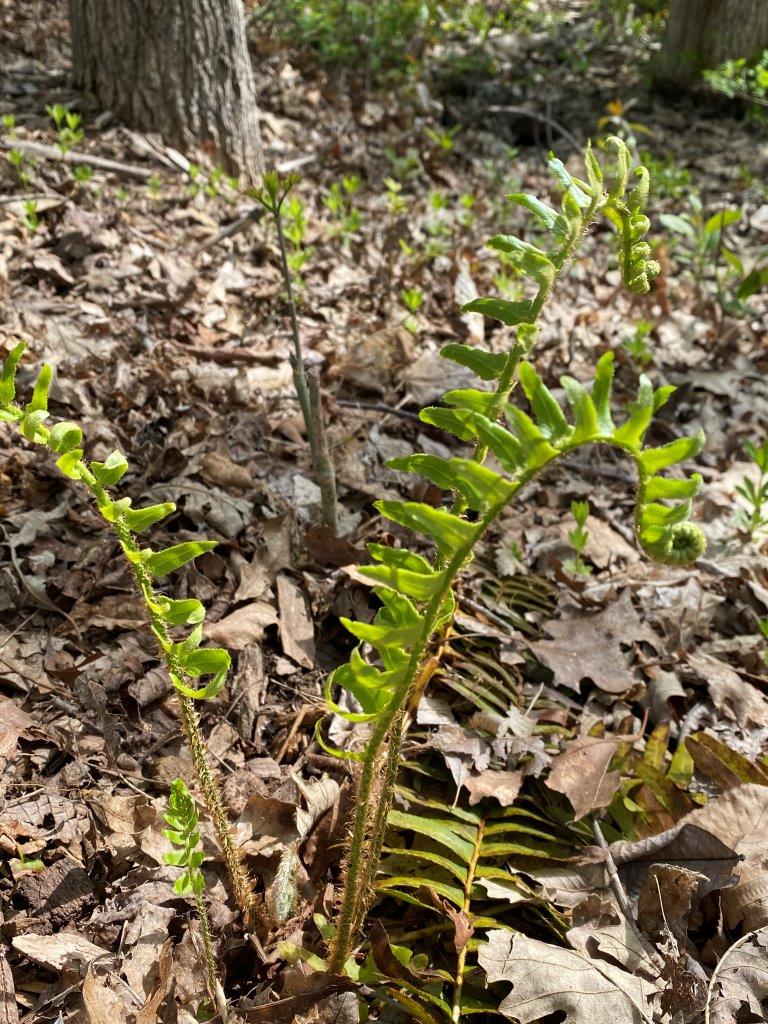
Last week I walked around Sapsucker woods (Cornell Lab of Ornithology). This is a great time to see trilliums (trillions of trilliums flowering across the forest floor), fiddleheads, mayapples just beginning to bud. The air was filled with the songs of birds and frogs. So today I'm sharing some of the things we noticed. Can you see the robin?


Wednesday, December 28, 2022

Explore Outdoors ~ Winter ferns


In winter, even the palest green stands out against ice and snow, frozen rock. It never fails to amaze me at how a plant can find a root-hold between rocks. I wonder if living on the edge of a stonewall feels as breezy as it looks?

This week check out where plants are taking a toehold, planting down roots, clinging to the edge.

Wednesday, December 14, 2022

Explore Outdoors ~ Ice Crystals

Part of my favorite walking road is shaded by a hill. It was so cold last week that, during the middle of the day, ice crystals formed on blades of grass and the midribs and edges of leaves littering the ground. 


This week pay attention to the small bits of beauty 
that make up your world.

Wednesday, December 7, 2022

Explore Outdoors ~ Colors of the Season

 Last week I was out walking and the bright splash of red against green caught my eye.

 
 Right now the greens are bright, the leaves crisp, the berries shiny. But soon - maybe by next week - they'll be covered by a blanket of snow, or exposed to icy winds. By spring, they'll be mouse-nibbled and winter-weary.

What plants sport reds and greens in your neighborhood?


Wednesday, November 30, 2022

Explore Outdoors ~ Shades of Winter Flowers


 This week pay attention to the colors of the flowers around you. The roses in one neighbor's garden displayed a range of hues from beige to faded peach to walnut and even colors of desert sand. Jot down the colors and shades you see. If you need some ideas for naming colors, drop by a paint store and check out the paint chips.

Winter Garden

The roses in my garden are beige, tan,
the color of espresso crema
or cafe con leche.
They remind me of desert sand
(depending on which desert),
a fortune cookie,
grade A maple syrup,
tortilla chips,
peanuts in the shell, 
peanuts out of the shell,
pecans and walnuts, 
amber, honey,
a faded peach, 
the end of summer.


Wednesday, November 16, 2022

Explore Outdoors ~ frost-faded flowers


after frost
 all that is left are memories
of humming bees
 
This week seek out the beauty in what is left behind after the hard fall frosts. Who knows ~ you might find a poem hidden in a secret garden!

Wednesday, November 9, 2022

Explore Outdoors ~ Flashes of red in the underbrush

 The other day I was out in the garden (pulling up dead zinnias) and the air was so still that I could hear the oak leaves falling from the trees. This is the time of year when the fall colors have faded from scarlet and gold to rusted orange and bronze. It is the time of year when I can count the leaves remaining on the oaks lining my drive. 
 
It is also the time of year when I am surprised by splashes of color ... the brilliant red of blueberry leaves and bright fuchsia of bittersweet tucked beneath the trees along the roadside.
 

What colors do you see in gardens 
and along roads this week?

Wednesday, October 26, 2022

Explore Outdoors ~ Becoming a Skeleton


I usually find leaf skeletons in the spring, after months of rain and snow has mouldered away the tender parts, leaving the vascular tissue (the "bones"). But sometimes I find the occasional leaf turning to skeleton before leaving home - helped along by fungi, I'm sure.

This week, head outside and look for leaf skeletons. If you don't want to wait around for spring, you can make your own. It is fun for kids, but adult supervision is needed. Here's how.

Wednesday, October 19, 2022

Explore Outdoors ~ Once these were Roses


Now they are rose hips... the fruit produced by this multiflora rose. Multiflora rose is an invasive plant, taking over fields and requiring constant cutting where you don't want them. But, the US Forest Service notes, multiflora rose hips provide food for grouse, wild turkeys, cedar waxwings and robins, chipmunks, white-tailed deer, opossums, coyotes, black bears, beavers, snowshoe hares, skunks and mice. 

This week look for the fruits left behind by summer flowers. Places to find fruits: trees, shrubs, rosebushes, and flowers. What do you see in your neighborhood?

Wednesday, October 12, 2022

Explore Outdoors ~ Gold Falling from the Sky


Early in the morning, the first rays of light turn the trees brilliant gold. It's like the leaves are burning with a fire inside of them. They may look like gold on the trees, but close-up you can see they've been battered by wind and pests. They also have their own personalities.

This week, get to know a leaf or two.

Wednesday, October 5, 2022

Explore Outdoors ~ Fall Colors

 Most folks, when they think of Fall Colors imagine the scarlets and fiery oranges of maple leaves, the deeper russets and shades of brown of oaks, the sunshiny yellows of aspen. Flowers have fall colors, too. If you watch a roadside or hayfield - or even the back edge of a park or playground - you might notice that the flowers you see this month are different colors than those of summer.


Six weeks ago, the flowers along our roadsides were orange daylilies and blue chicory. Now we've got an abundance of goldenrod and purple asters. 

What colors are the flowers in your neighborhood?

Monday, August 22, 2022

Bringing Back the Words

Words are important. At least, being a writer, I like to think so. Words connect us to ideas. Words connect us to our culture, history, family and community. And words connect us to nature. 

I was a kid who kept lists of nature words: names of the rocks we hunted for; names for the squirrels and birds I learned to identify; names for wild places hidden in vacant lots and parks around the city. Pooh had the Hundred Acre Wood; my friends and I had the Secret Forest – though it wasn’t very secret and only had a handful of trees. Something inside me felt that if I could name an animal, flower, rock, I might know it a little better.

So I was surprised, taken aback, even appalled to learn that a children’s dictionary was removing words about nature to make more room for words about technology. This started in 2007 when the Oxford Junior Dictionary deleted a slew of nature words: dandelion, acorn, magpie, otter – seriously? Who removes those cute, fluffy critters from a children’s dictionary? But the facts are that the children’s dictionary has a limited number of pages upon which to print words, and the words children are using (or being forced to use in school) are changing. In place of the nature words, they put in voice mail, broadband, BlackBerry – a now obsolete phone, not the tasty Rubus spp we continue to pick from prickly vines to this day.


This losing of nature words rubbed a lot of people the wrong way. Teachers and scientists sent emails to the Oxford dictionary folks. And author Robert Macfarlane teamed up with painter, Jackie Morris to create a lovely book, Lost Words. I discovered this book in 2019 and fell in love with it. It’s presented as a “spellbook for conjuring back those lost words” – those words snatched from the language of children before they even had a chance to learn about conkers and newts, bluebells and brambles. The pages held not just poems, but spells that might – through the magic of being spoken aloud – bring back those lost words into a child’s language. Ours, too.

How we perceive and talk about the natural world affects how we relate to it, and that affects how we care for it. Or how we don’t. I sometimes catch myself talking about going out to the garden to chat with plants or listen to the bees. When I hear a bird song I don’t recognize, I often ask, “who’s that?” 

I think that having words to share our observations about nature and the ecology around us is vitally important. Not only does it give us a language to converse in, but it strengthens our connections to the natural world. These connections are critical, especially now. In the past 50 years, human activities have contributed to a loss of nearly 70% of the world’s wildlife.


Can we reverse our environmental losses by changing the language we use? I think so. What if, instead of “profit” we talked about “environmental sustainability?” Instead of “weeds” we used words like “dandelion” and “pussy toes” and “plantain?” What if, like wildlife rehabilitators, we released wild words, like "kingfisher" back into our lexicon?

The Lost Words folks have created a wonderful Explorers Guide for teachers and parents and curious naturalists. You can find it at the John Muir Trust website (www.johnmuirtrust.org/john-muir-award/ideas-and-resources/literacy-and-nature/the-lost-words). It is packed with activities across the curriculum ~ poetry, science, things you can do outside and things you can do inside. You’ll also find articles and other resources there.

And if you’re interested in becoming a keeper of nature words, here’s another book you might want to check out: The Keeper of Wild Words, by Brooke Smith. Check out my review here.

Wednesday, August 17, 2022

Explore Outdoors ~ Thistles


I've always liked thistles. Sure, they're sharp and prickly - and you wouldn't want to step on them with bare feet. But they are also soft and fluffy. Butterflies and bees visit the flowers, and goldfinches snack on their seeds. 

So this week let's take a closer look at thistles you find in your neighborhood. They're opportunistic, so you'll probably find them growing in "weedy areas" or along roadsides, old fields, or (in my case) the un-mowed back bit of the yard.

  • What color is your thistle? And does it have a fragrance?
  • What does the flower feel like?
  • Where do you find spines and prickles on your thistle? 
  • How long are the spines?
  • What insects do you find on the thistle flower?
  • Are there any insects on the leaves or stem?
  • What kind of seeds do thistles produce?
  • Dig one up. What sort of root does it have? (you may want to wear thick gloves for this!)

Wednesday, August 10, 2022

Explore Outdoors ~ Textures


There are so many things to see on trees: leaves, insects, bark, and lichens! The thing I like about lichens - aside from the fact that they are funky fungi - is the diversity of textures. You can touch them gently and feel that some are bumpy and crusty, some are bristly, and some are smooth and leafy.

This week take a closer peek at the trees in your neighborhood. Do they have lichens growing on their bark? If so:

  • What kinds of lichens do you see? Write notes or draw them in your nature notebook.
  • What colors are the lichens?
  • How would you describe their texture?
  • Are there two (or more) kinds growing together?
  • Take a closer look with a hand lens or magnifying glass.
  • What do you suppose ants think about as they walk through a lichen patch?
     

Wednesday, August 3, 2022

Explore Outdoors ~ Early Morning Discoveries


The last half of July was so hot that I had to head out early in the morning to get my walk in. Often, the valley was filled with a layer of cloud and the air was deliciously cool. The early morning dew clung to spiderwebs like pearls on thread. They looked like lace.

This week get outside an hour earlier than usual and take a walk around your block, or even around your yard.
  • Does the air feel different compared to later in the day? How?
  • Do bird calls, cars, and other noises sound different?
  • Does early morning smell different than your normal get-out-and-explore time?
  • Can you see the moon, or planets?
  • What do you discover first thing in the morning?

Wednesday, July 27, 2022

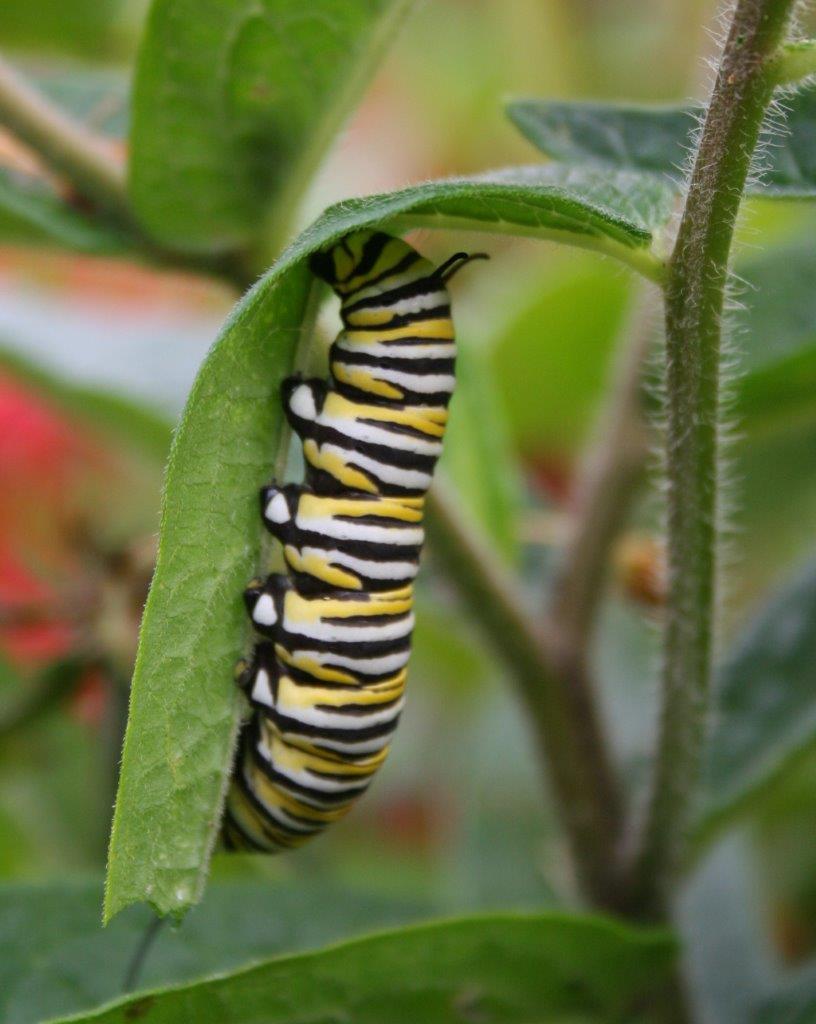
Be a Scientist ~ International Monarch Monitoring Blitz, July 29 - August 7


Got an eye for monarchs? The Xerces Society among other partners invites you to join a weeklong International Monarch Monitoring Blitz beginning this Friday, July 29. 


Volunteers help track milkweed, monarch eggs, caterpillars, and/or adults as part of a trinational effort to better understand the monarch butterfly’s breeding productivity, range, and timing in North America. 

Learn how you can participate in this community science project. Give yourself some extra time to watch training videos and read up on the projects. Then head out and do science!


Monday, July 25, 2022

Where Does a Walk Around the Block Take You?

One of the things I like about my daily walks is that there’s always something to see. Sometimes it’s flies clustered around just-opened willow flowers. Sometimes it’s the way a Virginia creeper spirals up the trunk of a tree. After a wind storm it might be treasures blown down from the treetops: twigs with interesting lichens, bird nests, seeds with helicopter rotors attached…

Recently I’ve been reading the stories Spike Carlsen tells in his book, Walk Around the Block (HarperCollins, 2020). He’s an urban walker, in Minnesota. So he writes about snow. He also writes about manhole covers, recycling bins, bike lanes, crosswalks, and how water gets to his house – and where it goes after it slurks down the drain.

Carlsen asks questions: what happened to the front porch? It used to be the place where neighbors would pull up a rocking chair or milk crate and chit chat. He takes readers on tours through a power plant, a sewer, a trash museum, even the inner-workings of a post office. How does the mail get from there to here? He opens our eyes to appreciate the natural side of things as well… things like pigeons, squirrels – even roadkill.

This is the sort of book that makes you want to walk slow enough that you can inspect the weeds pushing between the cracks in the sidewalk. This is the sort of book that inspires you to head outside before the sun dries the dew so you can look at spiderwebs on the fence. 

This is the sort of book that makes you wonder: if I walk around the block today, what will I find? And leads one to ask: does it matter how I walk around the block? If I go in a counter-clockwise direction, will I see things differently? What if I play hopscotch with the fallen walnuts and hickory nuts? Walk at a snail’s pace? 

A Dozen Walks to take Around Your Block
  1. Walk sideways, like a crab
  2. Walk with a child
  3. Skip part of the way
  4. Walk backward (when you’re in a safe place)
  5. Look at all the flowers on your route
  6. Listen to the birds
  7. Notice people working ~ what are they doing?
  8. Walk at first light
  9. Walk after dark
  10. Look at doorways
  11. Examine things growing in the sidewalk
  12. Stop and smell the _______.

Wednesday, June 29, 2022

Explore Outdoors ~ Millipedes!


The millipedes living in my neck of the woods are about three inches long and round, with pretty stripes marking the edge of each segment. They have dainty antennae and feet that will tickle if you let them crawl up your arm. Some folks think millipedes have 1,000 legs, but they don't. What they do have is 2 pair of legs per segment. Centipedes have one pair of legs per segment, and tend to be flatter - and faster. 

Millipedes tend to spiral when they die, and their colors fade. But, even dead, they are cool to observe. For one thing, their faces look like they have smiles. And for another, you can see how the legs attach.

This week ~ look for bugs with lots of legs. Maybe you'll find roly-polies (pill bugs) or centipedes or millipedes, or daddy longlegs. 

Give it a name. Mine is named Millie.

Spend some time watching your critter. How do the legs attach to the body? How fast does it move? What does it look like when you put your eyes at ground level?

Ask questions.

Draw a picture or take a photo so you can continue to study your leggy critter.


Monday, June 27, 2022

Messing around in my Nature Journal

 Have you ever smooshed a marigold or buttercup across a page in your journal or sketchbook? Maybe it left a yellowish smudge… And while you may have done it by accident, a couple weeks ago I smooshed plant parts onto the page on purpose.

It was part experiment, part “artist date” a’la Julia Cameron, and a whole lot curiosity. I wanted to know would blue pigments in my bachelor button blossoms smear blue pigment on the page? Would the centers of oxeye daisies make as nice a yellow as buttercups?

Materials
I began by collecting a variety of plants that I thought might provide some color:

bachelor button flower
bleeding heart flowers and leaves
oxeye daisy flower
buttercup flowers and leaves
yellow hawkweed flowers
creeping charlie leaves
wild strawberries

Method
 I knew I could extract pigments by boiling the flowers and adding a mordant (a mordant is a chemical that helps keep the pigment from fading, such as vinegar or alum). But I wanted something more immediate. So I pressed and smeared, smooshed, and squashed petals and plant parts directly onto the paper.


Results: Yellow hawkweed and buttercup petals left bright yellow smudges; the yellow center of the daisy left only a faint mark. Bachelor button petals left a bright blue. Strawberries left pink smears, not the red I expected. Bleeding heart flowers left no pigment on the page. As for the leaves, creeping charlie and bleeding heart leaves left different shades of green.