Showing posts with label wildflowers. Show all posts

Wednesday, May 21, 2025

Explore Outdoors ~ Who's hanging out on the dandelions?

 Last week my garden was filled with bright yellow dandelions. My first thought was ... hey! I wonder if any pollinators are visiting them?
 
There were! I spent a bit more than 10 minutes walking around the garden counting the bees, wasps, and flies visiting dandelions.
 
Three tiny coppery bees, two flies, one bumblebee, and 45 wasps. Of those wasps, most (41) were small, not even a centimeter long, and four were paper wasps, like this one from nearly a dozen years ago. Check out that pollen smeared all over her face and thorax!
 
 
This week look for pollinators on the dandelions in your neighborhood.


Wednesday, May 14, 2025

Explore Outdoors ~ Violets and their Kin

 What do you notice about the flowers below? 


They look like they might be related, right? And they are! The first one is a violet growing in my yard, and the others are pansies, growing in pots at a nursery. 

Sometimes I think pansies look like giant violets - and they do share the same genus: Viola. They also have five petals, just like violets. But look at the violet petals: it looks like three go in one direction and two in the other. The pansies have four petals going up, and one going down (like the smile on a face). 

I've seen violets in my yard ranging in color from nearly white to pink, magenta, and deep purple. And some of the violets even have little faces, like these pansies do.

Look for violets and pansies growing near you. 
What things do you notice about them?
 

Wednesday, October 9, 2024

Explore Outdoors ~ Asters and Goldenrod


Fall is a season of colors. Leaves turning red, orange, gold... even the wildflowers are getting in on the act. You can tell it's fall in the northeast by the yellows and purples of goldenrod and asters growing in fields and along roadsides. Their beauty is eye-catching, both for people and the pollinators collecting nectar and pollen before winter settles in. 

Goldenrod and asters create a community, says Rhonda Fleming Haye. "Beyond the bees and butterflies you’ll find syrphid flies, beetles and many other insects. Goldfinches, tree sparrows, prairie chickens and wild turkeys eat the seeds, while rabbits and deer will browse the foliage," she writes for Northern Gardener.

If you can, find a patch of asters and goldenrod to watch!

Wednesday, July 31, 2024

Explore Outdoors ~ Purple Razz

 At the beginning of the month, these purple-flowered raspberries were just coming into bloom. By now they should be producing their fuzzy berries. These plants (Rubus odoratus) are native to eastern North America; their cousins, which I grew up calling "thimbleberries" are native to the western part of the continent. 


The flowers have five petals, and the leaves look a bit like maple leaves, with five lobes. The fruit looks like a red raspberry but is flatter and a bit drier. And then there's the fuzziness... it doesn't seem to deter the birds and small mammals, though, because these berries tend to disappear off the bushes pretty fast. 

What kinds of berries grow around your neighborhood?

Wednesday, June 5, 2024

Explore Outdoors ~ A Rose by Any Other Name ...

 What do you notice about the flowers below? Look at each of them and jot down what you observe.

 
From the top left, going clockwise they are bird cherry, amelanchier, strawberry, and apple. You might have noticed they have five petals and a lot of stamens in the center. And that might have led you to wonder whether they are related. Yes, they are. All of these belong to the rose family, Rosaceae. It's a big family and, in addition to roses, includes amelanchier, apples, pears, apricots, plums, cherries, peaches, raspberries, blackberries, strawberries, and almonds. And those are just the familiar fruits and berries (and nuts) that we eat.

You might also wonder whether all flowers in the rose family are white. Most are white to pink, but there are some brambles with fuchsia petals, and cinquefoil flowers with yellow petals, flowering crab apple with bright pink and roses in all colors.

This week, go on a "rose-hunting" field trip. 
Look for flowers that might be related to roses. You might find strawberry flowers in your lawn, apple and cherry blossoms on trees at a park, and cinquefoil along the roadside.

Wednesday, May 22, 2024

Explore Outdoors ~ a field trip to Sapsucker Woods

 A couple weeks ago we headed up to Sapsucker Woods (Cornell Lab of Ornithology) for a wildflower walk. I can hear you asking: what about the birds? Oh, they were there - noisy and generally high in the trees where we couldn't see them. Meanwhile, the wildflowers were hanging around, close to the trail, showing off their prettiest blossoms and smiling for the camera.


wild geranium 

These are native woodland plants, found in eastern forests in North America. I think the leaves look like hands with fingers spread out.


 White trillium, another woodland native.


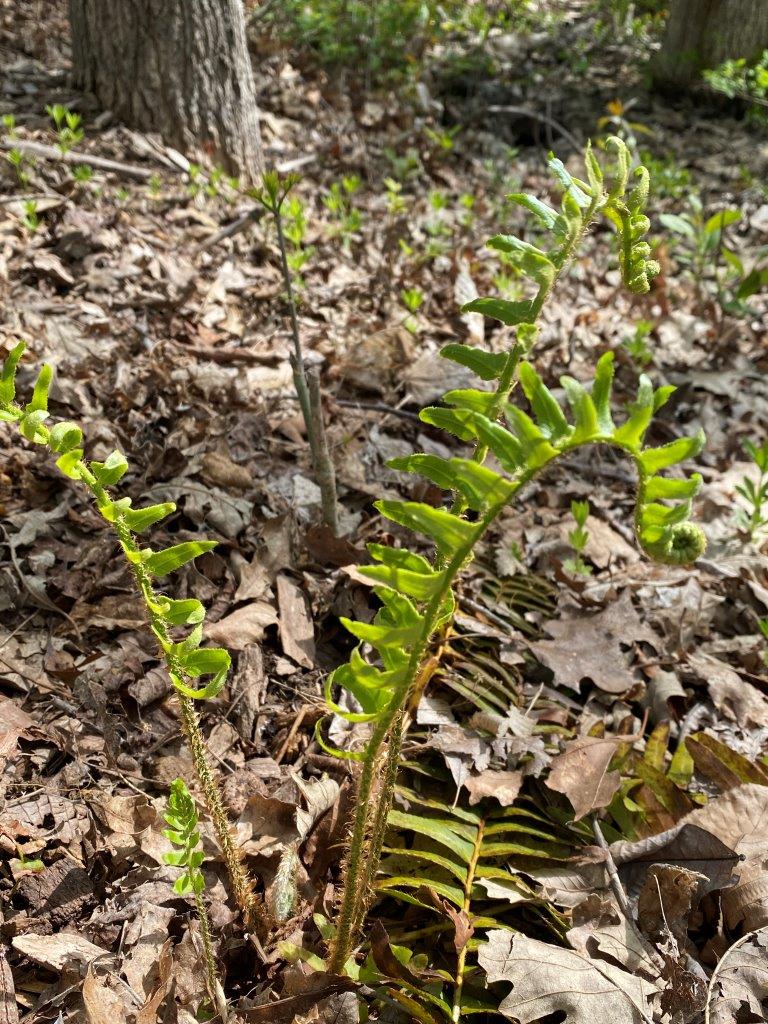
Jack-in-the-pulpit (above) and some fern fiddleheads (below)


Sweet woodruff - it looks like it's related to bedstraw, and it is.


a quiet spot to listen to frogs singing....


and then off to see the geese! Oh, look at those cute fluffy babies!


Wednesday, April 3, 2024

Explore Outdoors ~ Look Closely to Find Spring


 Spring has sprung, they say. And sure, a couple of daffodils have bloomed. But for the most part, my yard is boring...

It looks bare and brown with a bit of moss here and there and scraggly tufts of grass and lots of dead leaves.

But look closer...


... lots of teensy mustards blooming. You can tell they're mustard flowers because they have four petals. These are growing in thin soil over rocky ground and I think they are one of the rock cresses. 


What's growing in your lawn?

Wednesday, March 27, 2024

Explore Outdoors ~ appreciating the other side of a flower

  This shaggy yellow flower is not a dandelion! It's a coltsfoot (Tussilago farfara) and is the first flower to push up through the soil in mud season - at least in our area of upstate NY. One way you can tell it's a coltsfoot is that there are flowers, but no leaves. Dandelions shoot up leaves first, then bloom.

Another way you can tell is by the stem. Dandelions have smooth stems that leak sticky white sap when you break them These stems look rather scaly with all those bract-like leaves on the stem. And when their leaves do finally emerge, they are roundish - like a colt's foot, not spear-shaped like dandelion leaves.

 
What do you notice when you look at the back sides of flowers growing near you?
 

Wednesday, November 29, 2023

Explore Outdoors ~ Winter Berries


I know I've posted pics of partridge berries in the past. But still, when I find them poking out from between fallen leaves (fall) or melting snow (spring) I'm always surprised by their splash of color. The leaves are thick, and you can feel the veins. The berries are interesting because they are formed by the fusion of two flowers. I've heard they make good trail snacks or you can toss them into a salad. But I usually only see a handful of berries, so I leave them for the chipmunks and turkeys.

These native plants grow low-to-the-ground, so they make good ground cover. Since I usually find them in wooded areas I'm thinking they might do well in a shaded part of my yard - and now I'm wondering if I could plant those berries and get some seedlings? You can find out more about partridge berries here.

What kind of berries provide a splash of color in your neighborhood this week?

Wednesday, November 22, 2023

Explore Outdoors ~ Fall in the Garden

 The cool thing about gardens is that they have different personalities throughout the seasons. Purples and pinks predominate in spring, yellows in the summer, joined by purples in August, and by late fall it's mostly faded petals, silky white milkweed parachutes, and ... brilliant red blueberry leaves!


 Notice the colors - and textures - in gardens around you this week.


Wednesday, July 5, 2023

Explore Outdoors ~ Milkweed visitors

 I started growing milkweed in and around my garden for the Monarch caterpillars. It turns out that lots of things love my milkweed. Over the seasons I spy skippers, honey bees, fritillaries, a variety of native bees, ants, the Monarchs (of course) and other butterflies, and even hummingbirds who hover long enough to check out the flowers. There are milkweed bugs and milkweed beetles, ladybugs, and crab spiders that hang out under the leaves waiting to snatch an unsuspecting fly.
 
And then there's this beetle - a daylight firefly that doesn't light up the sky, and who is nibbling milkweed buds.


This week choose a flower that's in bloom and watch the insects that visit it. How many different kinds of insects do you see? And do any birds drop by? Are there spiders lurking on the blossom or hiding in the leaves?

Wednesday, June 7, 2023

Explore Outdoors ~ Dame's Rocket


Go for a walk along any country road in the northeast and you're likely to come upon swaths of these beautiful phlox-like flowers. Ranging from white to pink to purple, the flowers bloom atop stems standing two-to four-feet high. 

But here's the thing: they aren't phlox. Look closely and you notice that these flowers have four petals. Phlox have five. These leaves are toothy, with rough edges; phlox leaves are smooth.

These beautiful blooms are an invasive mustard called "Dame's Rocket" (Hesperis matronalis), brought to the US from Europe about 400 years ago. They are pretty, but they crowd out native species - flowers that the native bees and butterflies depend on. So if you see some on your walk, go ahead and pick them - just don't plant any (or allow them to go to seed if they grow near you). Unfortunately, their seeds are often included in wildflower mixes.

Want to know more? Here's an article from Ohio State U, and here's one from U of Wisconsin extension.

Wednesday, May 17, 2023

Explore Outdoors ~ a Field Trip to Sapsucker Woods

Last week I walked around Sapsucker woods (Cornell Lab of Ornithology). This is a great time to see trilliums (trillions of trilliums flowering across the forest floor), fiddleheads, mayapples just beginning to bud. The air was filled with the songs of birds and frogs. So today I'm sharing some of the things we noticed. Can you see the robin?


Wednesday, May 3, 2023

Explore Outdoors ~ Violets in the Lawn

Violets abound in my yard. They grow companionably next to the dandelions and creeping charlie, thrusting their blue (and sometimes pink, magenta, nearly white) flowers up through the thatch and leaf detritus. They are an early source of nectar for butterflies, and pollen for bees. And the flowers taste yummy in salad.

The other thing about violets - and the reason I let them grow wildly in my yard and along the edges of my garden beds - is that their leaves are caterpillar food. Greater Fritillary caterpillars are picky eaters and eat only violet leaves! But they are late night diners, hiding during daylight hours, so you might never see them. I haven't. But I have seen plenty of fritillaries fluttering around my garden.

This week look for violets - in your yard, in a park, growing along the sides of sidewalks. 
 
Notice the colors of the flowers. How many shades of blue and purple do you find? What about yellow and white?

And here's another thing you'll notice: each flower grows from a stem that comes directly out of the ground, and they seem to be nodding (well, at least mine do).

Wednesday, April 19, 2023

Explore outdoors ~ trilliums!

Today I'm celebrating trilliums on this blog. Over at The GROG blog it's Bugs - the Third Annual Arthropod Roundtable. Hop on over and join a delightful group of authors with bugs in their books.

The red trillium is native to the eastern and northeastern US, blooming in the spring. Some people call it "Robins Wake" because it blooms at the same time robins show up, and it has those red petals. The flowers grow in shady wooded spots, and when they are finished blooming they produce a bright red berry that birds and other animals eat. If you are lucky enough to find some, just take pictures. These flowers are on the NY state protected list.

What flowers do you find in shady places?


Wednesday, October 5, 2022

Explore Outdoors ~ Fall Colors

 Most folks, when they think of Fall Colors imagine the scarlets and fiery oranges of maple leaves, the deeper russets and shades of brown of oaks, the sunshiny yellows of aspen. Flowers have fall colors, too. If you watch a roadside or hayfield - or even the back edge of a park or playground - you might notice that the flowers you see this month are different colors than those of summer.


Six weeks ago, the flowers along our roadsides were orange daylilies and blue chicory. Now we've got an abundance of goldenrod and purple asters. 

What colors are the flowers in your neighborhood?

Wednesday, July 28, 2021

Explore Outdoors ~ Growing Old


One day the field is filled with yellow composites ~ dandelion-like blooms atop tall, hairy stems. Within days the petals fade and the flowers go to seed. Even as that's happening, new buds are getting ready to bloom. 

Look for aging flowers in your yard and around the neighborhood. Take a photo or draw an aging plant that you find. What do you notice?

Wednesday, June 9, 2021

Explore Outdoors ~ Mayapples


One corner of my yard lies under dappled shade of maples and cottonwoods. A colony of mayapples lives there, and has thrived (and even grown) over the years. Mayapples are native to our area, so I am always delighted to see them bloom and grow.

 
In early spring, the leaves push up, like folded umbrellas. Then they open, two large, deeply lobed, leaves per stem. Eventually a white flower blooms - tucked in the axil of the leaves. Its petals look waxy, accented by the yellow stamens. The best way to get a good look is to lay on your tummy - or be a very small animal. Eventually they produce a small lemon-shaped fruit - a tasty treat for box turtles and other wildlife.

This week, keep your eyes peeled for:
  • white flowers
  • hidden flowers
  • plants with umbrella-leaves
  • flowers with lots of stamens


Wednesday, May 19, 2021

A Nature Walk

 Come with me on a nature walk at the Fleisher preserve (Watertown, CT). It's cool in the shaded forest, and the ground is still muddy in many places. You can hear a pileated woodpecker hammering away in the distance; closer are calls of robins and warblers and the burbling brook. 


Look up!

and listen.....


look down...

and all around.


Jack-in-the-pulpit,


 Canada mayflower,


and ferns, uncurling into spring.