Showing posts with label seasonal activities. Show all posts

Thursday, June 25, 2026

Pollinator Week ~ plant some flowers

 ... or let some wild flowers grow in your garden or yard. Often, nature will provide plenty of flowers - plants that most folks call "weeds" such as: henbit and deadnettle, mullein, ox-eye daisies, asters, goldenrod,  red clover, Queen Anne's lace, and black-eyed Susans. 

When I want to add color and height, I'll plant cosmos, coneflowers, calendula, bee balm (monarda), and zinnias. I'll let some of the oregano, thyme, and basil go to flower - the bees love them. And I usually plant sunflowers and marigolds just for fun.

The other thing a pollinator patch needs is water. I pour water in a shallow dish and put in some rocks to give insects a place to perch as they drink.

And if you're growing flowers to attract pollinators, ditch the pesticides and herbicides. 

Wednesday, December 10, 2025

Explore Outdoors ~ a prickly tree!


Sometimes when you get up close to a tree, you decide that maybe you don't want to shake it's hands! What sort of prickly trees do you have where you live?

Friday, December 5, 2025

Let it Snow!

We still have a couple weeks before the official “first day of winter” but it can snow any time, so I want to share these fun books today.

theme: snow, snowflakes, STEM

Flurry, Float, and Fly!: The Story of a Snowstorm 
by Laura Purdie Salas; illus by Chiara Fedele 
40 pages; ages 4-7
Bloomsbury Children’s Books, 2025

Clouds lie heavy, gray, and low. From down below, just one wish: Snow!

The kids are waiting, and waiting… they pull out the sled and sit on it and wait some more. Above, the sky is dark with clouds that look like they might bring snow. And above those clouds, the air currents, cold from the north and damp from the south, mix and swirl. “Water vapor clings to dust, begins to build a slushy crust.” From the endpages – autumn leaves at the front, snow at the back – to the rhythmic, rhyming language, this is one fun read-aloud!

What I like about this book: there’s a ton of science in this book, beginning with cloud formation. Readers will learn how a drop freezes and how water vapor clings, forming branches, and how those crystals begin to fall and collect into flakes. Back matter all about The Science of Snow, from the ingredients you need for a snowstorm to flake formation, accompanied by snowflake photos. 

Hello Snow (Board Book)
by Katherine Pryor; illus. by Rose Soini 
24 pages; ages 0-3
Schiffer Kids, 2025

Flakes flutter. Wind swirls.
Parents help two youngsters zip up into their outdoor clothes so they can greet the snow. They slip and slide, make snow angels, and roll snow into a friend. There is so much to explore outside in the cold.

What I like about this book: The rhymes are short and focus on sounds and action. Boots crunch, ice cracks. Activities are perfect for toddlers (and their adults!), and the bright colors bring life to a snowy page.


Beyond the Books:

Go snowflake watching. Make sure you’re dressed warmly and then go outside to watch snowflakes fall. What do they look like when you watch them looking straight ahead? What do they look like when you look up into the sky? Come up with words that show what you see.

Catch snowflakes. You’ll need to put some dark colored paper in the freezer a couple hours before. Then head outside and let flakes land. Some things to do: look at flakes through a magnifying glass; catch flakes at the beginning of the storm and later on to see if they have changed shape and size; try to count how many land on your paper in 10 seconds. 

Build a snowflake using materials at hand: legos, twigs, straws, or cut one out of paper. Remember the two rules of snowflakes: they have six rays and they are symmetrical. Here’s a video showing one way to cut a paper snowflake.

Make a list of five more things you can do to play with snow! Then go do them.

We'll be joining Perfect Picture Book Friday when it resumes after the holidays. It’s a wonderful gathering where bloggers share great picture books at Susanna Leonard Hill's website. Review copies provided by the publishers.

Wednesday, June 25, 2025

Explore Outdoors ~ Sneaky Spiders

 I've got some Very Sneaky Spiders hanging out in my garden and surrounding area! They don't advertise their presence by spinning sticky webs that net unsuspecting fliers. Instead, they hide in and under flowers, waiting for dinner to come to them - to settle on the flower for a sip of sweet nectar - and then they POUNCE! 
 
Do you have sneaky spiders in your flowers? 
  

Wednesday, May 7, 2025

Explore outdoors ~ No Mowing Yet

 We have not mowed yet ... because the lawn is filled with flowers. And some of those flowers provide pollen for the bees. And because, frankly, we just haven't gotten around to it. Here are a couple shots from my lawn last week. What do you notice?


 Do you have flowers growing in your yard? 
Take a close look - sometimes the flowers are hidden.
  • What color are the flowers growing amongst your grass?
  • How many petals do they have?
  • Are there any bumble bees or other insects visiting them? 

Wednesday, March 26, 2025

Explore Outdoors ~ Spring Comes In

 Spring officially started last week, but depending on where you live, signs of spring may have been sprouting up since February. Maybe it's the sound of running water (the creek at the bottom of the road is burbling along - noisy compared to a couple weeks ago!) or the abundance of bird calls. Maybe bits of green are poking up through the snow...

This week look for signs of spring!


Wednesday, June 19, 2024

Explore Outdoors ~ Pollinator Scavenger Hunt


It's Pollinator Week so of course we're going to head out to look for some pollinators! How many of these can you find? Have Fun!
  • a bumble bee
  • a beetle on a flower
  • a shiny green bee
  • a fly that looks like a bee or wasp
  • a hummingbird
  • a moth that looks like a hummingbird
  • an ant on a flower
  • a bee with pollen on its body or face
  • a fuzzy fly that looks like a bumble bee
  • a wasp on a flower
  • a butterfly on a flower
  • a fuzzy beetle that looks like a bumble bee

Wednesday, April 24, 2024

Explore Outdoors ~ tricolored bumble bee

 Last week - on the first sunny day since the rain (and maybe since the eclipse...) I headed outside to see who was up and about. Yes, there were flies in the forsythia, and a woodpecker drumming on a tree somewhere nearby. Then I heard buzzing... the sort of buzzing a bumble bee makes. Sure enough, down in the tiny purple deadnettle blossoms.


There were actually two of them - probably queens out for lunch and possibly house-hunting - Bombus ternarius, commonly known as the tricolored bumblebee (aka orange-belted bumblebee). It was a good day to be flitting about; I also saw a mourning cloak butterfly and a smaller orange butterfly that wouldn't stay still long enough for me to get a good look at it. 

What's buzzing, flitting, and flying about in your neighborhood?

Wednesday, December 20, 2023

 Merry Solstice & Happy New Year


'Tis the Season to:

Slide on ice
Tromp through the snow
Sled down a hill
Build a snow fort
Save a snowball in your freezer (for July)

I'm taking a winter break. See you in mid-January!

Wednesday, June 21, 2023

Explore Outdoors ~ Go on a Bee Walk

 One of the best ways to get to know your local pollinators is to go outside and meet them. So today let's head out and meet some bees. 

First, a bit about what bees look like. They have three body parts (head, thorax, abdomen), long slender antennae, large multi-faceted eyes, two pair of wings (that's 4 wings in all!) and, if they're female, a stinger at the end of their abdomen. 

Chances are you're familiar with your neighborhood bumble bees and honey bees, and you may have met a few shiny metallic green sweat bees. For this bee walk, take a notebook and pencil - or a camera - so you can take notes, draw pictures, or take photos of bees you see along the way.


Things to observe on your bee walk:
  • how big is your bee?
  • what colors does it have on its abdomen?
  • what is the pattern of the colors?
  • does it have longer antennae than other bees?
  • is its abdomen flattish?
  • what sort of sound does it make?
  • what flowers does it visit?
  • also note the date, time of day, and basic weather observations
If you are looking for bee guides, you can find a short North American Bee Identification Guide (free) at Pollinator Partnership. They have some state guides as well. They have a longer Beginner Bee Field Guide available for free download as well.

Happy Bee watching!


Wednesday, September 28, 2022

Explore Outdoors ~ Seeds!

The dill in my garden is going to seed. That's what dill does if you leave it long enough... it produces flowers which, eventually, produce seeds. It's what tomatoes and cucumbers and pumpkins do, too - but their seeds are sheltered in a protective coating (fruit).
 
Dill aren't the only ones going to seed. This time of year a whole bunch of flowers are producing seeds: sunflowers, coneflowers, thistles, poppies, lupine, forgotten lettuces and broccoli...
 
even the spidery cleome flowers which, if I leave them alone, will drop their seeds so I'll have flowers again next year. We'll see...
 
  • What kind of seeds are you finding as you walk around your neighborhood and local parks?
  • Are the seeds smooth or textured?
  • Do they come in pods or on stalks?
  • Do they have wings or parachutes to fly?
  • Or do they have hooks to hitch a ride?


Wednesday, September 14, 2022

Explore Outdoors ~ insects in the garden (still)

 The days may be getting shorter and (in some places) cooler, but there are still plenty of insects around. Butterflies, bees, grasshoppers, crickets ... and even woolly bear caterpillars looking for a place to curl up for the winter.

This week, pay attention to the insects you see. Where do you find them? What are they doing? How are they getting ready for the coming winter? 
 
While walking in a neighboring town last week, I came upon a beautiful pollinator garden. One of the plants was simply  buzzing with bees! The gardener happened to be around and explained the feathery blooms were "Kiss me over the Garden Gate" - a Victorian cottage garden favorite. The plant is native to China, but has a long history in American gardens going back to President Thomas Jefferson - who was a pretty passionate gardener.


My own garden has its fair share of bumble bees and carpenter bees and tiny native bees of all kinds. But I found this handsome hopper hiding in the basil! Love those stripy legs... 


Wednesday, July 27, 2022

Be a Scientist ~ International Monarch Monitoring Blitz, July 29 - August 7


Got an eye for monarchs? The Xerces Society among other partners invites you to join a weeklong International Monarch Monitoring Blitz beginning this Friday, July 29. 


Volunteers help track milkweed, monarch eggs, caterpillars, and/or adults as part of a trinational effort to better understand the monarch butterfly’s breeding productivity, range, and timing in North America. 

Learn how you can participate in this community science project. Give yourself some extra time to watch training videos and read up on the projects. Then head out and do science!


Monday, June 27, 2022

Messing around in my Nature Journal

 Have you ever smooshed a marigold or buttercup across a page in your journal or sketchbook? Maybe it left a yellowish smudge… And while you may have done it by accident, a couple weeks ago I smooshed plant parts onto the page on purpose.

It was part experiment, part “artist date” a’la Julia Cameron, and a whole lot curiosity. I wanted to know would blue pigments in my bachelor button blossoms smear blue pigment on the page? Would the centers of oxeye daisies make as nice a yellow as buttercups?

Materials
I began by collecting a variety of plants that I thought might provide some color:

bachelor button flower
bleeding heart flowers and leaves
oxeye daisy flower
buttercup flowers and leaves
yellow hawkweed flowers
creeping charlie leaves
wild strawberries

Method
 I knew I could extract pigments by boiling the flowers and adding a mordant (a mordant is a chemical that helps keep the pigment from fading, such as vinegar or alum). But I wanted something more immediate. So I pressed and smeared, smooshed, and squashed petals and plant parts directly onto the paper.


Results: Yellow hawkweed and buttercup petals left bright yellow smudges; the yellow center of the daisy left only a faint mark. Bachelor button petals left a bright blue. Strawberries left pink smears, not the red I expected. Bleeding heart flowers left no pigment on the page. As for the leaves, creeping charlie and bleeding heart leaves left different shades of green.


Wednesday, May 4, 2022

Explore Outdoors ~ A Story Grows over Time

 The change in seasons takes time. Sure, the snow can start melting sometime in March, and the first daffodil leaves push up like fat, green spears. 

Gradually buds fatten and you wait. And wait. And keep going out to see if this is the day.

Until one morning you forget, and later you notice that - BLOOM! that brownish end-of-winter spot is now a splash of color.
So then you take a look inside to see if anyone is there.

Hello?

But it looks empty.

And just when you are ready to go back inside to make hot soup, you notice a dark spot. So you look closer. 

This month, spend time observing a patch of flowers that are getting ready to bloom. Or a patch where you have planted some seeds. 
Document the progression from emergence to bloom. 
Check out who visits, who hangs out, who gathers pollen, who nibbles the petals and leaves.
This is how nature writes her stories. Slowly. And then - BLOOM!

Wednesday, April 27, 2022

Explore Outdoors ~ Not a Dandelion


The earliest wildflower on our hill is this one. 

It may look like a dandelion...
  • it's yellow
  • it's shaggy
 But it's not a dandelion.
It's coltsfoot. 

Like the dandelion, coltsfoot is introduced. And like the dandelion, people use the leaves, flower and root. Instead of salad, fritters, and coffee, coltsfoot is used to treat coughs and sore throats.

Here's how to distinguish between them:
 
Dandelion leaves emerge before the flower; coltsfoot flowers emerge before the leaves.

Dandelion stems are green with tiny (almost imperceptible) hairs; coltsfoot stems are a bit grayer and look like they have brownish scales on them.

Dandelion flower heads have hair all over; coltsfoot flowers have a center of bumps. Like this one.

This week we're Going On a Lion Hunt ~ 
Dandelions, that is. Look for plants with shaggy yellow flowers. Then take a closer look.
  • Stem: what color is it? how tall is it? does it have hairs?
  • Leaves: what shape are they? how long? do they grow on the stem or only at the base? do they have smooth edges? are they notched?
  • Flower: are the petals thin? are they thick? are they everywhere or is there a center?

Coltsfoot isn't the only dandelion fooler. Here are some others.


Wednesday, April 13, 2022

Explore Outdoors ~ What was hiding beneath the snow

 My usual walk takes me past a wooded spot, and I noticed this plant that had been hidden beneath the snow all winter.

This weird double-berry is a partridge berry. It's a native plant here, growing along the forest floor. Wild turkeys, foxes, skunks, and mice eat the berries. So do partridge - which is probably how it got its name. The flowers are small and white, and grow in pairs. The berry results from a fusion of the twin ovaries. You can find out more about partridge berries from the US Forest Service here

What kind of "winter leftovers" do you notice this week?


Monday, March 28, 2022

Squashing Plants for Fun and Science

The first plant I pressed was a violet. I think I wanted to glue it on a card. My “plant press” consisted of a piece of newspaper and Webster’s Dictionary. I laid the flower between a folded sheet of newspaper and put it inside the dictionary. I may have piled on my dad’s geology textbook for good measure.

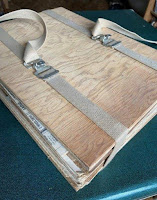
The thing about plants is that they sometimes leak and, as I’ve discovered, books don’t like damp pages. Eventually I made a heavy-duty plant press with straps to squish it closed. It’s heavy and big, so I made another one that I can fit into my backpack and take with me on walks.

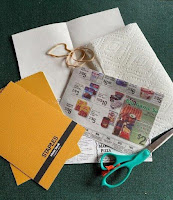
Here’s what you need to make a simple plant press using materials you can find around the house (maybe even in the recycling bin):
  • cardboard (I used the covers of an old steno notebook)
  • paper towels
  • newspaper
  • watercolor paper
  • some printer paper
  • two thick rubber bands or twine
To press a plant, place it between two pieces of paper or newspaper. Take a few minutes to position it so that you can see the petals, leaves, and other plant parts.

Then layer paper towel and heavy watercolor paper, or more newspaper. If you want to press another plant, place it between paper and layer in the newspaper and other sheets.

Put the top cardboard layer on.

Stretch rubber bands around each end, and let it dry. You can stack a heavy book or two on it as well.


After a week, check to see if your plant is completely dry. If not, leave it in the press longer.

Once your plant is dry, use it to make cards or for art projects. Or make an herbarium mount and add it to a plant collection. Here’s what you need:
  • card stock
  • scotch tape
  • labels
  • page protectors
  • 3-ring binder
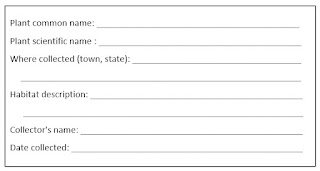
Before you mount your plant, fill out a label. Tape it to the bottom right corner of a piece of cardstock.

Gently remove the dried plant from your press and arrange it on the cardstock. Use thin strips of tape to hold the plant to the page. You’ll want to tape the stem, leaves, tops of petals.

Slide the cardstock into a page protector, and put it in the binder.