Showing posts with label butterflies. Show all posts

Monday, June 22, 2026

Welcome to Pollinator Week!


This week is Pollinator week! And this year’s theme is Life on a Leaf: Celebrating Caterpillars and Host Plants. The theme highlights the importance of lepidoptera in the United States – the nearly 11,000 species of moths and 750 species of butterflies that pollinate flowers – and the  plant species they depend on for breeding, feeding, and overwintering.

This year’s “Pollinator of the Year” is the Swallowtail Butterfly. There are some thirty species of the Swallowtail here in the U.S. and nearly 600 species around the world – here’s the one I commonly see in my garden. You can find swallowtails around gardens, lilac trees, and puddles - they love slurping up salts from the mud. 

Pollinator Week is also your chance to get involved in a community science project: Pollinator Bioblitz. All you have to do is sign in on your iNaturalist account and join the project. (If you don’t have an iNaturalist account, it’s pretty easy to set up.) Then, during pollinator week, take photos of the bees, wasps, butterflies, moths, hoverflies, hummingbirds, and bats you see flying around and landing on flowers.  


Friday, March 13, 2026

A Tale of Two Butterflies


Monarch and Mourning Cloak: A Butterfly Journal 
by Melissa Stewart; illus. by Sarah S. Brannen 
48 pages; ages 4-8
‎Beach Lane Books, 2026

themes: nature, butterflies, art

 Look, a monarch!
 Bright orange wings
 keep it safe.

The first spread opens with a comparison and contrast of two butterflies you might find in your backyard: the monarch and the mourning cloak. The monarch is bright orange – a warning to predators that it is poisonous and they should stay away. The mourning cloak is brown – it blends in with the bark of trees so predators have a hard time finding it.

Monarch and mourning cloak are as different as two butterflies can be: one flies south in the winter and the other one snuggles under bark to hibernate. And yet they are surprisingly similar: they hatch from eggs, eat leaves, and undergo metamorphosis.


But this book is more than just an ordinary butterfly book. It’s a nature sketch book, a poetry journal, and an invitation to observe nature more closely. An invitation to engage with the world outside your door. An invitation to grab a sketchbook and head outside.

What I like love about this book: So Many Things! Beginning with the end pages: On the front end pages we meet the Monarch: there’s a quick overview of its life cycle, sketches of it in different stages of its life, and a range map showing where you’re likely to find monarch butterflies. The back end pages introduce the Mourning Cloak butterfly. 

Even before you get into the book, there’s front matter – a letter to readers explaining that this book is a collage of poetry and artwork that not only captures the lives of the butterflies, but shows the creative process Melissa Stewart and Sarah Brannen went through over the few years of creating the book.

Spreads reveal the secrets of the two butterflies in poetry and sketches, along with notes about when and where the butterfly observations took place, annotated illustrations, and even some color palates. These are pages that you’ll want to spend time on, because there is so much to discover. I am absolutely astounded by the awesome renderings of the spiky caterpillars.


There’s luscious language. “Changing, rearranging” – what better description of metamorphosis can you think of?

And there’s back matter (which of course I always love!) beginning with a section about “the joy of journaling” and how to create a sketchbook. And of course there’s more about butterflies, caterpillar time, and some great resources for kids who want to know more. This is a book that I would definitely have in my classroom (and I taught high school bio!). I don’t usually give stars, but I give this one 5 Butterflies.


I’ll be chatting with Melissa and other authors about their buggy books over at the Annual Arthropod Roundtable at the GROG  on Earth Day, April 22.

Beyond the Books:

Make a butterfly journal. This is a quick fold and “pamphlet sew” binding – and I usually use a piece of paper bag as a cover for mine. Directions are here.

Draw pictures of the butterflies and caterpillars you see fluttering (or crawling) around your yard this summer. The first ones I see are the mourning cloaks; they emerge from hibernation and are fluttering about before other butterflies. You don’t have to be exact, but if you can color in the wings, it helps you remember what you saw.

Write a poem about a butterfly you observe. Write a poem about a caterpillar you watch. 

Plant some native flowers for the butterflies in your area. An excellent resource is the XERCES Society.

Melissa is a member of the STEAM Team Books group. You can find out more about her at her at her website melissa-stewart.com. You can find more about recently released STEM and STEAM at www.steamteambooks.com

Today we’re joining Perfect Picture Book Friday. It’s a wonderful gathering where bloggers share great picture books at Susanna Leonard Hill's website. Review copy provided by Blue Slip Media.

Monday, June 16, 2025

Welcome to Pollinator Week!

I’m celebrating pollinators all week with books and activities. Pollinators come in all shapes and sizes, from teensy bees to big flappy bats. One thing a lot of them have in common is wings, so I’m starting the week off with…


Wonder Wings: Guess Who’s Flying 
by Rebecca E. Hirsch; illus. by Sally Soweol Han 
40 pages; ages 4-8
‎Abrams Books for Young Readers, 2025   

Wings can soar and wings can skim…

Rhyming clues ask readers to guess whose wings these are. For example: wings that buzz and pollinate – and fly back to a hollow tree. Or what about wings that make a thrumming sound, that beat so fast all you can see is a blur? What about colorful wings that drift and float? Or wings that swoop through twilight sky?


Pollinator Week Activity: Make some wearable wings using recycled cardboard and markers, colored paper, and yarn or twine to attach them to your back. This video from the Smithsonian shows one way you can do it.


Friday, April 4, 2025

Spring is a Season for Hatching!

themes: Animals, nature, growing up, eggs

Watching and Waiting: What Hatches from Nature's Nurseries
By Sara Levine
32 pages; ages 4-8
Millbrook Press, 2025  

When you find something interesting and beautiful 

… what should you do? Should you poke it and prod it? Open it up to see what’s inside? Granted, that is the way curious naturalists discover things. But if you open things up, then what’s inside won’t grow anymore, says Sara Levine. So maybe you could wait?

What I like about this book: Using gentle, lyrical language, Sara ponders how one might observe nature without harming it. In particular, she offers strategies for watching how eggs develop and waiting to see what hatches out. She draws examples from birds, insects, amphibians, and reptiles. Back matter discusses what eggs are, egg cases and galls, and how to be an “observational scientist” – something anyone can do. The photos are gorgeous and will have children looking closer to study the details.

Sara is a member of #STEAMTeam2025. You can find out more about her at her website, www.saralevinebooks.com She's also a guest author joining me at the 5th Annual Arthropod Roundtable over on the GROG Blog on April 16. 


Butterflies come from eggs. But what happens when they grow up?

When a Butterfly Goes to School (Board Book)
by Laura Purdie Salas; illus. by Chloe Niclas 
7 spreads
‎Creative Editions, 2025

What does a butterfly do at school all day? From art class to science, story time to lunchtime we follow swallowtail and her friends.

What I like about this book: I have to confess that I loved the lunch break the best – the butterflies zip and sip their way through the flowers. The luscious artwork supports lyrical prose as the words ask us to suspend reality and join a butterfly on a normal day at butterfly school.

Beyond the Books:

Go on a gall walk. You can find round galls on the stems of goldenrod, bumpy galls on leaves, and fluffy galls on leaves as well. Find out more about galls – and see some examples – here and here.

Birds aren’t the only animals to lay eggs. Find out what other animals lay eggs, and what kind of eggs they lay. 

If you were a butterfly, what sort of things would you learn at school? What might you do in art class? In science? At story time? At play time?

Today we’re joining Perfect Picture Book Friday. It’s a wonderful gathering where bloggers share great picture books at Susanna Leonard Hill's website. Review copies provided by the publishers.

Monday, June 17, 2024

It's Pollinator Week!

 It's Pollinator Week! That means every day I'll have something fun on this blog. Tomorrow and Thursday it's a look at pollinators at work. On Wednesday there's a pollinator scavenger hunt, and on Friday a review of a special book about bees.
 
 Before the Seed: How Pollen Moves
by Susannah Buhrman-Deever; illus. by Gina Triplett & Matt Curtius
40 pages; ages 7-9
‎MIT Kids Press, 2024
 
 If you want to grow a flower - or a tomato - you need to plant a seed. But before you can have a seed, you've got to move pollen. And if you've ever seen a pollen grain, you know they're too tiny to pick up. So how does pollen get moved? By animals. From beetles to bees, from bats to birds and butterflies, pollen is on the move!


 The Mighty Pollinators
by Helen Frost; photographs by Rick Lieder
32 pages; ages 2-5
Candlewick, 2024

Meet the pollinators through playful poems and stunning photographs. There are bumble bees and honey bees that carry pollen back to their hive, and solitary bees that live alone. There are beautiful photos of flies and butterflies, bats and fireflies, and back matter that explains more about pollen and pollination. Want to observe pollinators in your garden or park? Just find a flower and stand a few feet away and watch. Once you're still, you'll notice the pollinators visiting the blooms. They are busy working, so if you don't bother them they won't bother you.

Want to learn more about these books and the authors? Head over to the GROG blog and check out my interview with Susannah and Helen at the GROG's Fourth Annual Arthropod Roundtable

Wednesday, July 12, 2023

Explore Outdoors ~ My, What a Long Tongue You Have!

 Have you ever watched a butterfly (or a moth) up close as it slurps up nectar from a flower? If so, you've noticed that it has a very long ...
 

... tongue! 

Skipper: The better to get into those tubular clover flowers, my dear!
 
Actually, butterflies - and moths - don't have tongues. What they have is a proboscis, a long, straw-like tube that comes in handy when you're trying to drink sweet stuff out of flowers. Imagine having your mouth extended into a long tube! 

And then imagine tasting with your feet. Though, to be fair, moths and butterflies can sense aromas with their antennae - and a good part of "taste" is what we smell. 

This week, check out butterflies and day-flying moths visiting flowers in your neighborhood. 
Try to get close without bothering them, and check out their proboscises (and yes, that is the plural!) Here are a couple of moths I've seen tasting flowers in and around my garden: 
 
Hummingbird moth on teasel

Virginia Ctenucha moth (say "ten-OOCH-ah")

Wednesday, September 7, 2022

Explore Outdoors ~ Flitting around with Fritillaries


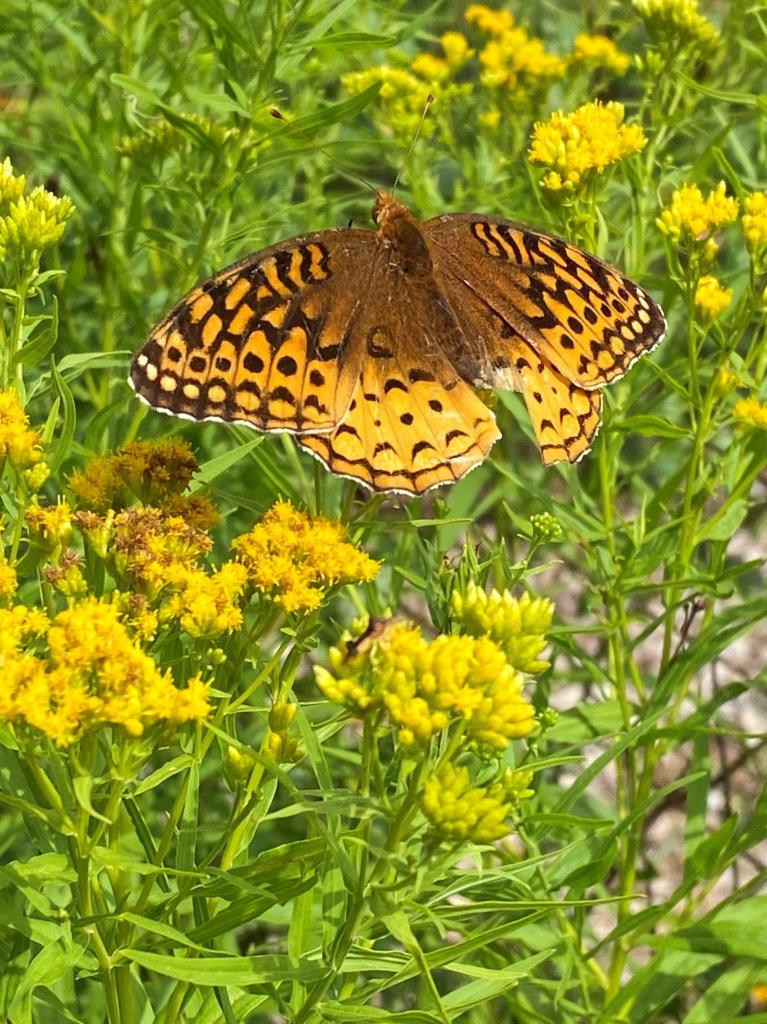
In late summer the goldenrod blooms. Some flat-topped, some droopy spikes, all filled with the color of the sun. And above, fritillaries flutter, land, unroll their long tongues and slurp sweet nectar with the abandon of a kid sucking up the last of the season's milkshakes.

This week look at the colors of the flowers - and the butterflies - in the landscape surrounding you.

Wednesday, July 27, 2022

Be a Scientist ~ International Monarch Monitoring Blitz, July 29 - August 7


Got an eye for monarchs? The Xerces Society among other partners invites you to join a weeklong International Monarch Monitoring Blitz beginning this Friday, July 29. 


Volunteers help track milkweed, monarch eggs, caterpillars, and/or adults as part of a trinational effort to better understand the monarch butterfly’s breeding productivity, range, and timing in North America. 

Learn how you can participate in this community science project. Give yourself some extra time to watch training videos and read up on the projects. Then head out and do science!


Wednesday, June 22, 2022

Thank a butterfly this week!


Butterflies are busy pollinating flowers all summer long. Some, like the swallowtails, have wingspans nearly as big as my hand. Others are tiny.
 
This week pay attention to the butterflies and moths you see on plants in your garden and neighborhood. 
  • Take their photos. 
  • Draw a picture of them. 
  • Write a fluttery bit of music for a lepidoptera!

Wednesday, July 21, 2021

Explore Outdoors ~ Butterflies

 I've allowed the milkweed to infiltrate the borders of my garden. It's taken a couple years of encouraging them to grow, taking out some of the non-native ornamentals to give them room, and even giving them a drink during the hot season. But this year they are blooming and attracting a variety of insects. Here are a couple of the butterflies that have been hanging around.
 
an Essex Skipper ~ look at that tongue!


Banded hairstreak
  
What butterflies are you seeing fluttering around your backyard and through the neighborhood?


Friday, September 18, 2020

Butterflies Belong Here!

As summer comes to an end, I’ve noticed tons of butterflies flitting around my garden and along the roadside: Monarchs, cabbage butterflies, sulfurs, blues, checkered, and cute, fuzzy skippers.

theme: butterflies, nature, environment

Butterflies Belong Here: A Story of One Idea, Thirty Kids, and a World of Butterflies 
by Deborah Hopkinson; illus. by Meilo So
68 pages; ages 5-8
Chronicle Books, 2020

Last spring, we took a class picture… I was a little like a caterpillar then: quiet and almost invisible.

When a girl moves to a new home, she learns all about monarch butterflies. But when she looks for them in the gardens of her neighborhood, they are hard to find. She hears about way stations – gardens filled with plants that monarchs like – and wonders if she could plant a way station at the school. All it takes is one person with an idea, says the librarian.

What I like about this book: I like that the main character, who remains unnamed, feels empowered enough to lead a class project in planting a monarch garden. It requires a plan, a presentation, and persistence. Planting flowers can sound so simple and small – but when it’s done to make the world a better place for butterflies, it’s huge. Back matter includes a guide to making a monarch way station, monarch facts, and resources for monarch activists of all ages.


Beyond the Books:

Do Monarch butterflies live in your neighborhood? Look for orange and black butterflies flitting around or nectaring at flowers. Then look closer to make sure it’s really a monarch. Here’s how to tell whether you’ve got a monarch.

Make a plan for planting a monarch way station. If you need some help, check out these articles here and here.

Draw or paint a picture of a monarch butterfly. Take a close look at its wings. Are they tattered? Maybe your monarch has been flying south for days.

Monarchs migrate in the fall. You can track the migration here.

Today we're joining Perfect Picture Book Friday, an event where bloggers share great picture books at Susanna Leonard Hill's website. Review copy provided by the publisher.

Friday, June 26, 2020

Bugs are in Danger!

One last bug book for the month!

Bugs in Danger
by Mark Kurlansky; illus. by Jia Liu
176 pages; ages 8 - 12
Bloomsbury Children's Books, 2019

“If we care about the health of our planet, we can’t choose which animals’ lives we want to save,” writes author Mark Kurlansky. “We have to care about them all.” And that includes insects, because they play an important role in the earth’s ecology. But there’s a problem: populations of fireflies, bees, butterflies, and ladybugs have been declining.

Kurlansky divides his book into four parts. In part one, he introduces the insect world, shows how bugs fit in and highlights their diversity. He talks about the biggest threats to insects: habitat loss, invasive species, pollution, and climate change. Then he talks about how insects evolved with plants – not just bees, but butterflies, beetles, and flies. And he shares the secret of why it’s so hard to sneak up on a fly.

Part two focuses on bees. There are a lot of kinds of bees, he writes. About 25,000 bee species have been catalogued and scientists have discovered another 40,000 that have yet to be named. He takes a close look at bee life, focusing on honey bees – which were introduced into North America in 1622 by Europeans.  At that time there were somewhere near 5,000 native bee species. Unfortunately, Kurlansky doesn’t address the impact of introduced honey bees on native bees. This is a shame, because native bees pollinate many of the crops we eat.

In the third part, Kurlansky introduces beetles as pollinators and beneficial (pest-controlling) insects. Native ladybug populations are in decline even as gardeners and farmers seek alternatives to insecticides. Even fireflies are vanishing.

Part four is all about the leps: butterflies and moths. He highlights monarchs, introduces endangered species, and discusses efforts to save butterflies. In the final chapters he mentions more insects that are endangered: dragonflies, grasshoppers, stoneflies. Individual insects may be small, but their impact in ecological systems is profound. A decline in insect population affects entire food webs.

The biggest problem, by far, is the impact of humans on natural ecosystems. There are, fortunately, things everyone can do to keep the world a safe place for bugs:
  1. stop squashing bugs when you see them!
  2. grow flowers to attract pollinators.
  3. if you have fireflies, turn off floodlights at night.
  4. Stop Using Pesticides!
  5. leave leaf litter and twigs on the ground beneath trees.

Thanks for dropping by today. On Monday we'll be hanging out at Marvelous Middle Grade Monday with other bloggers. It's over at Greg Pattridge's blog, Always in the Middle, so hop over to see what other people are reading. Review copy provided by the publisher.


Wednesday, June 24, 2020

Explore Outdoors ~ Looking for Lepidoptera

Not only is this month "Bug Month" for Archimedes  - it's #pollinatorweek!


Today we're Looking for Lepidoptera ~ butterflies and moths. 


 There are so many kinds of butterflies and moths, as you can see here. See how many different kinds you can find: 
  • small
  • large
  • fancy
  • plain
  •  night-flier
  • act like hummingbird
  • larva
  • feathery antennae
As always, if you have a camera, capture the butterflies, moths, and caterpillars you see in photos. Or draw some pictures and share them with your friends.

Monday, June 22, 2020

Welcome to Pollinator Week


This week is National Pollinator Week ~ a time to celebrate pollinators and spread the word about what you can do to protect them.

Pollination happens when pollen is moved within a flower or is carried from one flower to another of the same species. It leads to fertilization which leads to apples or tomatoes or...

Here's the stuff you need to know: pollination is necessary for healthy and productive native and agricultural ecosystems.

Did you know that:

  • About 75% of all flowering plant species need the help of  animals to move their heavy pollen grains from plant to plant for fertilization.
  • About 1,000 of all pollinators are vertebrates such as birds, bats, and small mammals.
  • Most pollinators (about 200,000 species) are beneficial insects such as flies, beetles, wasps, ants, butterflies, moths, and bees.

You can learn all about pollinators over at the Pollinator Partnership website where you can also download this cool poster.


And download fact sheets and more.

Wednesday, August 29, 2018

Wednesday Explorers Club ~ butterfly tongues!


Next time a butterfly drops by for a sip, edge closer and take a look at its long tongue. These guys don't need straws - they carry their own tubular sucking device which rolls up when they fly. Did you know that a butterfly's tongue is called a proboscis? You can learn lots more about butterfly tongues here - plus look at cool magnifications of the tongue.

Friday, April 27, 2018

Drawing Butterflies and School for Bugs

It's the last week of poetry month, so I'm celebrating with another book featuring poems about bugs. And now that butterflies are flitting about, it's a wonderful time to dive into a new book about a naturalist who used art to study butterflies.
themes: art, nature, insects

The Girl Who Drew Butterflies: How Maria Merian's art changed science
by Joyce Sidman
160 pages; ages 10-12
HMH for young readers, 2018

Maria Merian was born in the mid-1600s into a family of printers and engravers. As a girl, she watched her father and apprentices carve maps and illustrations onto copper plates which were inked and then pressed onto paper. She learned to mix pigments and make brushes. And she fell in love with insects - especially caterpillars.

In Miriam's time the silkworm was the only insect whose metamorphosis was well understood. But people still thought of it as "magical". So Maria began studying caterpillars, keeping them in boxes and jars, sketching and making notes as they developed. She also wanted to know more about the connection between caterpillars and their food plants. And she did all this at a time when women were not allowed to study science. Indeed, many were burned as witches for conducting similar kinds of studies.

What I like love about this book: It's about moths, butterflies, and caterpillars! What I love is that Maria's story is told in chapters that follow the life cycle of lepidoptera: egg, instars, molting, pupa, eclosing, expanding, flight... back to egg. Brilliant! I love how author Joyce Sidman shows the vital role women played as homemakers, business partners, yet they were never given the respect or power of the business role. She describes the realities of publishing books and painting in the 1600s, a time when wealthy men bought and read them. And she takes us with Maria on her adventures to South America to study insects.

Crawly School for Bugs: poems to drive you buggy
by David L. Harrison; illus. by Julie Bayless
32 page; ages 5-9
WordSong, 2018

Welcome hummers, tweeters, singers, diggers.... 

It doesn't matter whether you fly, leap, or crawl, this school welcomes you. There's just one Very Important Rule: don't eat your friends at school.

What I like about this book: Each poem focuses on a different bug, imagining how they would respond in various school situations. For example: aphids in math class. If mama has fifty babies and each babies have fifty babies, how many aphids do you get? There's camouflage class, stink bug class, and what's left of termite class. There are cricket lessons, report cards, and a serious moment when grasshoppers discover a recipe book...
   It's fine to eat
   the farmer's crop
   but eating US
   has got to stop!
Definitely more word play than entomology, but a fun way to invite bugs into your day.

Beyond the Books:

Go on a butterfly hunt - with a camera or your sketchbook. Try to catch photos of different kinds of butterflies and daytime moths. Sometimes nature centers host butterfly walks or moth nights for the public. Then use a guide book or online guide to find a picture of its larva. Using pencils, paint, or other media, create an illustration showing the caterpillar and butterfly, and Maria Merian might have done.

Check out cool photos of butterflies, moths, and caterpillars in field guides or online. Here's a link to photos of Lepidoptera and here's a caterpillar guide.

Write a buggy poem. During "poetry month", poet Amy Ludwig VanDerwater has been writing one poem each day using different poetry styles. Find one (or more) that you like and play around with words to share what you know about your favorite bug.

Cook up some grasshoppers? Here's how... or buy some online.

 Today we're joining the STEM Friday roundup - and we're also joining others over at Perfect Picture Book Friday, an event in which bloggers share great picture books at Susanna Leonard Hill's site. She keeps an ever-growing list of Perfect Picture Books. Review copies provided by publishers.

Friday, April 24, 2015

Butterfly Counting

Butterfly Counting
by Jerry Pallotta; illus by Shennen Bersani
32 pages; ages 3-7
Charlesbridge, 2015

theme: counting, butterflies

Opening: "Zero. This Emperor penguin has never seen a butterfly." That's because there are no butterflies on Antarctica.

From one to twenty-five we count butterflies, beginning with one red Zarinda and two Holly Blue butterflies. If you're a fan of Jerry Pallotta bug alphabet books, then you'll have a lot of fun with this one.

What I like love about this book: Each page features a different kind of butterfly PLUS a cool butterfly fact. So by the time you get to the end you know about butterfly mouths and antennae that smell and feet that taste and what the word for butterfly poop is. It's "frass" in case you are wondering.

Pallotta also includes a whole bunch of names for butterflies in foreign languages, like parpar (Hebrew) and kelebek (Turkish). I love it when Pallotta surprises us with different life stages of the butterfly: on one page we're counting eggs, on another we're counting caterpillars, and yet another we're counting chrysalises.

The illustrations are marvelous, giving us so much to see on each page - especially the page filled with caterpillars of all types. And there are even some practical jokes tossed in: a page of moths, a grasshopper, and that penguin.

Beyond the book activities: Grab some colored pencils and a sketchpad and go find some butterflies. Draw as many different kinds of butterflies as you can see - including caterpillars. Make sure you write down the date and where you find them.

Look for butterfly eggs ~  butterflies usually attach their eggs to the underside of leaves, so you'll need to look closely. You might need a handlens because butterfly eggs are tiny. Here are some photos to help you out.

Make Butterflies Foot Prints. You'll need some paint, white cardstock, paint brushes, maybe a plastic tablecloth for the floor, and bare feet. Yours. Here's how to do it.

Make a butterfly you can eat. Out of a pear and some other yummy things. It's a healthy snack, and no butterflies are harmed. Here's how.

Learn how to sign "butterfly" here.

Today's review is part of the STEM Friday roundup. Drop by STEM Friday blog for more science books and resources. We're also joining PPBF (perfect picture book Friday), an event in which bloggers share great picture books at Susanna Leonard Hill's site. She keeps an ever-growing list of Perfect Picture BooksReview copy from the publisher.


Friday, June 20, 2014

Very Hungry Caterpillars

gypsy moth caterpillar (creative commons)
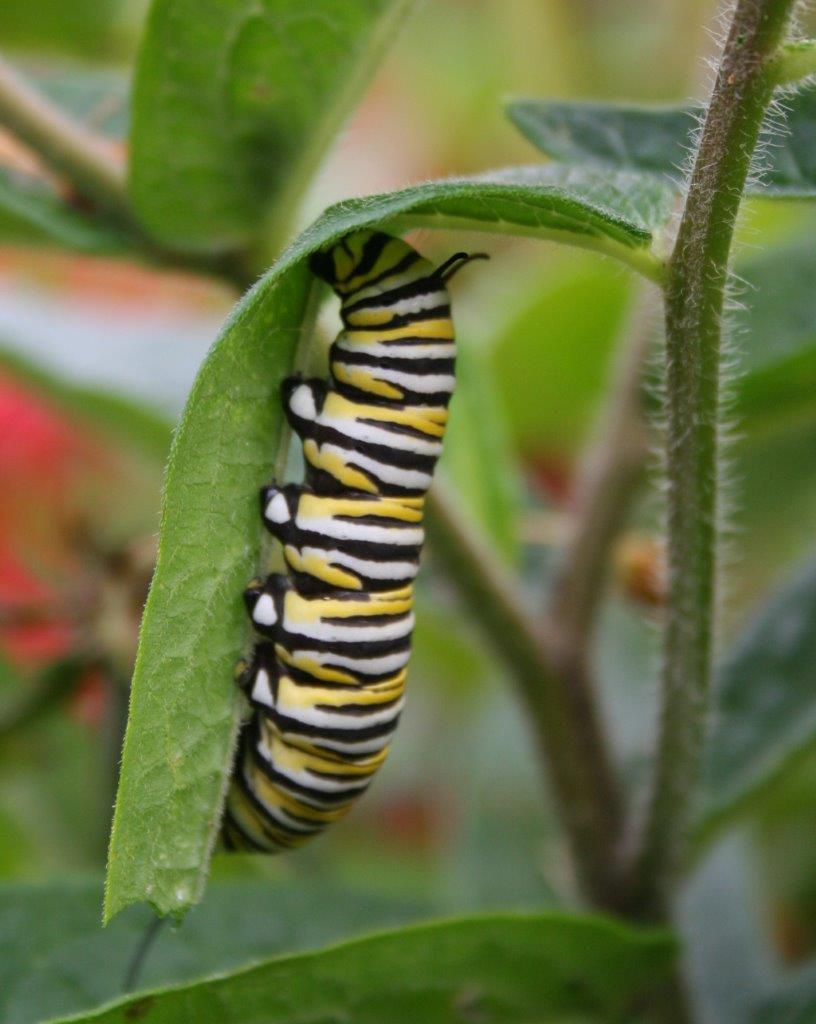
How much can a single caterpillar eat? A lot! Caterpillars are basically eating machines. They need to be if they hope to get through all those instars (larval stages), into a cocoon or chrysalis, and reach adulthood in time to mate or migrate.

One summer the gypsy moths were so numerous we could hear frass dropping on leaves like rain. Bits of leaves littered the ground - crumbs dropped by the herbivorous gluttons devouring our forest canopy. Reference books mentioned that gypsy moths could defoliate entire forests - but there was not one word on how much an individual caterpillar consumed.

So we decided to take prisoners and find out for ourselves. Or plan of action: give them leaves and see how much they eat over 24 hours. Sounded easy enough.... So we made up cozy homes cells for our captives, one caterpillar per gallon jar, and gave them leaves. Before feeding them, though, we traced each leaf onto a piece of centimeter graph paper. That made it easy to approximate leaf area by counting squares and parts thereof. The next day we took out what was left of the leaves and traced them. Now we could figure out how much they ate.

Summer is the perfect time to go caterpillar watching. And there are so many things to discover about caterpillars: what they like to eat, how they move, where they hang out in the hot part of the day...

Here are a couple of handy resources for budding caterpillarologists (people who study caterpillars):

Everyone needs a field guide, and Caterpillarology is full of hands-on ways to look at these guys.

Also check out  the Butterfly School.

Drop by STEM Friday to see what other science books and resources bloggers are sharing.   

Monday, June 16, 2014

National Pollinator Week June 16 - 22


This week, take a moment to think about things you can do to help pollinators. Pollinator conservation isn’t just something for fields and nature preserves – the bees and flies and butterflies and other pollinators are all around us. So protecting them is something we can all do. And we must, because pollinators are fundamental to the health of our environment, our farms, our gardens – not to mention chocolate.

 What can you do? Start by checking out the action steps on Xerces Society's Bring Back the Pollinators page.

Get involved with a Citizen Science pollinator project. Here are a few to get you started:

If you don't have any pollinators flitting around your house, plant a patch of flowers for them, or let a section of your yard go wild for the summer. Then go see how many are visiting your neighborhood.

Take a close look.... even closer, and get to know these guys. Take some photos - or draw a picture.

You can check out past "pollinator posts" here.