Showing posts with label seeds. Show all posts

Wednesday, June 10, 2026

Explore Outdoors ~ Seeds of Flight

 I find dandelion puffballs fascinating. The seed heads look like a constellation of stars. Then, as they are blown by the wind, it begins to look downright scraggly. What amazes me is how dainty the fiber parachutes look, and how sturdy the little seeds appear. 


If you've ever wondered how far a dandelion seed can travel, the best time to find out is when they go to seed. Pick a dandelion seed head (no one will yell at you for that!), mark a launch zone, and pull off a few seeds with their parachutes. Then hold them up as high as you can and let go. Follow one (or more) and put a marker down where they land. Then measure the distance. Sometimes they fly so far you have to count "giant steps"...
 
Check out the dandelion seeds in your yard... 


Wednesday, May 20, 2026

Explore Outdoors ~ portrait of a dandelion

 I just love the curly hair on top of this one! OK, in reality I know those are sticky stigmas sticking up - awaiting pollen carried by bees, flies, wasps - all three of which I saw in the garden on dandelions.


This week catch a close-up of a flower in your neighborhood.

Friday, March 20, 2026

Saving Seeds For the Future


Just in Case: Saving Seeds in the Svalbard Global Seed Vault
Megan Clendenan, illus by Brittany Cicchese 
32 pages; ages 5-8
Charlesbridge, 2025  

theme: nonfiction, conservation, seeds, food

Only eight hundred miles from the North Pole, away from wars and weapons, safe from earthquakes, fire, and even an asteroid, buried deep in the Earth on an island in Norway, the Svalbard Global Seed Vault holds priceless treasure.

That treasure is seeds … more than 580 million of them, frozen and held for the future “just in case.” Seeds are the foundation of our food supply, says Megan Clendenan, but they are also our history. People have been planting seeds for thousands of years! Seeds are also our future, providing genetic material for future crops in case of a disaster. In this book, Megan takes us into the designing and construction of this seed vault. 


What I like about this book: I like how Megan describes a walk down the aisles of the vault as “a walk through the world.” There are seeds from almost every country. I like the short sidebars that take a deeper dive into some aspect of the vault (visits from polar bears and Arctic foxes) or practical use of the seeds (restoring crops to fields after a war). And I like the back matter, in which Megan explains in more detail why having “backup copies” of seeds and a diversity of varieties is so critical to the future of agriculture. Or, as I call it, “food.”

Beyond the Books:

Save your own seeds. “The best way to save seeds for the future is to grow them yourself,” writes Megan. And saving some kinds of seeds is pretty easy – especially seeds from lettuce, beans, peas, and flowers. 

Does your library have a “seed library?” Many libraries do, and it’s fun to “check out” seeds, plant them, and “return” a packet of saved seeds.

Make seed envelopes for seeds you save. Check out my activity guide for The Pie that Molly Grew for how to fold an origami seed envelope. Remember to label them with the kind of plant and the date you collected the seeds. 

Swap seeds with your friends. If you buy a pack of seeds, you might only need a few. So divide those extra seeds into home-made seed envelopes and host a seed swap event this spring.

Megan is a member of the STEAM Team Books group. You can find out more about her at her at her website www.meganclendenan.com. You can find more about recently released STEM and STEAM at www.steamteambooks.com

Today we’re joining Perfect Picture Book Friday. It’s a wonderful gathering where bloggers share great picture books at Susanna Leonard Hill's website. Review copies provided by the publishers.

Wednesday, January 14, 2026

Explore Outdoors ~leaving seeds for the birds

 I love my garden - but let's face it: I am a lazy gardener. I let my flowers go to seed and leave them all winter. One reason is that some of the seeds will germinate and grow into beautiful blooms next summer.
 
So who nibbles the seeds of my purple coneflowers and bee balm? Blue jays do. So do cardinals, goldfinches, chickadees, nuthatches, titmice, juncos and sparrows. These are the same birds that show up at my feeder ... but on those days I'm slow to refill the feeder, I'm happy there are plenty of seeds out in the garden for them.

 Birds, and other wildlife, glean seeds from grasses and other plants as well. 
 
You can find out more at this article, "Native Plants Provide Winter Food Sources for Birds" here.
 
This week, look for birds visiting seedy heads of flowers and grasses in your neighborhood.
 
Who do you see? 


Wednesday, October 22, 2025

Explore Outdoors ~ Aging flowers

 Day by day we're growing older. But for some of us, the process of aging comes more quickly - especially if we're a plant! As the flowers in my garden age, they produce seeds and the petals fall away. But there's that in-between time when they look like they're having a "bad hair day." This is especially true with calendula.


Aren't those textured seeds cool? 
This week, check out what the flowers are doing in your neighborhood! 


Wednesday, June 4, 2025

Explore Outdoors ~ dandelion seeds

 Dandelion seed heads look so fluffy and soft! 


 But over time the wind blows those seed-parachutes away and you can see where the seeds were attached. They look sort of like golf balls to me - and when you look more closely at the seeds, you begin to notice the different textures. I used a clip-on macro lens for my smartphone, but you can see a great amount of detail with a hand lens.

 
This week get up-close and personal with dandelions.
What do you discover?


Friday, April 18, 2025

Stories Start with a Seed

 As a gardener, I’m always looking for new picture books about seeds, gardens, and the gardeners who plant them. 

themes: seeds, science, perseverance
     
Beansprout 
Art and words by Sarah Lynne Reul 
48 pages; ages 4-7
Charlesbridge, 2025 

This book opens with students gathered on a rug as their teacher says, “In this paper bag.. I have one hundred secrets. One hundred tiny surprises. Because this bag contains one hundred … Mystery Seeds!”

Each student chooses a seed to plant. They draw what they think will grow, and water their seed, and watch and wait for something to poke up out of the soil. Everyone’s seed sprouts except for Ben’s. The sprouts grow into seedlings, but not the nothing in Ben’s pot.  And then Ben discovers the bag filled with seeds that weren’t chosen and comes up with a new idea.

What I like about this book: As one who has planted seeds that haven’t germinated, I identify with Ben! I, too, have wondered when something – anything – will sprout. I like how Sarah Lynne Reul shows Ben’s excitement at planting time, his dismay – and then second-guessing his seed’s (and his) worth – and his teacher explaining that “sometimes things don’t grow and we don’t know the reason why.” I love that even as Ben considers never planting another thing, he discovers the bag of leftover seeds teetering on the edge of the teacher’s desk, way too close to the garbage can! I love the back matter: what is a seed? How does a seed know when to grow? What can you do if a seed doesn’t grow? 


And I really, really LOVE the art! Sarah’s illustrations are done in mixed media, with watercolor paints, tissue paper prints, and collage. The edges are cleanly cut, not torn, and give the feel of more than 2-D.  Make sure you spend time with the front AND back end papers!

Not only is March the perfect time to be thinking of seeds to plant, it’s Women’s History Month. And I have the perfect book, which was published last year - today I’m celebrating its One Year Anniversary.

Gifts from Georgia's Garden: How Georgia O'Keeffe Nourished Her Art 
by Lisa Robinson; illus. by Hadley Hooper 
‎40 pages; ages 4-8
Neal Porter Books, 2024  

Georgia painted flowers so lush and large they filled the canvas – petunias, poppies, lilies, and more…

But she was also a gardener who tended her crops using organic methods, planting marigolds to protect her plants from pests. And while she waited for her seeds to sprout, she painted. She raised her food, sewed her clothes, ground grain for bread – and all the while painted the skulls and bones and things she found in nature.

What I like about this book: Lisa Robinson shows that the act of tending her garden and feeding friends inspired Georgia O’Keefe’s art. I like that back matter shares more about Georgia O’Keefe and some of the basic concepts of sustainable gardening: conserving water, companion planting, attracting beneficial insects, and composting. There’s also a recipe to try.

Beyond the Books:

Plant some seeds. Think about things you like: beans, flowers, carrots … maybe a pumpkin? Before you plant your seed, take a good look at it and write down some of the things you notice. 

Watch your plants grow! Draw pictures of what you see as your plant grows. What do the leaves look like? How tall does it grow? When does it begin to flower? Do any insects hang out on your plant, eat the leaves, or gather pollen from the flower? NOTE: if you don’t plant any seeds, or if your seeds don’t grow, you can “adopt” a plant you find already growing – maybe in a neighborhood garden or park.

my attempt at a poppy!
Paint a flower ~ or make a collage of a flower in the style of  Georgia O’Keefe. She painted her flowers large, so viewers could really see the details. Look into the center of the flower and think: how can I show this using paint or paper? Or both? Then make art!

Today we’re joining Perfect Picture Book Friday. It’s a wonderful gathering where bloggers share great picture books at Susanna Leonard Hill's website. Review copies provided by the publishers.


Wednesday, November 13, 2024

Explore Outdoors ~ I thought this was a Desert Plant!

 Last fall I discovered some yucca plants growing in one of the yards down in the village. It surprised me because I think of yucca as a desert plant, not one found in northeast gardens! But they have a wide distribution across the US and even up into the southern Atlantic states.


 The cool thing about yucca plants is that their leaves have lots of fibers curling off - I wrote about them in a previous post.
 
 
Those fibers look fragile, but if you spin them together they can make a pretty sturdy string.


As fascinated as I am about yucca fibers (and I am, because I enjoy twining and spinning anything from milkweed to grasses), I found their seedpods even more interesting.

The seeds themselves are flat, round-ended triangles, and thinner than I expected. I planted a bunch this spring and managed to get half-a-dozen seedlings (about 50% germination). The seeds took a long time to germinate, and the seedlings are slow-growing. On the plus-side, they seem to tolerate benign neglect. 
Though I may have to bring them inside for winter ...

Friday, August 23, 2024

Small Seeds, Big Dreams

 
Saving Delicia: A Story about Small Seeds and Big Dreams 
by Laura Gehl; illus. by Patricia Metola 
40 pages; ages 3-7
Flyaway Books, 2024    

theme: seeds, trees, conservation

Every summer afternoon, Kari and Cookie sat in the shade of the beautiful Delicia tree listening to Old Otis tell tales from way back when.

Back then, the world was filled with delicia trees, but now only one remains. What happens if it disappears? Kari wants to make sure it won’t – that there will be delicia fruit for children in years to come. And she has an idea for how to do it. All she needs is the old freezer in Otis’s shed.

What I like about this book: Though it’s fictional, the story reflects some of the realities we see in our world. Disease and environmental changes have pushed many plants to the edge of extinction. People are trying to save those plants – especially crops – by collecting seeds and storing them in seed banks. Author, Laura Gehl goes into more details about seed banks in her author’s note at the back of the book. “Already,” she writes, “seed banks have helped restore crops around the world that were killed by natural disasters, wars, and pest infestations.” Seed banks play an important role in preserving our planet’s biodiversity!

I always love the opportunity to chat with Laura about her books, so I asked her a couple of questions. Okay, three.

Me: What inspired you to write about saving seeds (and creating a seed bank)?

Laura: When I first began learning about seed banks, I was fascinated. I was particularly amazed as I read about the Svalbard Global Seed Vault, which is located close to the North Pole. Picturing thousands of seeds stored safely for the future, in a plethora of shapes, colors and sizes, ignited my imagination. I knew I wanted to write about seed banks, but finding my way to the story took a long time. I tried a number of different approaches, trying to craft a story introducing seed banks to young readers that would be interesting, inviting, and inspiring. I hope I succeeded in the end! 

Me: Do you garden - and have you gotten any seeds through seed swaps or seed libraries? 

Laura: When my oldest two kids were little, we lived in an apartment building with a community garden, and we enjoyed growing tomatoes and other fruits and vegetables there. Then we had two more kids and life got too hectic for gardening to fit into our schedule. When COVID took over the world, my oldest son came home on the last day before schools closed with a tomato plant rescued from the environmental science class. That started a new spurt of gardening for our family, and we grew lots of tomatoes, lettuce, and herbs that summer. (My in-laws, who are avid gardeners, lived with us for a while during the lockdown, so we benefitted from their expertise.) But then life got hectic again, and gardening fell by the wayside. When I have my next spurt of gardening energy, I plan to get seeds from a seed library. There are several seed libraries in Maryland, and I am excited to give them a try. Eating heirloom tomatoes is one of my favorite summer activities…now I want to attempt growing some! 

Me: Do you think you'll try to save some seeds after having written about it?

Laura: Definitely! I want to try saving seeds when I get back to gardening, and I would love to host a neighborhood seed swap in the future.  

Beyond the Books:

What seeds would you save if you could? Beans? Apples? Tomatoes? Some of these seeds aren’t very hard to save. Tomatoes, for example – just squeeze (or scoop) seeds from a ripe tomato into a sieve and rinse them, and let them dry. Other seeds that aren’t too hard to save are pumpkin, melon, beans, and some flowers such as sunflowers, calendula, poppies, and lupine.

You can learn more about what a seed bank is here and about the Millennium Seed Bank at Kew Gardens here. Be sure to check out this video of how Native Seeds/SEARCH stores their seeds in their seed bank.

Laura is a member of #STEAMTeam2024. You can find out more about her at her website, https://lauragehl.com/

We’ll join Perfect Picture Book Friday once they resume. It’s a wonderful gathering where bloggers share great picture books at Susanna Leonard Hill's website. Review copy provided by Blue Slip Media.

Friday, March 22, 2024

Celebrating Seeds and a book anniversary

 I missed this book by a fellow Sleeping Bear Press author when it released last year, so I’m celebrating its One Year Anniversary! Full disclosure: I am a gardener and seed-saver… so yeah, I may be a bit biased.

Every Little Seed  
by Cynthia Schumerth; illus. by Elisa Paganelli 
32 pages; ages 5-8
Sleeping Bear Press, 2023

theme: gardening, rhyme, family

 Grandpa told Mom, and Mom told me: The secret of a plant lives in every little seed.

When spring finally arrives, it’s time to plant seeds. This story follows a girl, her grandpa, and her mom as they plant and tend their garden over a season, We are introduced to a variety of garden tools – a wonderful illustration shows all the different things you might use, from claw-cultivator to trowel! The story brings us full circle, by collecting seeds for planting the next year.

What I like about this book: There are so many things to notice, from the differences in seeds to the small creatures that call the garden home. Some of them help pollinate the flowers; some of them are nibblers, chewing on plants we don’t want them to eat! So I appreciate that non-chemical solutions are shown for dealing with unwanted hungry garden guests.

There’s back matter, too (which you know I love!) with information about what’s inside seeds, invasive plants and animals, and some seed-related activities. And the illustrations are lovely. Here's a sample from Elisa Paganelli's gallery


Since I am a gardener, I knew I just had to ask Cynthia Schumerth a question or three…

Me: Hi Cynthia. I save seeds from the beans and pumpkins in my garden, and from flowers growing in my garden and around my yard. I’ve been known to collect seeds from flowers along roadsides and even from other people’s gardens! With their permission, of course. Do you save seeds? And what do you like to save?

Cynthia: I do save seeds.  Most of the seeds I save are from my annual flowering plants. My favorite are my Cosmos flowers.  When they dry on the stem, their seeds form a star.  You just have to slide your fingers over them and they release like magic. I always save my zinnia and marigold seeds too.  I even planted a lemon seed I saved and it grew into a lemon tree. I live where it’s cold in the winter, so I have to keep the tree inside from October to May. If you pinch the leaves they smell like lemon, it’s pretty neat.  But I’ve never gotten any actual fruit. I’ve also collected milkweed seeds and spread them out in open fields and along the roadside. It’s my way of helping the monarchs who need milkweed to lay their eggs on.

Me: Yes – dried cosmos seedheads are like asterisks in the garden! Did your own gardening experiences inspire your book? 

Cynthia: I grew up in a gardening family.  I had country grandparents who grew mostly vegetables and berries and of course fields of wheat and corn. I spent many hours in the garden with my Grandma picking peas and strawberries and red currants. And my sister and I helped Grandpa collect the corn seeds from the dried field corn. In the city my grandparents had a vegetable garden, and they grew beautiful flowers.  I learned a lot about flowers from them.  In parts of their garden they didn’t collect seeds, they’d just flatten the dried up plants down and let them reseed for next year. My parents had a large vegetable garden and several large flower beds.  They were always working out in the garden and of course we all helped.  I think we ate more than we picked! I guess you could say my grandparents and my parents helped me write this story by teaching me all about gardening and love as I grew up. 
Me:  Do you have favorite seeds and flowers?

Cynthia: While cosmos is my favorite seed to collect, my favorite flower is the violet. My second favorite is the forget-me-not. In our first house I grew forget-me-knots along our fence line and for some reason the birds would come along and cut the stem just under the flower head and all the pretty blue flower heads would fall to the ground. I often wonder why. I think Hollyhock seeds are interesting. It’s just really fun to take a closer look at dried up flowers in the fall and see all the different ways you can find their seeds hiding on the plant. It’s also interesting to see all the different shapes that seeds come in even if you don’t collect them.

Thanks for dropping by to talk about seeds and gardening, Cynthia. And now for one of my favorite parts of writing reviews – doing things that go…

Beyond the Books:

Plant some seeds and watch them grow. Beans, sunflowers, and other flowers are fun to grow – and you can even grow them in pots on your balcony, porch, or roof if you don’t have a garden.

Watch flowers you plant – or that you find growing in your neighborhood – throughout the season. Can you tell when they are producing seeds? Collect seeds from different flowers to examine. Cosmos, calendula, bee balm, and yucca are interesting to look at. What do you notice about these seeds? Plant some to see how they grow.

How do seeds get from a parent plant to a new place to grow? Look for milkweed or dandelion seeds, burdock seeds, and seeds in berries. What do you notice about these seeds? How do you think they end up in a new place?

Today we’re joining Perfect Picture Book Friday. It’s a wonderful gathering where bloggers share great picture books at Susanna Leonard Hill's website. Review copy provided by the publisher.

Wednesday, January 31, 2024

Explore Outdoors ~ Seeds in the Garden

 I am one of those "lazy" gardeners who doesn't clean up at the end of the season. I leave the seedheads standing, hoping that birds will drop by and chow down on the seeds over winter. And sure enough, they have.


Not all seeds are gone... many of the milkweed pods are still filled with seeds and their fine, fibrous parachutes. Every time we get a strong wind, I expect these seeds to take flight. But no, even though the wind tugs at their fibers, they continue to cling to their cozy pod. Maybe next storm...


What seeds are you finding in gardens and along roadsides?

Wednesday, October 25, 2023

Explore Outdoors ~ Parachute Seeds

This is the season when trees drop walnuts and hickory nuts onto our road, and purple berry juice speckles our driveway. Tall roadside weeds with dandelion-like flowers are going to seed, sending dainty parachutes out to ride the least breeze.

Sometimes the parachute fibers hang on, reluctant to leave the safety of the seedhead. After all, where will they end up? They don't file flight plans and no one has given them a map. 

Look for plants producing parachute seeds in your neighborhood. 
  • What kinds of plants make these seeds?
  • Collect some parachute seeds from different kinds of plants and draw them. What do you notice?
  • How far do the seeds travel on a breath of air?
  • What do the fibers feel like?
  • What do the seeds and fibers look like under a magnifying lens?

Wednesday, October 4, 2023

Explore Outdoors ~ Watching the Season Change


The first signs of fall came in mid-September: a single leaf nestled amongst plantain and dandelion leaves. A week later, more leaves were checking out their new seasonal wardrobe, but still clinging tightly to their branches. 


Meanwhile, maple samaras formed drifts on my porch: sugar maple, striped maple, boxelder. Samaras are the papery winged seeds that helicopter through the air as they are let go from the trees. Turkeys and finches eat the seeds, and occasionally squirrels and chipmunks do. You can, too, if you want to put in a little effort. It's a bit like shelling peas, and you might want to roast the seeds.... here's an article sharing how to eat a maple seed.
 
 
What seasonal changes do you notice in your neighborhood?

Wednesday, July 19, 2023

Explore Outdoors ~ Spider Flowers

 Last year I planted some of these flowers. They are called "spider flowers" and cleome, and grew as tall as me (five feet tall, if you must know). 


I planted them for the hummingbirds and hummingbird moths, butterflies and bees - you can see where a leafcutter bee has snipped out a bit of petal. And I planted them for their color and their fragile beauty. You may recall a post from late September in which, while looking at the seed pods, I wondered whether they would re-seed.

Yes, they do - but only where I didn't want them. Did the seeds grow in the flower bed? No. Did the seeds grow where I planted lettuce this year? Of course! Plants growing where you don't want them is the definition of "weed". But instead of calling them "weeds," I referred to them as "volunteers." Rather than yank the seedlings out, I let them grow a couple of weeks and have been transplanting them around the garden: to the flower bed, in amongst the tomatoes. I can't wait to see the birds and bees and butterflies visit this year's blooms.

This week, look for "volunteers" growing in your garden and yard. Did they come from seedpods of last year's plants? Did they fly on the wind? Were they dropped by birds or carried by ants? How do plants take root in a new place?

Monday, November 28, 2022

The Beauty of Dead Flowers


In the past few days the temperature has taken a dive, snow has fallen, and my garden has gone from the gold and rusty reds of late fall to the brittle browns of not-yet-winter. 


There is a stark beauty to the end of the season. Without the distraction of brilliantly colored petals (and the attendant bees, flies, wasps, beetles, butterflies, caterpillars, spiders, and birds) I can see the underlying structure: the cones that held the individual flowers; the prickles and hairs on stems and leaves.


I can enjoy the beauty in the curves of the leaves…


Seedpods split, filled with seeds ready to fall at any moment …


The details of seeds waiting to lift off in the breeze…


What was once order is now all about letting go. 

Wednesday, September 28, 2022

Explore Outdoors ~ Seeds!

The dill in my garden is going to seed. That's what dill does if you leave it long enough... it produces flowers which, eventually, produce seeds. It's what tomatoes and cucumbers and pumpkins do, too - but their seeds are sheltered in a protective coating (fruit).
 
Dill aren't the only ones going to seed. This time of year a whole bunch of flowers are producing seeds: sunflowers, coneflowers, thistles, poppies, lupine, forgotten lettuces and broccoli...
 
even the spidery cleome flowers which, if I leave them alone, will drop their seeds so I'll have flowers again next year. We'll see...
 
  • What kind of seeds are you finding as you walk around your neighborhood and local parks?
  • Are the seeds smooth or textured?
  • Do they come in pods or on stalks?
  • Do they have wings or parachutes to fly?
  • Or do they have hooks to hitch a ride?


Wednesday, February 16, 2022

Explore Outdoors ~ An appreciation of small things


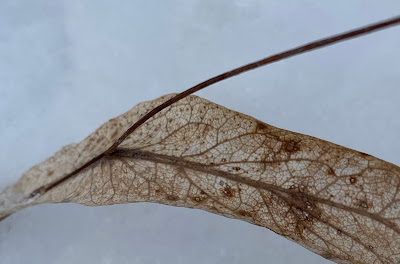
 At first glance this looks like a winter weed poking up through the snow. But it's actually the dried bracht from the fruit of an American basswood(Tilia americana). The stem bearing the tiny marble-like fruits grows out of the bracht, a specialized leaf.

This small leaf-bit helicoptered on the wind and eventually landed in my road - where I stopped to marvel at the tiny details of leaf veins.

This week, take time to observe the small things you come across. Dried aster heads and seedpods, leaf skeletons, a jay's feather, cat tracks across the snowy lawn, frozen grasses beneath the roof's drip-line, stubborn oak or maple or beech leaves still clinging to their twigs.

What tiny marvels do you find?

Wednesday, October 6, 2021

Explore Outdoors ~ Collect some seeds


This week look for flowers that are going to seed. Seeds come in all kinds of sizes and shapes and textures. Some are tiny and round. Some, like this calendula, look like they have spiky mohawks. Sunflower seeds look like teardrops, while milkweed seeds have silky parachutes. Lupine flowers produce pods that look like tiny, furry bean pods, while poppies make seedheads that look like salt-shakers.

Today, go on a seed-looking walk. If you want to, pull a pair of wool socks over your shoes to collect seeds that cling and hitchhike on animal fur. Collect a few seeds into paper bags. Then, when you get home, plant a few in a garden space where they can grow next spring. 

Friday, July 16, 2021

A Walk in the Woods

 theme: nature, STEAM, observation

This month I’m reviewing books that explore different habitats and biomes. Today we’re off to the woods.

Look What I Found in the Woods 
by Moira Butterfield; illus. by Jesus Verona 
32 pages; ages 2-5
Nosy Crow (Candlewick), 2021

Follow me. I know the way.
We’re walking through the woods today.
Look what I found!

This is such a fun book to read before you head of on a walk through the woods. And maybe to carry along with you. It’s part field guide and part treasure hunt. Some spreads invite you to look for specific things: a signpost, wild strawberries, beetles. 


 Other spreads explain how to identify things, such as what kind of snail shell you’ve found, and how to tell a tree by its leaves or needles.


What I like about this book: It’s fun! I love the die-cut cover, and the scavenger-hunt type lists of things to find. I love that this book is all about observations, and the questions support visual literacy. And that the author asks young naturalists to be thoughtful while exploring, and only collect things they find on the ground (if you’re going to use items in art or to study).

If I gave stars, this book would get some.

Beyond the book:

Collect seeds from trees and observe them. Take them apart and learn more about how those trees grow. Try planting some seeds. I once planted a maple seed, and it grew! And every spring I find baby oaks growing from acorns that squirrels have buried in my garden.

Make some rubbings of tree bark. Put paper against a tree and rub the side of the crayon against the paper. The design of the bark will show. Now compare your rubbing to the tree’s bark. Are there some details your crayon couldn’t pick up?

Draw a picture of something you see on your walk in the woods. It could be a mushroom or a bird or a flower… Then give it to a friend and tell them where to find it. 

Go on a woodland scavenger hike – but instead of collecting items, take photos or draw pictures. Here's a place to find a woods walk printable scavenger hunt.

We’ll join Perfect Picture Book Friday once they resume. It’s a wonderful gathering where bloggers share great picture books at Susanna Leonard Hill's website. Review copy provided by the publisher.

Wednesday, June 2, 2021

Explore Outdoors ~ Maple seeds have wings


Maple samaras are seeds with papery wings. When I was a kid, we used to collect maple samaras to play with. Some were big, and when you opened up one of the seeds, they were sticky - sticky enough to put them on our noses and pretend we were rhinoceroses. A better game was whirlybirds. The samara is perfectly designed to helicopter from a tree to a distant location. That paper wing helps it fly, so it can find a place to grow beyond the shade of its parent tree. They are built for seed dispersal.

When you find some maple or ash samaras, drop them from a height and measure how far they travel. Or toss them in the air and watch them twirl their way down.

If you're adventurous, try snacking on maple seeds. They're a bit bitter, but the folks over at Eat the Weeds suggest leaching them before roasting.