Showing posts with label environment. Show all posts

Friday, May 15, 2026

See Your World Anew

 Last week I shared The Nature of Play, a handbook for exploring the world around us in all seasons. This week I want to dive a bit deeper into the theme of exploring nature. 


Stickler Loves the World (A Stickler Story)
by Lane Smith 
40 pages; ages 4-8
Random House Studio, 2023

theme: mindfulness, wonder, appreciation

Many strange creatures lived in the part of the forest where shadow met tree. 
But the strangest of all was Stickler.

Stickler loves sticks more than anything in the world. Except maybe fluffy clouds, buzzy bees, and prickly plants! Our world, says Stickler, has some pretty weird stuff – this coming from a character with eight – or six, or five – eyes that never seem to stay in the same place.

“Oh, to see it all anew. Wouldn’t that be amazing?” Stickler muses. When an alien shows up, Stickler has that very opportunity. The two set out to see the world, Stickler narrating all the wonders as they walk. Puffballs (dandelion seed heads), rocks, the wind…  the changing colors of the sunset.


What I like  LOVE about this book: As Stickler “shows” things to the space alien, readers can see things Stickler either misses or simply ignores. That space helmet? Not a helmet at all. When Stickler alludes to all the wonders we pass by every day “without even noticing,” we can see the creature in the woods. 

I love the language. The wind is like a whisper. Maple samaras whirl, twirl, spin as they fall. I especially love it when Stickler discovers who is really under that space helmet, and how they have both had their eyes “opened” that day. I love the art!


Beyond the Books:

Share the world outside your house with someone who can’t see it. Maybe blindfold a friend and describe what you see, smell, feel. Or call a cousin and tell them about the nature right outside your door.

Paint or draw a picture of the nature growing around you. How does creating art influence the way you see your world?

Collect some bits of nature that are on the ground – acorns, fallen leaves, sticks, stones – and pay attention to how they feel, their colors, whether they have a smell.

Describe the wind, how the sunshine feels, what the earth smells like before (or after) rain. 

Today we’re joining Perfect Picture Book Friday. It’s a wonderful gathering where bloggers share great picture books at Susanna Leonard Hill's website. I borrowed this book from my local library, Candor Free Library.


Friday, March 6, 2026

Home, Sweet Home

Today I've got a couple books about animal homes to share. Our theme: animals, nature, environment. 

Who Nests Here? 
by Karen Jameson; illus. by Ramona Kaulitzki 
48 pages; ages 4-8
‎Beach Lane Books, 2026 

 Who nests here?
Whose baby bed? 
Whose family home? 
Whose winter shed?

Spread by spread readers are introduced to visual clues and invited to guess the animal that each home belongs to. Constructed from mud and sand, rock and snow, and nests high in trees, they shelter a diversity of insects and crabs, frogs and squirrels, fish and foxes. 


What I like about this book: I like the “nature detective” feel of this book. One spread shows three homes – as in the spread below: a nest of twigs, a swelling on a twig, a nest of leaves. It invites the reader to study and make a guess before turning the page. I like that the rhyming text, and the space on the page that provides room for imagining. And I like the back matter where kids can find out more about animals that nest in mud or water, rocks or snow.
This is such a cute book that I had to ask Karen One Question:

me: Where do you nest? 

Karen: I write lyrical picture books from my cozy treetop “nest” in Southern California. My nest is filled with treasured book friends - George and Martha, Chrysanthemum,  Blue on Blue, Pug and Pig, Over and Under the Snow, Home in the Woods and many more. Baskets, bookcases, bins and shelves overflow with stories waiting to be savored. A big, soft, double wide reading chair is where I oftentimes dream and draft my stories. Other times, it is a story nest for me and a grandchild or two. We settle into books and snuggles as time slips away. 

My window seat is the best spot for gazing at the happenings outside. Sometimes the garden calls to me. I wander downstairs and out to the backyard to drink in the scented air of lemon trees, roses, geraniums, bottle brush, pink crepe myrtle blossoms and buds galore. The bees are visiting too, as are glorious, shimmering hummingbirds. In warm weather, small lizards bask on the planters doing push ups and chasing one another. I gather a few blooms, fill a small vase, and bring this little bit of heaven up to my nest to dream some more.

Thank you, Karen. That sounds positively delightful! After digging around in my book basket, I found another book about animal homes. This one is written in poetry.

Home 
by Isabelle Simler; translated by Vineet Lal 
68 pages; ages 6-9
‎Eerdmans Books for Young Readers, 2024

Here’s my little house, 
hanging from the tip of a willow branch, 
just like a fruit.

From bird nests to an octopus den, woven webs to shell-covered homes, readers are taken around the world to see how animals build their homes. Each poem offers clues to animal lives, and back matter provides more information about each creature. The intricate illustrations invite one to linger on the page.

Beyond the Books:

Look for places where animals in your neighborhood make their homes. Where do you notice ants? What about wasps? Do you notice squirrel nests in trees or gopher holes in your yard?

Build a fairy house out of natural materials you find outside: branches from an old Christmas tree, dried leaves, twigs, stones…  

Imagine your life curled up in a leaf or under a stone. Write a poem or draw a picture about what that would be like.

Create a cozy den or nest for yourself either inside or outside. I’m partial to pillow and blanket forts!

Karen is a member of the STEAM Team Books group. You can find out more about her at her at her karenljameson.com. You can find more about recently released STEM and www.steamteambooks.com

Today we’re joining Perfect Picture Book Friday. It’s a wonderful gathering where bloggers share great picture books at Susanna Leonard Hill's website. Review copies provided by the publishers.


Friday, September 19, 2025

Cleanin' Up the River

 
Riverkeeper: Protecting an American River (Books for a Better Earth) 
By Nancy Castaldo
128 pages; ages 10-12
‎Holiday House, 2025

Rivers are important in our ecology and commercial existence. Not only are they a source of water, but they also play important roles in power generation and transportation. What’s cool about rivers is that each one has its own personality. So do books about them.

Riverkeeper is a story about cleaning up and monitoring the once polluted Hudson River. It’s a story about caring for the watershed. And it’s told through the work of environmental activists. I’ve got to confess that the whole time I read this book, Pete Seeger’s version of “Sailin’ Up, Sailin’ Down” was streaming through my head!

But the efforts to clean up the Hudson stretch way beyond the river and the Clearwater. Nancy Castaldo lays out the importance of rivers – they are the lifeblood of the ecosystem – and how citizens stepped up to clean the banks and raise awareness. And still do.

From the thousands of volunteers who pick up trash to the folks doing habitat restoration work, this book focuses on the people who brought the Hudson River back to health. It’s also about those who work to make sure the River has a voice in its future by asking basic questions: does a river have fundamental rights beyond their perceived economic value to people? Doe a river have the right to flourish and naturally evolve? Current environmental regulations don’t protect rivers from stopping harm, writes Nancy. They regulate the amount of harm that is “acceptable.”

In addition to introducing the Riverkeepers, Nancy includes extensive back matter. There’s an author’s note where Nancy talks about growing up beside the Hudson, a glossary, and a ton of resources. The lists of rivers and resources make this a handbook for Riverkeepers of all ages. 

Even before finishing the last chapter, I knew I had to ask Nancy a Couple of Questions!

Me: If a person could do only one thing to help a river, what do you think is the most important action they could take?

Nancy: All rivers are unique and have their own challenges, but they all have one thing in common  — they need our attention! Learn how to engage with your local river. Participate in riverside park events. Sign up for clean-up days. The more we learn about our local rivers and become active neighbors with them, the more we can help them. More actions can be found in the resource section of Riverkeeper

Me: You mention the movement to protect the rights of nature. If rivers had rights, how would that change our interactions with them?

Nancy: Rivers are essential to all life. Sadly, we have caused significant degradation to the world’s rivers. But if rivers had rights, they could advocate on their own behalf, through legal guardians.  Lawsuits can be filed against polluters. Judgements would be passed that would benefit them directly. It’s hard to imagine, but there are already rivers in the world with rights. They serve as great examples for other rivers. You can read more about the Declaration on the Rights of Rivers at www.rightsofrivers.org and sign the petition to endorse the Declaration.

Nancy is a member of #STEAMTeam2025. You can find out more about her at her website, nancycastaldo.com

Thanks for dropping by today. On Monday we'll be hanging out at Marvelous Middle Grade Monday with other  bloggers. It's over at Greg Pattridge’s blog, Always in the Middle, so hop over to see what other people are reading. Review copy provided by the publisher.


Friday, June 13, 2025

We All Share the Air

 
The Air We Share: A Pollution Problem and Finding Ways to Fix It (Books for a Better Earth) 
by Dee Romito; illus. by Mariona Cabassa 
40 pages; ages 6-9
‎Holiday House, 2025

theme: air, pollution, environment

What goes up here, ends up there. It’s all connected, in the air we share.

The air around us may look invisible, but it’s a mixture of gases and tiny particles. What sort of particles? Think about the things that go up into the air: smoke from wildfires, exhaust from cars and buses, volcanic ash, dust, and even pollen and fragrances from flowers and trees. In the pages of this book, Dee Romito talks about sources of air pollution and what people – and governments – have been, and are doing about them. The book ends with a list of things you can do to keep the air clean, and a reminder that “…everything is connected, and we all share the same air.”

What I like about this book: I like that there are examples of different things that can impact our air quality, from man-made smog to volcanic eruptions. And that Dee highlights how solutions were implemented: tree-planting to combat erosion and the dust storms, a clean air act to control vehicle emissions. I also like how she showed that air carries other, invisible things: sounds and smells and sometimes seeds. Back matter includes an author’s note, glossary, short bibliography, and index.

Beyond the Books:

Build a Pollution Catcher to find out what’s in the air you breathe. Smear a thin coat of petroleum jelly on a paper plate and attach it to a wall or fence using paper clips. Particles carried in the air will get trapped and you can see them the next day. Here’s a short video showing how.

Learn more about what causes air pollution from the NASA Climate Kids page.
https://climatekids.nasa.gov/air-pollution/

What’s your Air Quality? You can check it out at AirNow – and they also have a wildfire smoke tracker. A couple weeks ago some US cities were getting warnings about poor air quality due to particulates from the wildfires in Canada.

Today we’re joining Perfect Picture Book Friday. It’s a wonderful gathering where bloggers share great picture books at Susanna Leonard Hill's website. Review copy provided by the publisher.

Friday, October 25, 2024

Look Up - Stars Are Falling!

 The annual Orionids meteor shower has been happening this week, and is predicted to peak this weekend. Just how many meteors are we talking about? According to the Washington Post, meteorologists are expecting about 23 meteors to shoot across the sky every hour. I can't think of a better time to check out this book!

The Meteor Shower: Kaleidoscope Club  
by Marie Mazas; illus by JoĆ«lle Passeron 
128 pages; ages 7-10
‎Blue Dot Kids Press, 2024

This is book two in this fun, STEAM adventure series and Nour and August, best friends and tree-house engineers, are at it again. This time they are drawing up plans to build something cool for watching the meteor shower. But first, they need to convince the Mayor to turn off the lights so they can have a dark-sky night. There’s already a law on the books that requires public lighting – street lights, public buildings, monuments – to be off between 1 and 7 am in an effort to reduce energy consumption. But nobody is enforcing the law, and the Mayor isn’t interested in pushing the issue.

So Nour and August engage in a flyer campaign: Keep the Stars Bright! Turn off Your Lights! This is a bold initiative for August, who is afraid of the dark. 

Just as the community seems to rally around the Dark Night idea, a fair moves into town. People have been waiting for the carnival rides and the games for a whole year – but the carnival lights threaten Nour and August’s efforts for stargazing. And an unlikely friendship threatens the Kaleidoscope Club.


What I like about the book is that it focuses on problem-solving and includes lots of STEM stuff: 
  • designing and building a model space capsule using recycled materials (engineering, art);
  • migration and light pollution (biology, conservation science);
  • meteors and constellations (astronomy); and
  • kitchen chemistry
I also like the back matter, which discusses in more depth how light pollution disrupts animal ecosystems, wastes energy, and even affects human health. And there’s a list of “what you can do” about it.

Thanks for dropping by today – and remember to watch for the meteor shower this weekend!. On Monday we'll be hanging out at Marvelous Middle Grade Monday with other  bloggers. It's over at Greg Pattridge's blog, Always in the Middle, so hop over to see what other people are reading. Review copy provided by the publisher.


Friday, April 26, 2024

The Wolves of Yellowstone

 Aha! I’ve found a stash of wolf books in my basket. I’m sharing two of them today, both about wolves reintroduced into Yellowstone National Park. They are great stories to share during Earth Week.

theme: environment, wolves, animal behavior

The Unlikely Hero: The Story of Wolf 8 (A Young Readers' Edition) 
by Rick McIntyre and David A. Poulsen; illus. by John Potter
120 pages; ages 9-12
Greystone Kids, 2024

This is the first book in the Chronicles of the Yellowstone Wolves series and is based on Rick McIntyre’s research and sightings of Wolf 8 when he worked for the national park. Written as close to a wolf’s perspective as possible, this story tells how Wolf 8 struggled as a pup after his family was captured from the wild and introduced to their new home: Yellowstone. It is by turns an adventure tale and a tale of scientific discovery. And while no one can truly know what a wolf thinks, after 44 years of wolf-observation Rick might just come close enough.

Readers follow Wolf 8 as he grows, plays – and fights – with his brothers, and eventually moves away to a new family. We watch him as a father teaching his own pups to hunt, and defending his new pack against other wolves as well as buffalo and grizzlies. The book is filled with a wealth of sound scientific information on wolf behavior and sidebars through which Rick explains how he and other wildlife scientists come to understand the wolves.

If you like stories about underdogs, this one’s for you! 

The Wolves of Yellowstone: A Rewilding Stor
by Catherine Barr; illus. by Jenni Desmond
48 pages; ages 5-8 (and older)
‎Bloomsbury Children’s Books, 2022

Yellowstone National Park is home to nearly 2,000 different kinds of wildlife. Birds, fish, elk, bison. Lynx, mountain lions, bears, coyotes. And wolves – at least now there are wolves. Not too long ago it was a place without wolves. Hunters shot wolves if they chased cattle. The US government didn’t interfere with the wolf hunts, and in 1926 the last wolf was killed.

And then things got out of hand. Without wolves, the elk population grew. And grew. And grew. Their grazing changed the habitat, and other animals left. In 1995 Yellowstone made the decision to reintroduce wolves to the park. First, though, they had to trap the wolves. Then they penned them in enclosures so the wolves wouldn’t try to return to their Canadian homes. Finally, after 10 weeks or so, they released the wolves into the wildest parts of the national park.

With the return of the wolves, something started to happen. The elk population declined, and other animals increased their presence in the park. As the number of elk went down, grass had a chance to grow, and trees reappeared along riverbanks. Trees provided habitat for songbirds. Reintroducing wolves created a chain of positive impacts on the ecosystem.

Here’s what I like about this book: The endpapers. The front one, filled with elk tracks; the back one with wolf tracks and hummocks of grasses. I love the illustrations and the section on “how nature works” and there’s a lot of information about wolf life and behavior in this book. If I could change one thing it would be to make the text larger and, on the dark pages, give it more contrast to make it easier to read.

Beyond the Books:

Read: Learn all about the wolves at this Yellowstone National Park page

Watch: 60-Minutes story on the Yellowstone wolves and a PBS (short) video on wolves

Observe: Visit a zoo (or Yellowstone National Park) where you can watch wolves. The Yellowstone wolves are gray wolves, but some zoos have red wolves. Both are interesting to watch.

Draw a picture of a wolf. Compare it to a dog you know … what similarities do you notice? What differences?

Today we’re joining Perfect Picture Book Friday. It’s a wonderful gathering where bloggers share great picture books at Susanna Leonard Hill's website

On Monday we'll be hanging out at Marvelous Middle Grade Monday with other  bloggers. It's over at Greg Pattridge's blog, Always in the Middle, so hop over to see what other people are reading. Review copies provided by the publishers.


Friday, April 12, 2024

Wilma's Words to Save the Water

 
Of Words and Water: The Story of Wilma Dykeman--Writer, Historian, Environmentalist
by Shannon Hitchcock; illus. by Sophie Page
32 pages; ages 6-9
‎ Reycraft Books, 2024

theme: Rivers, environment, biography

Born in the Blue Ridge Mountains near the French Broad River, Wilma Dykeman was an only child. Her first words were – “Water coming down.”

Using lyrical language, Shannon Hitchcock tells the tale of an environmentalist who deserves to be better known. An only child, Wilma spent her days exploring ponds and meadows and the creek that ran nearby. She earned a scholarship to college, and after marrying she returned to the Blue Ridge Mountains and the river of her home. She traveled up and down the river, collecting stories about the people who lived there and noticed the pollution that killed the trout and threatened peoples’ livelihoods. Wilma wrote a book about the people living along the river, and a publisher accepted the book. On one condition: she remove what she wrote about water pollution. Wilma refused. She wanted to inspire people to clean up the water and believed that  factories and businesses could coexist with clean water.

When her book was published – about seven years before Rachel Carson’s Silent Spring – people paid attention. 
 
What I like about this book: I always love a good story about someone working to make this world a better place to live, whether you’re a fish or a person. Her motto was “Be good to the earth, fair to other people, and use words to fight injustice.” Good words to live by whether you live near a stream or in the middle of a city.

I also adore Sophie Page’s artwork. She uses clay, paper, fabric, and wire in her pictures which give them a three-dimensional quality. Blues and greens run through nearly all of the double-page spreads … almost like a river connecting them.

Shannon graciously answered Two Questions:

Me: Why Wilma? What drew you to her story?
 
Shannon: This book is part of the storytellers’ series I've been writing for Reycraft. In that series we're looking at all the different ways human beings have shared stories. We started with oral storytelling, moved on to sharing stories through music, then story quilts. After that I started searching for an Appalachian author, somebody who shared stories through the written word. Wilma was born in Asheville where I now live, and after seeing an exhibition about her in my local library I thought she would be a good subject. So I started my research.

Me: There is something special about canoeing or rafting down a river: the smell, the sounds, the way the air feels different than on shore. Have you traveled down the French Broad (or maybe another) river? 

Shannon: No, I haven't traveled down the French Broad. The closest I have come is traveling down the Yadkin River on an inner tube! 
 
Me: Tubing down a river sounds like a relaxing way to spend a hot summer day! Thanks for joining us here on the blog. And for folks who are interested, I had a longer conversation with Shannon a couple years ago about "writing from a sense of place." You can read that over at the GROG blog.

Beyond the Books:

Spend some time near a river – or even in a boat on a river. What do you see? Listen: what sounds do you hear? Does the air smell or feel different the closer you get to a river? Write or draw your observations.

If you have a stream or creek or river nearby, visit it at different times of the year. How does it change? Besides you, what other animals hang out at the river?

Create a mixed-media picture that shows something of the world around you. Some materials to use: different kinds of paper (store bags, giftwrap, origami, construction); fabric; natural materials; clay or play-dough; paint, pencil charcoal, or ink.

Today we’re joining Perfect Picture Book Friday. It’s a wonderful gathering where bloggers share great picture books at Susanna Leonard Hill's website

Friday, March 8, 2024

It's Raining, It's Pouring ...

 
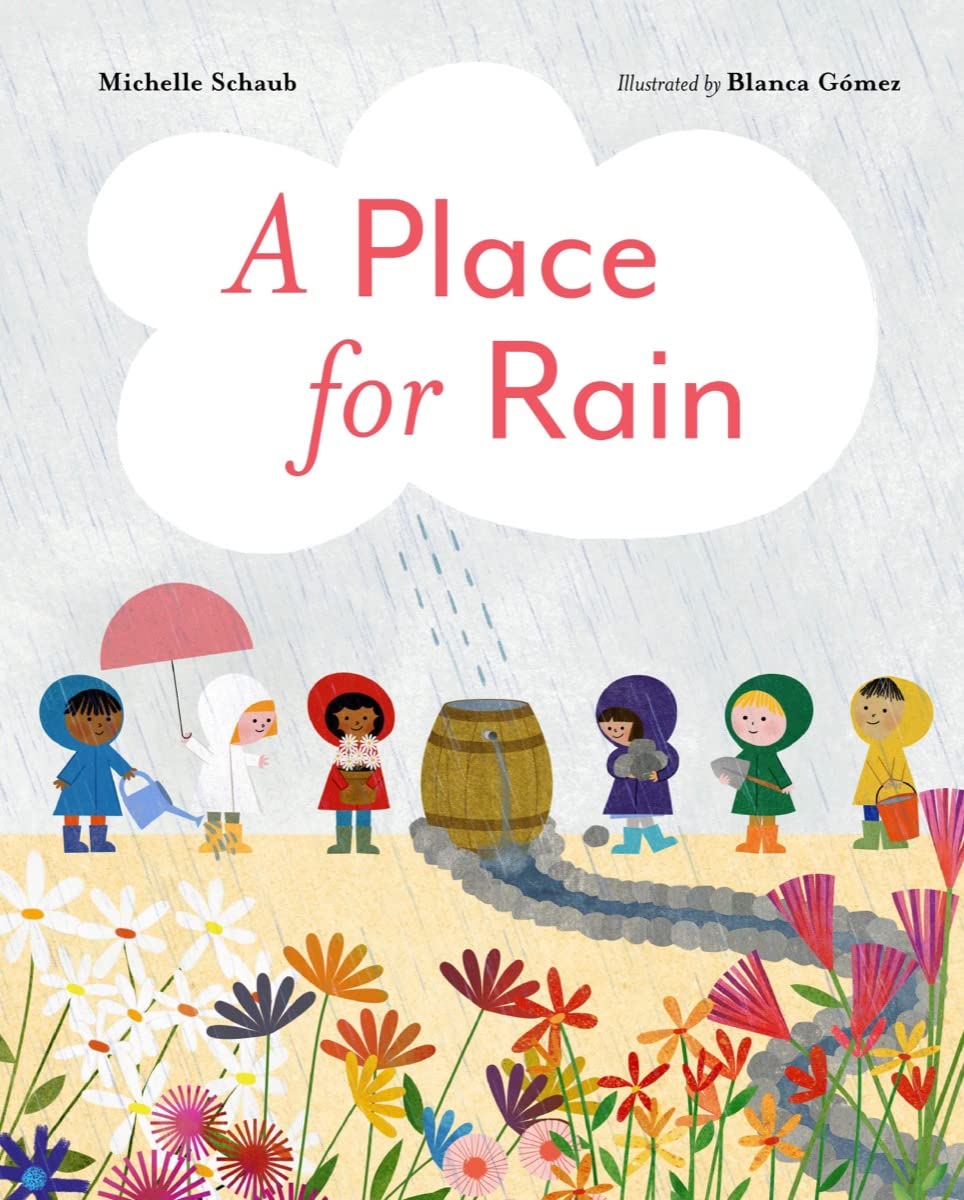
A Place for Rain   
by Michelle Schaub; illus. by Blanca Gómez 
32 pages; ages 4-8
‎Norton Young Readers, 2024

theme: rain, problem-solving, environment

Plink. 
     Plip. 
        Plop. 
We watch the raindrops drop.

Children, warm and dry inside, watch the rain pour down, puddle, pool, and fill the playground and parking lot, flood sidewalks, and run off into the road where it mixes with grit and grease. From there, the stream of water runs into storm drains and eventually into creeks, groundwater, or the ocean. 

The kids begin to wonder if they could collect some of that rain for a droughty day. And maybe they could keep it from pooling on the playground. Their solution: build a rain garden.

What I like about this book: I love the language, the onomatopoeia of plink, plop, pitter-patter, splutter-splatter. I like how Michelle Schaub highlights an important environmental issue by showing one solution –  a solution many cities are embracing as they focus on mitigating stormwater damage. And I really like that the Back Matter shows how people of all ages can Make Room for Rain with step-by-step instructions on how to build a rain garden.


A couple weeks ago, I caught up with Michelle (via the wonders of email) and asked her a couple questions.

Me: What inspired you to write a picture book about building a rain garden?

Michelle: I’ve always been passionate about using water and land sustainably, and I planted my first rain garden over ten years ago to help solve the problem of stormwater flooding my driveway. As I worked on the garden with my own children, I thought that the process would be fun to explain in a picture book.

Me: Why do you think this is an important story to share with children?

Michelle: In the face of doom and gloom news about climate change, A Place for Rain provides children with positive, attainable actions they can take to make a difference, whether it’s planting a full rain garden, or simply adding a rain barrel to a downspout to catch and reuse water.

Me: I agree, Michelle! Now for my favorite part of my Friday picture book reviews …

Beyond the Books:

Next time it rains, observe how and where the rain collects. What do you notice?

How much rain falls in a rainstorm? You can measure your rainfall if you have a big bucket and a ruler. Put the bucket in an open spot in your yard or driveway – not under roof eaves or trees. Then, after the storm measure how much rain fell.

Collect rainwater that comes off your roof by putting buckets under the eaves or a rain spout. How much collects? What could you use collected rainwater for? (water flowers, wash your bike, flush toilets…)

Michelle has written many books for kids, including Dream Big, Little Scientists. You can check out my review here on this blog

Michelle is a member of #STEAMTeam2024. You can find out more about her at her website.

Today we’re joining Perfect Picture Book Friday. It’s a wonderful gathering where bloggers share great picture books at Susanna Leonard Hill's website. Review copy provided by the publisher.

Friday, December 15, 2023

How to Be an Earth-keeper

 
Caring for Earth (Ultimate Spotlight)
by Sandra Laboucarie and Sarah Reynard; illus. by Julie Mercier
12 pages; ages 5 & up
Twirl, 2023

theme: ecology, nature, environmental protection

Nature is all around. We can learn a lot from nature by observing how plants and animals interact in the wild.

The environment we live in is full of complexity, and this book shows five detailed views of the nature around us. It’s an interactive book with flaps to open, wheels to turn, tabs to pull, and pop-ups. It is also written with a permaculture sensibility, showing how families could create a forest garden as well as develop a fruit and vegetable garden. One spread focuses on a house built with nature in mind, and the book ends with suggestions for how people can create an environment that is good for the earth in their neighborhood and at school

What I like about this book: As a gardener, there are things I definitely liked in this book. For example, showing how to create a raised bed using straw bales. There’s a family in our town who started their gardens this way a few years ago, and now they have deliciously rich soil in their beds. I also like the multi-layered pop-up showing a forest garden and the layers of fruit trees, fruiting shrubs, and flowers that could grow with taller trees in your backyard, local park, or schoolyard.


 And I like that, in the "natural house" they included a composting toilet. If nothing else, this book will provide openings for questions and may inspire you to grow a small fruit tree in your yard for the birds!

Beyond the Books:

Explore nature right out your front (or back) door. What kinds of trees and shrubs live around you? What do you notice about them right now? Draw a picture of your favorite tree and save it where you can look at it later. Try drawing a picture of your tree each month and see what changes you notice.

What kinds of wildlife shares your neighborhood? Maybe you see squirrels, birds, insects. Maybe you hear coyotes howling at night …. Get to know some of your wild neighbors.

Think of three things you can do to make the Earth a better place for all the plants and animals (including people). Write down one of the things – then go do it.

Today we’re joining Perfect Picture Book Friday. It’s a wonderful gathering where bloggers share great picture books at Susanna Leonard Hill's website. Review copies provided by the publishers.

Book reviews are taking a winter break ~ I'll be back with more book talk in mid-January.
Friday, December 8, 2023

Earth Out of Balance

 Themes: climate, environment, immigration

A couple years ago I put this book aside to review for an Earth Day post. Then things piled up… after this summer of disasters – wildfires, floods, storms – it’s abundantly clear that our Earth is out of balance.

Our World Out of Balance: Understanding Climate Change and What We Can Do
by Andrea Minoglio; illus. by Laura Fanelli
72 pages; ages 8-12
Blue Dot Kids Press, 2021

The book opens with an explanation of global warming and why we should stop it. So many reasons! Among them: rising sea levels that threaten communities, loss of forested land, urban heat islands, displaced wildlife, and extreme weather events. The book is broken down into 15 chapters, each one explaining a specific environmental problem related to climate chaos. Included in each chapter is a “how you can help” section and one on “how people are helping.” The book ends by focusing on actions readers can take and how they can be part of the solution. One person seems so small when you’re looking at a huge problem. But every small action you and your friends take adds up to make a difference. There’s also a list of community science projects kids and their families can get involved with.
 
Where Can We Go? A Tale of Four Bears
By Dai Yun; illus. by Igor Oleynikov
40 pages; ages 4-8
Greystone Books, 2023

One orange and purple evening, Papa comes home with only one small fish in his paws. He says, “We are moving tomorrow.”

Papa isn’t sure where they are going, but it will be a place where seals abound. Except … when they get to a place with food, it’s not seals they end up eating. It’s scraps from the garbage dump. And when they get tired, Papa looks for a place to sleep.

Have you ever wondered what would happen if the three bears had invaded Goldilocks’s house? Only, in this story it’s not curiosity that drives them to try out the beds, the chairs, the bowls of food. It’s climate change.

What I like about this book: I like how the illustrator brings us right into bear culture. Papa and Mama wear necklaces of bones and Mama has ear piercings. I like how the bears explore the house, find a bed that is “just right,” and later decide they need to find something more suitable for bears. It has a wee feeling of cynicism – perhaps something lost in translation? – but it is a good book for opening a discussion about climate change, refugees, immigration, or even sparking ideas for putting a new spin on an old story.

Beyond the Books:


Think of three things you can do to make the Earth a better place for trees and animals. If you live in a drought-stricken area, you might think of ways to cut wasteful use of water. If you’re concerned about melting sea ice (which makes it hard for polar bears to hunt) you might come up with ways you can get from one place to another without using a car.

Do you know of any animals in your area that are being forced out of their home by climate change or habitat loss? Where do they go?

If you had to leave Right Now, what would you grab to take with you? If you live in an area where you might have to evacuate due to flooding or fire, you may want to make a “grab-and-go” bag. Here’s some advice from a place that’s seen its share of wild fires.

Today we’re joining Perfect Picture Book Friday. It’s a wonderful gathering where bloggers share great picture books at Susanna Leonard Hill's website. Thanks for dropping by today. On Monday we'll be hanging out at Marvelous Middle Grade Monday with other  bloggers. It's over at Greg Pattridge's blog, Always in the Middle, so hop over to see what other people are reading. Review copies provided by the publishers.

Friday, March 3, 2023

Celebrate World Wildlife Day with Animal Books!

It’s World Wildlife Day – so the theme for today is animals. In particular, penguins – and also maps, because mapping things can give us insight into animal lives.

Themes: animals, nonfiction, maps

Emperor of the Ice: How a Changing Climate Affects a Penguin Colony 
by Nicola Davies; illus by Catherine Rayner 
32 pages; ages 5-9
Candlewick, 2023 

It’s April in Antarctica.

That’s not a “beginning of spring” April, but a “winter is coming” April. Most animals are heading north to warmer weather, but not the emperor penguins. Sea ice and bitter cold – that’s what they’ve been waiting for. This is breeding season, and they’ll depend on that sea ice to last as long as it takes to raise a chick. That sea ice is how mama penguin gets to the fisheries and, when she returns to care for the just hatched chick, it’s how papa penguin will get to the fishes.

What I like about this book: The combination of text and illustrations gives a wonderful glimpse into the life of emperor penguins. And it emphasizes why the ice is so important; without it, the penguins could perish. Back matter explains what climate change is and discusses how a warming world affects Antarctic sea ice. There’s also a section about what people can do to slow climate change.

Maps for Penguins and Other Traveling Animals
by Tracey Turner, illus. by Hui Skipp 
48 pages; ages 6 & up
Kane/Miller Book Publishers, 2023

Animals find their way without using maps, GPS, a compass, street signs, or any of the things we humans need if we don’t want to get lost.

Some of them travel thousands of miles, from one continent to another, over vast stretches of ocean. Others travel short distances, over to the next meadow to pick up a basket of pollen for the hive. And some mark their territories, warning others to keep out!

What I like about this book: I love maps, so I picked this book for the title. And I was not disappointed – there are ten maps detailing travels of penguins, butterflies, tigers, whales, honeybees, lemurs … and even sea turtles! These aren’t maps for those various creatures to use – but visual representations that help us understand more about their lives and the journeys they undergo on a daily or seasonal basis. Take the map for penguins: it shows a route to the rookery and route back to colony. Plus it’s annotated with short notes about what is going on at each stop. Another spread tells more about penguins lives. Or check out the ring-tailed lemur’s map: which details the territory of one group of lemurs living on the island of Madagascar. Landmarks include a sunbathing rock, the sleeping tree, and a place where territorial fights sometimes happen.

Beyond the Books:

Fold a penguin out of paper. All you need is a sheet of paper. Here’s a video showing how to do it. And here's directions for a slightly easier version.

Hold a Penguin Dance Party. Waddle like a penguin, create slippy-slidy moves, and have fun. Grab some ideas from this post.

What can you do to make the world a better place for penguins and other animals? List at least three things you can do starting today. You can get some ideas here.

Map your travels. Maybe you want to show your daily travels to/from school, or a seasonal journey over the river and through the woods to grandmother’s house. Make sure to put in some landmarks and some notes about what happens where.

Today we’re joining Perfect Picture Book Friday. It’s a wonderful gathering where bloggers share great picture books at Susanna Leonard Hill's website. Review copies provided by the publishers.

Friday, February 24, 2023

Problems with Plastic

I chose this book for it's title, because growing up I often heard someone exclaim "That's the last straw!" when they got frustrated. In this case, it's a call for action.

The Last Plastic Straw: A Plastic Problem and Finding Ways to Fix It (Books for a Better Earth)
by Dee Romito; illus. by Ziyue Chen 
40 pages; ages 6-9
‎Holiday House, 2023 

theme: environment, recycling, nonfiction 

Over five thousand years ago, the ancient Sumerians had a problem. They needed a way to avoid the icky substances in their beverages

Fortunately, these ancient folks were great problem-solvers and they came up with an idea: use a hollow reed to suck out the tasty liquid, leaving the sludgy stuff in the bottom of the cup. Even the Queen used a straw, though hers was a golden drinking tube encrusted with jewels.  

But there was another problem: some straw stems had residue that changed the flavor of the drink. Fortunately someone got the brilliant idea to wrap paper around a pencil to make a paper straw – and even patented the idea for how to do it! But there was another problem: could the top be bendy? And another problem…. And for each problem, people came up with a solution, and eventually plastic straws became ubiquitous.

Which led to an even bigger problem: too many plastic straws! Nearly 500 million straws are thrown out every day – in the US alone! And those plastic straws (and other things) don’t biodegrade. Instead, they break down into tiny bits called microplastics that stay around forever. They pollute oceans, endanger wildlife, and even show up in the food we eat! 

Fortunately, that’s a problem we can solve!

What I like about this book: I like the way Dee shows straws as a solution to a problem; even plastic straws solved a problem. I like how she focuses the end of the book on solutions. And of course, I like the back matter: an author’s note about more things that kids – and their families – can do, and a list of sources.

The Last Plastic Straw is part of the Books for a Better Earth series published by Holiday House. They  designed the series to inspire young people to become active, knowledgeable participants in caring for the planet they live on.

As a person who has tried to go straw-free, but still forgets to say “no straw” when ordering the occasional soda, I just had to ask Dee One Question:

Me: What was the last straw for you? And did you quit using plastic straws?

Dee: I’ve always tried to choose eco-friendly options, but wasn’t being as active as I wanted to be. Once I started researching and saw the photos of how much plastic pollution there is out there, we made the switch in our house away from plastic straws which has led to other earth-friendly choices. Sometimes we forget to say “no straws” or we’re on a road trip and the stainless steel are harder to keep clean, but we’ve started using agave straws (which are disposable and biodegradable) as our on-the-go option. And most of the time, you really don’t need a straw. It’s a habit and a convenience that I’m happy to give up for a cleaner earth and healthier sea creatures. As for writing this book, when I feel like the information I have can make a difference in the world, I want to write about it and share it!
Beyond the Books:

Find out more about alternatives to using plastic straws. Look for metal, bamboo, or even paper straws in stores or online. What other alternatives can you find?

Are there any companies manufacturing non-plastic straws near you? One company, Roc Paper Straws, makes paper straws Rochester, New York. The company is owned by a mother-daughter team who, when they started, had zero manufacturing experience and a giant dream. You can find out more about them at their website

Make your own paper straws. All you need is a pencil (or chop stick), some paper, glue, and wax. If you want your straws to be 100% biodegradable, use beeswax instead of paraffin to wax your straws. If you’re making straws for crafts, you don’t need to wax them. Here’s how to do it.
 
Dee Romito is a member of #STEAMTeam2023. You can find out more about her at her website, on Facebook, or on Instagram.

Today we’re joining Perfect Picture Book Friday. It’s a wonderful gathering where bloggers share great picture books at Susanna Leonard Hill's website. Review copy provided by the publisher.

Friday, February 17, 2023

Animals on the Move

Animals are heading out on journeys every day. Some are long: migrations from summer home to winter home. Some are shorter: looking for food or a mate or a good place to make a den for little ones. These books take a look at animals on the move – and what happens when you can’t travel along your normal route.

theme: animals, migration, nature

Border Crossings 
by Sneed B. Collard III; illustrated by Howard Gray 
32 pages; ages 6-9
‎Charlesbridge, 2023

On a moonless night, padded paws silently step across pebbled ground. They make their way past thorn tree, through brush, and around a muddy marsh.

A male ocelot is on the move, across the Chihuahuan Desert, seeking a mate. But then he comes upon an obstacle so tall and slippery he can’t get over it. The wall runs right through ocelot country, splintering rich habitat into two pieces. Ocelot isn’t the only animal that crosses the border to find a mate, hunt, or graze. 

What I like about this book: I like how the author presents the borderlands as an environment that has been part of animals’ lives for longer than humans have inhabited that bit of land. That for them, the border is not something that divides, but just … home. The illustrations capture the beauty of the desert, and (I hope) will inspire some readers to learn more about the southwestern desert. And the back matter is a tremendous resource, packed with information about the ecology of the border region, a glossary, and great recommendations for further reading.

Animal Journeys  
by Carron Brown; illus. by Carrie May
36 pages; ages 4-8
Kane/Miller Book Publishers, 2023

Many animals make incredible journeys every year, month, and even each day. This is called migration.

Readers go on journeys with geese, lobsters, sea turtles, and butterflies in environments ranging from high mountains to the seashore. But some things are hidden from view. To reveal the different animals on their travels, readers will need to shine a flashlight behind the page – or hold the page up to a light source, such as a window. Which works even on a cloudy day (I tested this).

What I like about this book: This is a fun way to introduce a diversity of animals from around the world. And the last spread invites kids to look for animals on their journeys. Plus there is back matter that explains a bit more about how animals stay safe on their travels.

Beyond the Books:

Learn more about ocelots and how walls and other infrastructure fragments their habitat. You can find out more about ocelots (and hear some ocelot sounds) at the San Diego Zoo website. Two places to learn more about the impacts of the border wall are the Defenders of Wildlife and the Center for Biological Diversity.

Explore the Chihuahuan Desert. Here are some resources to get you started: National Park Service; World Wildlife Fund; and this photo essay of plants and animals commonly seen on the desert.

Watch for migrating animals. As we move towards warmer spring weather, you might hear – and see – new birds flying overhead or stopping for a snack at local birdfeeders. Here’s a tool for following bird migration. Or you might discover butterflies returning to the gardens – check out this migration map for monarchs. 

Today we’re joining Perfect Picture Book Friday. It’s a wonderful gathering where bloggers share great picture books at Susanna Leonard Hill's website. Review copies provided by the publishers.

Friday, January 20, 2023

Books for Little Engineers

One of my favorite memories from homeschooling was all the engineering that went on around the house. One week it was building marble runs along a wall, another week it was designing a hand-powered elevator to hoist toys to the second floor. Inside winter activities are a great time to explore machines and building things.

theme: machines, engineering, reuse

Franny's Fix-It Shop 
by Edward Miller 
32 pages; ages 6-9
‎Holiday House, 2022

Franny Fixit can fix anything. Her robot friend, Robbie, knows a lot, too.

When a friend says he needs a new wagon, Franny suggests they fix it and give it a new coat of paint. She helps one friend fix a skateboard, another with a bike. As she repairs, she points out what’s broken and how it can be fixed. Along the way readers learn about wheels and axles, levers, inclined planes, and pulleys.

What I like about this book: I like how Franny presents repairing things as a way to help the environment. It’s a great way to reuse, recycle, or even repurpose things. I also like how she points out a problem, such as worn wheels, and then explains how they cause friction which slows down the skateboard. And when she talks about wheels and axles, illustrations show how axles are used in other applications. 

Working With Machines (Kid Engineer series)
By Sonya Newland; illus. by Diego Vaisberg
32 pages; ages 9+
Kane Miller Publishing, 2022

This book focuses on mechanical engineering. It introduces young readers to the concepts of work, force, and movement and the idea that they could be an engineer. Then it explains how simple machines work (levers, pulleys, axles, etc) and includes a hands-on activity to explore each type of machine. A great companion to Franny Fixit.

Beyond the Books:

Look for wheels and axles, wedges, screws, gears, levers, and other simple machines around your home. Around here I’ve got a wheelbarrow (lever and axle), skateboard (wheels and axles), and a pulley on the clothesline. What do you find?

Make a pulley out of an old thread spool. Then use it to pull a cup loaded with marbles up, up, up to the second floor. Here’s how.

Build a simple catapult to launch marshmallows into your cocoa cup. A catapult is a lever – one of the simple machines Franny talks about. Here’s directions.

Thanks for dropping by. Today we're joining Perfect Picture Book Friday, an event where bloggers share great picture books at Susanna Leonard Hill's website. Review copies provided by the publishers.

Friday, September 23, 2022

The Nature Around Us

Where do you go to find a bit of quiet and nature? Your backyard? A park? The forested lands of a nature preserve or state forest? No matter where it is, you’ll find a community – if not people, then of the birds, insects, plants, and other wild things that live there.

Themes: nature, environment, community

A Park Connects Us 
by Sarah Nelson; illus. by Ellen Rooney
‎32 pages; ages 3-7
Owlkids, 2022    

A park invites us—spreads out its arms and welcomes us in, whoever we are.

Between the open green spaces and the trails, a park connects and gathers and collects us to each other. Using tons of active verbs, Sarah Nelson shows how a park can be a nature sanctuary, dance party, picnic place, and even a place for political action. And the cool thing: a park belongs to everyone.

What I like about this book: I love the verbs! Parks are filled with people doing things – even if that “doing” involves sitting quietly and listening to the sounds of nature. And did I mention that it’s written in rhyme? No? Well, it is and it’s fun to read aloud. And there is Back Matter, where we learn how parks were created, with biographical information about park-maker Frederick Law Olmstead. Because, can you imagine living in a city where there are no parks? 

One Million Trees: A True Story 
by Kristen Balouch 
40 pages; ages 4-8
‎Margaret Ferguson Books (Holiday House), 2022

One day after school, Mom handed me and my sisters suitcases, and dad handed us packing lists.

This happened when Kristen Balouch was 10 years old. Her family took off from California to go plant trees at a logging site in British Columbia, Canada: Kristen, her math book (she loved math!), her sisters, her mom and dad, even their pet, Wonder Dog. Where they were greeted with a hearty “Bonjour, mes amis!” 

They spent forty days living in a tent, covered in mud and bug bites, and doing the hard work required to plant trees. Cedar, pine, hemlock, and fir - one million of them. An entire forest of baby trees loaded into boxes of 500 each. If a truck can carry 500 boxes, how many trucks did it take to haul 1,000,000 trees to their camp? (Remember, Kristen has her math book along…)

What I like about this book: I love the way Kristen tells the story using art, dialog, large main text, and smaller text placed strategically along a trail or along a timeline. I love the way she shows how to plant a tree. And I love the sneaky ways she weaves math and French into the story. And there is Back Matter: an author’s note about forest products and old growth forests and why trees are essential to keeping our planet healthy.

Beyond the Books:

Where are the parks in your town or city? Get (or make) a map and then draw in where the parks are. Visit as many as you can. Take pictures. Write a short bit about each park. Then create a town Park Guide for people new to your area.

Next time you visit your park, find out what people are doing. How many are eating? How many are laying on the grass? How many children are playing in the playground? How many birds are waiting for hand-outs? Make a bar graph to show how people - and pigeons, maybe - use the park.

Get to know the trees where you live. Make a tree notebook where you can draw (or paste a photo of) the different trees growing around you. Press a leaf. Watch for flowers. Make a bark rubbing. Learn their names. Introduce them to your friends.

Make up a Math Problem about the trees around you. Maybe it will be about how many seeds will grow from maple "helicopters" or how many acorns squirrels can harvest from an oak tree. Maybe it will have something to do with how tall the tree is or how much ribbon it takes to tie around the trunk.


Today we're joining Perfect Picture Book Friday, an event where bloggers share great picture books at Susanna Leonard Hill's website. Review copies provided by the publishers.

Friday, April 29, 2022

How to Save the Earth with Small Actions

 Earth Day may have been last week, but this book reminds us that Every Day is Earth Day – and that we can, by taking small actions, make the world a better place.


Be the Change 
by Rob Greenfield and Antonia Banyard 
96 pages; ages 8-12
Greystone Kids, 2022

When Rob Greenfield was 25, he wanted to change his life so that he could live in a more environmentally-friendly way. Step one: he wrote a list of positive changes he could make, and then set out to do one action every week. He started with small steps – eating fresh food instead of packaged foods, and even gave up his car. 

In this book he hopes to inspire kids to take positive actions that will help heal the world. In fact, it’s even subtitled Rob Greenfield’s Call to Kids: Making a Difference in a Messed-Up World. It’s divided into nine chapters that focus on stuff, waste, food waste, water, energy, money, transportation, and more. 
The first few pages of each chapter give information about that aspect in our daily lives. Take “stuff” for example. We’ve got so much, but how much is necessary? Really, how many toys does a kid need? And all that stuff is not making us happier.

Then Rob talks about his own adventures in becoming more ecologically activist: letting go of possessions, trading in his car for a bike, dumpster-diving to show how much good food is wasted.

What I like about this book: At the end of each chapter, Rob shares some ideas about things kids can do, and what others are doing to help make the environment healthier. Things like planting community fruit trees, and observing Buy Nothing Day. Instead of a luxury vacation, he proposes exploring local parks and museums – and, if you can, bike or take public transportation to get there. There are lists of small things kids can do to make a difference, such as help fix leaks and turning part of a grassy yard into a garden.

Thanks for dropping by today. On Monday we'll be hanging out at Marvelous Middle Grade Monday with other  bloggers. It's over at Greg Pattridge's blog, Always in the Middle, so hop over to see what other people are reading. Review copy provided by the publisher.


Friday, January 21, 2022

Good to the Last Drop

 
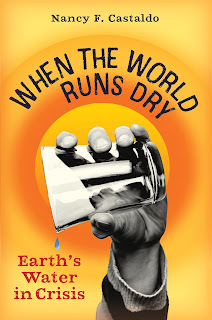
When the World Runs Dry: Earth's Water in Crisis 
by Nancy F. Castaldo 
208 pages; ages 10 & up
Algonquin Young Readers, 2022   


“When you get up in the morning and turn on the faucet of your bathroom sink, you can probably trust that water is going to flow out through the tap.” But what if it doesn’t, asks Nancy Castaldo? Or what if the water that does come out is toxic? 

You might be able to go a week or so without food… but water is essential to our life. In this book, Nancy examines our relationship to water and highlights specific issues contributing to a global water crisis. Each chapter presents case studies of ongoing problems in the US and beyond.

In one chapter, Nancy looks at infrastructure: the plumbing and pipes that transport drinking water into our homes. She revisits the Safe Drinking Water Act and shows how polluted drinking water is often and environmental justice issue. She dives into the problems facing residents in Flint, Michigan and Newark, NJ and gives some tips on what to do if lead is found in your school drinking water. 

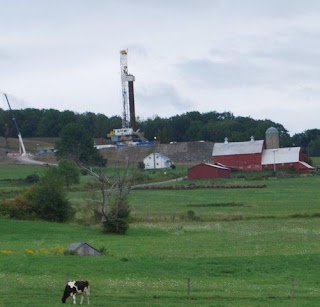
A number of chapters focus on sources of water pollution, from industrial to agricultural. One community facing groundwater pollution is a short couple-hour drive from my home. Residents in Hoosick Falls, NY are dealing with industrial chemicals that have percolated through the soil and into the aquifer they depend on for their water supply. Other communities, such as our neighbors in Bradford County, PA have lost their water due to pollution from fracking. Sure, you can get water delivered to your home and fill up large 250-gallon “buffaloes” – but the average person in our country uses 60-80 gallons of water per day. How long would that water last for your family? Not to mention problems of keeping water flowing on frigid winter days.

fracking in Bradford County, PA
Algae blooms and red tides contaminate water supplies. Accidental pollution happens when people flush medications down the toilet, and when chemicals from soaps and detergents reach rivers and streams. 

There are problems with too little water: lack of rainfall and snowfall resulting in lowering water levels in lakes and reservoirs. Maybe people can conserve by not watering their lawns, but how can farmers keep crops growing and livestock healthy when the pump runs dry? Likewise, problems arise when there is too much water. Flooding and rising seas pollute drinking water and destroy farmland.

Declining water resources drives conflict and migration. What happens when a corporation, partisan group, or local gangs take control of diminishing water supplies? Fortunately, Nancy ends with a couple chapters that look at potential solutions from recharging aquifers to desalinization, suggestions for action, and resources for folks who want to know more.

Nancy was kind enough to answer One Question:

me: What was the thing that made you know you had to write this book?

Nancy: This was a tough book to write, but so worth it. It enabled me to see people impacted by very difficult challenges rise to the occasion to help others. Every voice matters, from the Standing Rock teens who ran across the country to raise theirs to the Flint moms who supported the Hoosick moms miles away. In the end, I watched so many people show up to make a difference. That’s what it is all about – just showing up for our families, our communities, each other, whether in a classroom or a ballot box. The water crisis impacts everyone. 

My inspiration began in childhood when my mom became a water activist. I even wrote about clean water issues for my middle school newspaper. But the topic rose up again more recently when I was working on The Story Of Seeds and I saw how water issues impacted our worldwide food security over and over again. That led me to writing this book. It is a worldwide issue that needed attention. My readers are on the front lines. I hope that this book becomes a tool in the toolbox for teens working for a better future.

Thank you, Nancy. Speaking of working for a better future, here are some Simple Things You Can Do staring today:
  • take shorter showers
  • fix leaky faucets
  • only run full loads in dishwasher
  • collect rainwater for gardening
  • fill a reusable water bottle

Nancy is a member of #STEAMTeam2022. You can find out more about her at her website.


Thanks for dropping by today. On Monday we'll be hanging out at Marvelous Middle Grade Monday with other  bloggers. It's over at Greg Pattridge's blog, Always in the Middle, so hop over to see what other people are reading. Review copy provided by the publisher.