Showing posts with label frogs. Show all posts

Friday, March 21, 2025

Oh my Crikeys! It’s tadpole season

 
We Are the Wibbly! 
by Sarah Tagholm; illus. by Jane McGuinness
32 pages; ages 2-6
‎Bloomsbury Children’s Books, 2025 

theme:  frogs, life cycles, nature

We are eggs. We are egg friends. We are the Wibbly.

I love frogs. Maybe not quite as much as I love bugs (which frogs eat – but that’s another matter altogether), but still, when I saw the title of this book I absolutely knew I had to read it! 

Fortunately, you can read it too, as it released earlier this week. 

Subtitled “A Tadpole’s Tail” this book is all about the frog lifecycle. It’s basic biology at its most humorous, as we follow along with our narrator who begins their story as one of the many eggs in a mass of frog eggs. Or, as they call it, “the Wibbly.” And it’s a nice life until things start happening: they get tails. They learn to swim – faster when there’s a “hunger-muncher” following them. They sprout hind legs. Front legs. Finally – in the nick of time – they achieve frogdom! 

This book is also about more than biology. What happens when you’re the last one to develop a tail? What happens when you are perfectly fine being just who you are and a leg unexpectedly sprouts from your torso?


What I like love about this book: I love the way Sarah Tagholm invites readers into the world of the Wibbly. She helps us see tadpole development from the tadpole’s point of view – their egg friends have gone “longish.” Then they … “Oh My Crikeys!” … burst out of the wibbly and begin “water-flying.”

I love the language. I have now incorporated “oh my crikeys!” into my basket of useful phrases for when unexpected – er, Stuff – hits the fan. I love the back matter, where the “true” story of the frog life cycle is presented. And I love Jane McGuinness’s illustrations created with a combo of mixed media, inks, and photoshop. She gets the perfect expressions on the frog faces when they discover their hands! Sorta reminds me of my granddaughter when she discovered her hands…

If I rated books, I'd give this one 5 lily pads!

Beyond the Books:

Listen for frogs and toads calling. Go outside in the afternoon on warmer days to a pond or wetland area. Find a comfy place to sit or stand and just listen. How many kinds of frogs can you hear? These recordings can help you learn a few of the calls.

Create your own wibbly. Gather some friends and find a space big enough for some jumping. Then start by crouching down like eggs in a mass, all snug together. When you’re ready to be a tadpole, lay on your tummy and wiggle. To begin turning into a frog, your hind legs grow out – so “fast swim” (or run) a few paces. When your front legs grow, you’re a real frog. Hop, frog, hop!

Brainstorm your own words or phrases to say when something surprising and unexpected happens. Here are a few words to get you started: yikes! Gee whiz! Holy smokes! Please share yours in the comments.

Today we’re joining Perfect Picture Book Friday. It’s a wonderful gathering where bloggers share great picture books at Susanna Leonard Hill's website. Review copy provided by publisher. 

Friday, May 5, 2023

Spring Books Bring Trees & Frogs

Trees are leafing out and frogs are singing. Spring is bringing new life to woods and wetlands, and I’ve got two fun books to share for the season.

theme: life cycles, trees, frogs

A few years ago I reviewed a book by this author/illustrator team. I am so happy to share this new book about how the world’s tallest trees grow up.

Rise to the Sky 
by Rebecca E. Hirsch; illus. by Mia Posada 
32 pages; ages 5-10
Millbrook Press, 2023 

What is the tallest living thing? It’s not an elephant or a giraffe or even a blue whale.

You can probably guess, but you have to turn the page to confirm that it’s a … tree! But not just any tree. In this book, Rebecca Hirsch highlights eight of the world’s tallest trees – trees that grow at least as tall as the Statue of Liberty. That’s about 305 feet tall or, comparing to whales, about 3.8 Blue whale-lengths.

Rebecca shows how tall trees begin as small seedlings, sprouting from old stumps or growing from seeds. She tells how they breathe, move water and nutrients, and rise up, up, up to the sky.


What I like about this book: The text is fun to read and easy for young children to follow. And the back matter tells more about how trees grow, what phloem and xylem are, and how long tall trees can live. Rebecca also includes a couple hands-on activities at the back. But wait! There’s more! Mia Posada’s cut paper collages add amazing texture to the pages, making me want to stay and explore the illustrations. And, there is a great vertical book-turn to give these giant trees the space they need to Rise!


Where there’s trees, you might find tree frogs. At least in my neck of the woods. 

One Tiny Treefrog: A Countdown to Survival 
by Tony Piedra, illus. by Mackenzie Joy 
‎40 pages; ages 4 - 8 years
Candlewick, 2023

Ten tiny tadpoles grow in their eggs.

This is a fun count-down book that shows the lifecycle of a red-eyed treefrog.

What I like about this book: I love the expressive tadpole faces, the illustrations, the fun language – and the notes that identify the different animals by common name and scientific name. There’s also a fun book-turn so you can see the tadpoles plunge “plink, plink, plink” into their new, watery home. And I love that there is back matter! One section tells what it takes to become a red-eyed treefrog, with some additional “survival” notes about the different stages. A great book for any frog-loving kid.

Beyond the Books:

Create some cut paper art to show some of the nature you see outside. You might use watercolors to paint paper to use for your collages, like Mia Posada does, or snip your colorful bits from old calendars and magazines. 

Sit outside or open a window and listen to frogs. Don’t think you have any? I’ve heard tree frogs when standing in a restaurant parking lot in downtown Ithaca, NY.

How tall are the trees where you live? Here are some ways to figure out tree height.

Today we’re joining Perfect Picture Book Friday. It’s a wonderful gathering where bloggers share great picture books at Susanna Leonard Hill's website. Review copies provided by the publishers.


Friday, May 13, 2022

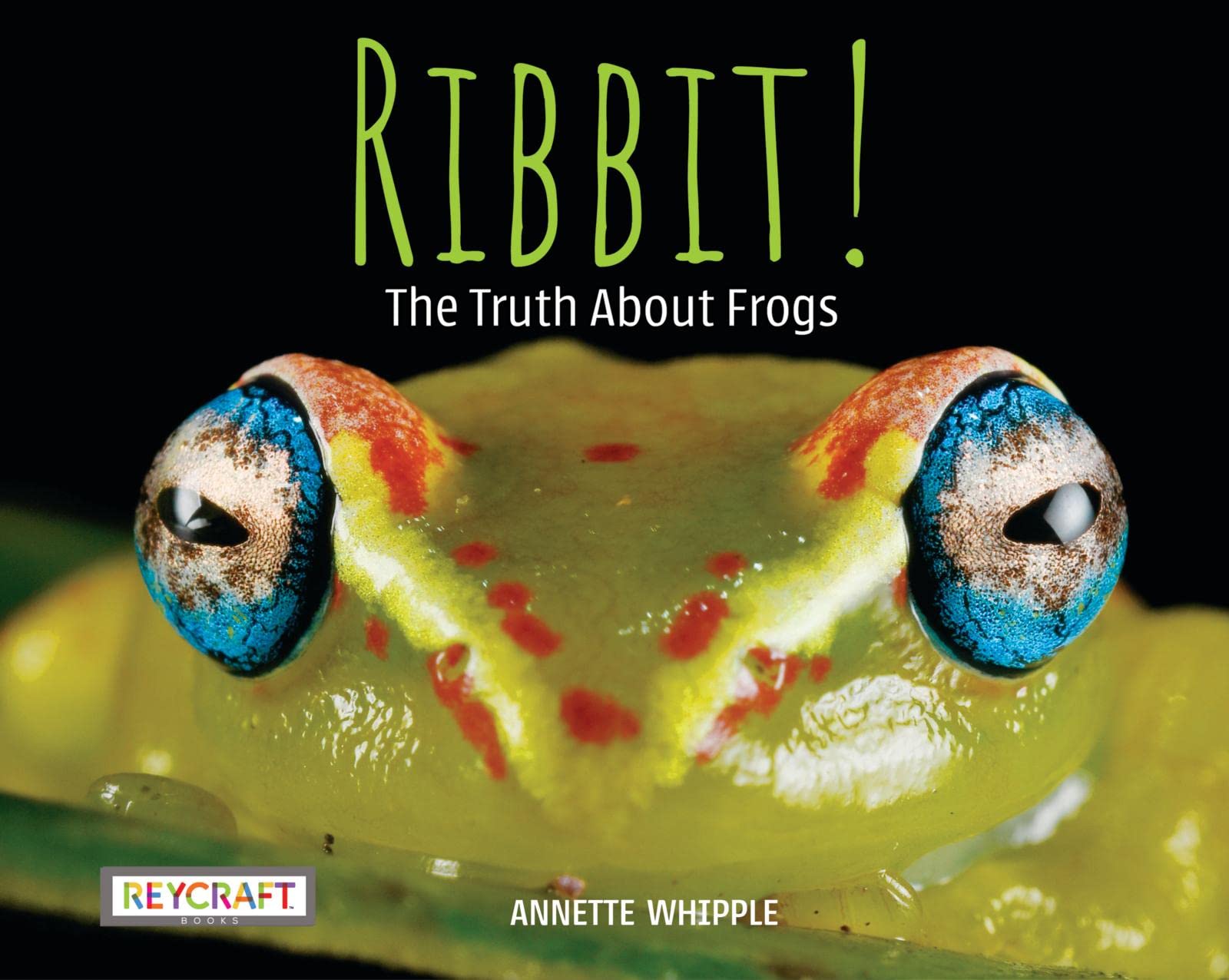
The Truth About Frogs ...


Ribbit! 
by Annette Whipple; illus. by Juanbjuan Oliver      
32 pages; ages 6-9
‎Reycraft Books, 2022

theme: frogs, adaptations, ecology

Who’s hopping?

This is a great introduction to frogs, filled with photos that will make you want to head to the nearest pond to go frog-watching. Annette Whipple answers pressing questions, including: what is the difference between frogs and toads? She shows how frogs eat, where they live, how they make sounds, and their development from eggs to adults.

What I like about this book: I love the close-up photos of legs and eyes and tongues. And the “Leaping Legs” sidebars with cartoony frogs that explain more, from a frog’s point of view. There is great back matter, too: frog-watching tips, a “fact or fiction” quiz, and instructions for a make-it-yourself toad abode.


I caught up with Annette between hops a couple weeks ago, long enough to ask her Two Questions

me: After doing all the research for this book, what’s your favorite froggy fact? 

Annette: When I think about the most amazing thing about frogs I’ve learned, I think about so many froggy facts. Like how scientists have recently been finding more than 100 new species each year. (At the time of this writing, 38 new species of amphibians have been located in 2022. Most of those are frogs!) Or how frogs don’t just eat insects. They eat anything that fits in their mouth – birds, mice, and even other frogs. Or how the Couch’s spadefoot can survive with just one big meal of termites for the entire year but the American toad has been recorded to eat more than 1,000 bugs in a single day. 

There’s such variety in frogs. I think the possible coolest thing I’ve learned is that some frogs like wood frogs and spring peepers are designed to freeze during the winter. The sugar in their blood acts like an antifreeze. When their icicle bodies thaw during the spring--the frog lives to tell about it! 

me: Can you share a memorable frog encounter?

Annette: It happened when I met a group of wood frogs. As I approached a pond with a herpetologist, I heard quacking. When I was about five feet from the pond, the quacking stopped. We stayed motionless at the pond’s edge for several minutes and spoke in hushed tones. Eventually the quacking began again – without a duck in sight. The pond was a preferred breeding ground for wood frogs. Their mating calls sound like duck quacks! I had learned of quacking wood frogs in my research, but it’s always so much better to experience it in person.

Beyond the Books:

Play a game of leap frog. One way is to use carpet squares as lily pads, and leap from lily pad to lily pad. Another way is to line up and have a leaping race. Then there’s the traditional leap frog game. Here’s the rules.

Go on a frog-watch. Ponds are great places to find frogs, but check grassy yards and parks. I’ve even found tree frogs hanging out in shrubs at the edge of a parking lot!

Hold a Jumping Contest with your friends. Can you leap like a frog? Some frogs can jump 20 times the length of their bodies – how far would you have to jump? Draw a chalk starting line, or lay a rope on the ground, and on “GO” have everyone do their best froggy leap. Then measure the distances. Here’s more frog-jumping activities.

Learn to speak like a frog. Listen to some frog recordings (here and here) and pick up some tips on how to sound like a frog.

Annette is a member of #STEAMTeam2022. You can find out more about her at her website.

Today we're joining Perfect Picture Book Friday, an event where bloggers share great picture books at Susanna Leonard Hill's website. Review e-galley provided by the author.


Friday, July 30, 2021

Finding the Meaning of "Frogness"


Frogness 
by Sarah Nelson; illus. by Eugenie Fernandes 
32 pages; ages 3-7
‎Owlkids, 2021   

theme: frogs, nature, imagination

Just before dusk, rain clouds bloom way out over the sea. We wait.

Sammy and Chocolate (a puppy) are waiting for the frogs to sing. They hike way out to the marsh because This is the night they will Catch A Frog! They hear them everywhere – but there are no frogs in the reeds and no frogs under a log.

What I like about this book: I love – really love – the page that has the frog songs spelled out in huge letters (while the kid and dog fall asleep). Because I also know how hard it is to find singing frogs near a pond, in the weeds, and along a creekbank. It takes two to triangulate, and even then you might never see those sneaky, noisy frogs. The illustrations are marvelous, and the idea of “frogness” just pulls me in. 


And there is … Back Matter! About frogs – how many, what their calls sound like, and how they sing, croak, rattle, peep, trill, trummm, and chuckle. Cool facts, too. Did you know that a species can have a slightly different call depending on where they live? Frogs have accents!

Beyond the Books:

Get to know your frog calls! Listen to the frogs in and around your neighborhood - they don't all live in ponds. Here are some recordings of frogs and toads that live in Indiana - but some may live in your area, too. 

Discover a Fun Frog Fact. Author Sarah Nelson has a whole list of fun frog facts, and lots of "frogness" over at her website.

Play leap frog - or, better yet, create your own frog game. It can be a card game or a board game - or an action game. One idea: cut some lily pads out of green paper and tape them onto the floor. Then hop from one lily pad to the next. Have fun making your own frogness!

We’ll join Perfect Picture Book Friday once they resume. It’s a wonderful gathering where bloggers share great picture books at Susanna Leonard Hill's website. Review copy provided by the publisher.

Friday, March 27, 2020

Amphibians!

It's spring. Tree frogs are peeping and quacking. Soon toads will be trilling. So it's a perfect time to dive into books about frogs! I know, I started the year off with a book about amphibian science, but one can never have too many books about frogs, toads, newts...  So here's one more to add to your "Got Frogs?" reading list:

Amphibian Acrobats
by Leslie Bulion; illus by Robert Meganck
60 pages; ages 8 - 12 years
Peachtree Publishing, 2020


We’re amphibians! We breathe through our skin,
We drink the same way: we soak water in….

Leslie Bulion, who has penned poetic descriptions of leaf litter critters and birds, now turns her attention to amphibians. She introduces us to Olympic jumpers – Fiji frogs that can twist in midair and land backwards to escape predators. She shares the secrets of deep-freeze artists, salamander wrestlers, and marathon walkers that migrate to their puddle home to lay eggs every spring.

What I like about this book: Let me count the ways! First, the science – on each page Bulion introduces one or two amphibians and their amazing behavior. She accompanies each poem with science notes about the frogs, salamanders, caecilians ... and Robert Meganck teams up with scientifically accurate illustrations.

Back matter includes poetry notes. For each poem, Bulion includes notes about the poetic structure and rhymes – a terrific resource for anyone who wants to experiment with different styles of writing.

But what I really like is that she invites readers to help protect amphibians. Her final poem focuses on the importance of protecting habitat. She adds notes in the back matter with specific steps kids – and their adults – can take to help conserve our amphibian neighbors.

Animal Skins
by Mary Holland
32 pages; ages 5-9
Arbordale, 2019

I’m including Animal Skins because Mary Holland provides more information about the skins of frogs, toads, and red efts (newts). She details how frogs shed their skin and why some amphibians have poisonous skins. And she clarifies that, though toads will make some animals sick if eaten, they will not give you warts. And that’s just the amphibians. Holland also shows how feathers and scales protect creatures and provides activities at the back.

Thanks for dropping by today. On Monday we'll be hanging out at Marvelous Middle Grade Monday with other  bloggers. It's over at Greg Pattridge's blog, Always in the Middle, so hop over to see what other people are reading. Review copies provided by the publishers.


Friday, January 24, 2020

Amazing Amphibians!


Amazing Amphibians: 30 Activities and Observations for Exploring Frogs, Toads, Salamanders, and More (Young Naturalists series)
By Lisa J. Amstutz
128 pages; ages 7 and up
Chicago Review Press, 2020

One summer my kids and I decided that we would learn how to “speak frog”. With a pond next door and a creek out back, we were surrounded by frog songs and calls all night long. To this day I can speak conversational peeper and toad, and a few “glunks” of green frog – but not enough to ask personal questions such as “how are the tadpoles?” and “where will you be staying this winter?”

So I was excited to see that Lisa Amstutz had a new book coming out this month on Amazing Amphibians. She packs a lot into ten chapters, starting with what amphibians are. Here’s a quick checklist:

  • is it cold-blooded?
  • does it have slimy skin?
  • does it undergo metamorphosis?

If you checked off all 3, you’ve got an amphibian.

What I like about this book:
Lisa takes readers on a field trip to ponds and fields in search of amphibians of all types. And there are a great many; more than 8,000 different kinds, and way too many for one book. So she introduces us to the major frog families, newts, and caecilians. Those last – they are the long, legless amphibians that look like giant earthworms.

I like that she shows amphibian anatomy, shares their housing and meal plans, and lets us in on their secrets of defense. What I really like, though: the hands-on activities. You can make an underwater pond viewer, mix up some frog slime, and craft an origami frog. Lisa also includes information on the problems frogs face, and how kids can help, from building a toad abode to making the yard amphibian-friendly.

One Question for Lisa
Archimedes: If you were an amphibian, what do you think you'd be?

Lisa: Wow, that's a question I've never pondered before. If I had a choice, I'd probably be a poison dart frog because they're beautiful and no one messes with them!

Lisa is a member of #STEAMTeam2020. You can find out more about her at her websiteReview copy provided by the publisher.

Friday, November 1, 2019

Snack, Snooze, Skedaddle

Snack, Snooze, Skedaddle: How Animals Get Ready for Winter 
by Laura Purdie Salas; illus by Claudine Gévry 
32 pages; ages 5-9
Millbrook Press, 2019

theme: winter, animals, nature

Soak up the sun, breathe in the breeze, munch crunchy apples that fall from the trees.

Because nights are growing longer, days are getting colder, and soon snow and ice will cover the landscape. Laura Purdie Salas shows how different animals prepare to survive the winter. Some, such as hummingbirds and butterflies, migrate. Others store up nuts and seeds, or build layers of fat, and spend the winter napping. And others grow extra layers of hair so they can keep warm.

What I like about this book: Rhyming text reveals survival secrets of twelve different animals, from worms to mammals. And yes, humans are counted amongst those mammals. A line of smaller text, offset by squiggly lines, offers additional details. Claudine Gévry’s illustrations are filled with details inviting readers to explore the spreads that show animals across the two seasons of autumn and winter.

And there is back matter! Salas provides more information about the three basic winter survival strategies: migrate, hibernate, or tolerate. Following pages tell more about the migrators, hibernators, and tolerators, and end with a glossary.

Beyond the Books:

The Cornell Lab of Ornithology is a great resource for learning more about bird migration. Here’s an article about bird migration basics, and here’s the migration forecast map.

Spend a month watching the wild animals and birds in your yard, neighborhood, parks, or nearby fields and woods. Jot down the dates when you see (or hear) geese flying overhead, or other birds. Make a list of animals you see staying. Are the birds that hang out in winter the same ones you saw in the summer?

If you live in a place of winter snow and ice, what do you do to adapt to the colder temperatures? Put on extra layers? Build snow forts and glide on ice? Do you eat different kinds of food than you do in the summer?

Today we're joining other book bloggers over at STEM Friday, where you can discover other cool STEM books. And we're joining Perfect Picture Book Friday, an event where bloggers share great picture books at Susanna Leonard Hill's website. Review copy provided by the publisher.

Friday, March 29, 2019

Books Celebrating Frogs and other Living Creatures

I love frogs almost as much as I love bugs. One time I even tried to learn the languages of our local frogs. Peeper, American toad, Wood frog - I got the basics. But never enough to ask them the important questions. Here are some recent books celebrating the lives of frogs - and other animals, too.

themes: frogs, animals, conservation

The Frog Book
by Steve Jenkins & Robin Page
40 pages; ages 6-9
HMH, 2019

Frogs are creatures of two worlds - they spend part of their lives in the water and part on land.

Spread by spread we meet frogs that hop, frogs that fly, frogs bigger than your hand, and frogs smaller than your thumb. Frogs have lived on earth for millions of year. "In fact," the authors write," a frog could have been stepped on by one of the first dinosaurs."

What I like love about this book: I love that each page features a particular froggy feature, from "what is a frog?" to frog adaptations. We discover what frogs eat (and it's not all flies), frog defenses, and life in the trees. Unfortunately, one-third of all frog species are in danger of extinction due to habitat loss, climate change, pollution, and disease. Back matter includes quick facts about every frog featured in the book: size, diet, home range.

I also love the torn- and cut-paper illustrations. The detail is amazing! And I really love the end papers! They are a luscious mix of bubbly pond shades of blues and greens. If you can't wait for spring to bring frogs, this book may tide you over the next few weeks.

Readers: Tadpole to Frog
by Shira Evans
48 pages; ages 2-5
National Geographic Children's Books, 2018

Subtitled "Animals Grow Up", this book is a co-reader. The text on one side of a spread, labeled You Read,  is meant for an older reader to read aloud. The text on the other side (I Read) is meant for the beginning reader. For example, chapter one introduces the concept that babies grow up. The text for older reader is in smaller font with three lines about animals and their babies. The "I read" text is larger, and contains a single idea:  Babies change as they grow.

This book has a table of contents, so you can find frogs or butterflies. The photos are amazing. And at the end of every chapter is an activity for a child and their reading partner to do together. It could be a matching game or a challenge to act out some life cycle phases.

Little Kids First Big Book of the Rain Forest
by Moira Rose Donohue
128 pages; ages 4-8
National Geographic Children's Books, 2018

Frogs abound in the rain forest. But they aren't the only animals living there. This book contains a diversity of animals - and plants - found in the rain forest. From the ground, to the understory, and on up to the canopy, this book introduces the birds, reptiles, and mammals that inhabit the rain forest. And yes, there are frogs! Blue poison dart frogs live on the forest floor, while red-eyed tree frogs live in the canopy.

Back matter includes "10 Cool Things to remember about Rain Forests" and a spread filled with tips for how parents can extend their child's experience beyond the book.

Beyond the Books:

Learn to speak frog. One way is to listen to the frogs that live in your neighborhood. But if snow and ice are covering the ground, head over here for some frog recordings.

Sing a silly frog song. Here's a link to Five Little Speckled Frogs (still one of my all time faves).

Visit a zoo that has a rain forest exhibit. How does the air feel on your skin? Look at the animals and plants on the forest floor. Can you see what's living in the understory and canopy? While there, visit the exhibit with frogs.

Can you jump like a frog? Try it. Some frogs jump 20 times the length of their body. How far would you have to jump to be that kind of frog?

Today we're joining other book bloggers over at STEM Friday, where you can discover other cool STEM books. And we're joining Perfect Picture Book Friday, an event where bloggers share great picture books at Susanna Leonard Hill's website . Review copies provided by the publishers.

Wednesday, July 4, 2018

Wednesday Explorers Club ~ Tadpoles in the Creek!


When the weather gets hot, head for the creek. Last week while doing some water testing, I noticed tons of tadpoles swarming the rocks along the edges of the creek. It's gonna be a long, hot summer for these guys, and herons patrol the creek banks. So not everyone will make it to frog-hood, but here's hoping a few make it to the hop-away stage.

If you have a stream nearby, head on down to see what's happening in and around the water.  And if you want to learn more about tadpoles, check out this link from Earth Rangers.

Friday, October 7, 2016

Two books for animal-lovers

My kids loved frogs. And otters, crickets, turtles ... they always wanted to know what made animals work. Here are two books that help answer some of those questions.

theme: nature, nonfiction

See-Thru Frogs (see-thru books series)
by Sherry Gerstein
28 pages; ages 7-10
Millbrook Press, 2016

The cool thing about frogs is that you find them anywhere: in ponds, in the wooded areas behind a park, even in sewers under city streets. In this book, kids learn how frogs breathe, swim, and leap.

What I like about this book: The "see-thru" pages help illustrate the insides of frogs - their skeleton and internal organs. You can see that we share similar bones with frogs (backbone, humerus) - but their food bones are much longer and they don't have neck bones so they can't turn their heads like we can.

There are tips on distinguishing frogs from toads, an overview of the class Amphibia, and a spread celebrating the diversity of frogs.

 Animal Legs
by Mary Holland
32 pages; ages 4-8
Arbordale Publishing, 2016

Legs and feet come in many shapes, numbers, and sizes. They are used to paddle, jump, cling, dig, warn others, catch food and even taste food! The way an animal's legs and feet look can tell you a lot about how it lives.

Mary Holland is a naturalist who observes animals closely and takes wonderful photographs. In this book she focuses her attention on legs.

What I like about this book: The close-up photos of caterpillar legs, spiny mantid legs, butterfly and frog feet, grouse and mole toes. Every page is packed with details about webbing, spines, flaps, toenails. Some animals walk on their toes; others walk on their toenails. We walk on our whole foot.

I also like the back-matter: extra information for curious minds and a matching game. 

Beyond the books

Listen for frogs. Last week we were still hearing wood frogs, but with cold weather the frogs may be going into hiding. You can check out frog calls here.

What can you do with your legs and feet? Jump? Walk? Run? Can you pick up a pencil with your toes? What else can you do?

What kinds of legs do you find in your neighborhood? Check out the birds and bugs, reptiles and amphibians and mammals you see. Look at tracks they leave in the mud and snow. What do you notice? Are they furry or scaly? Do they have 2 legs or more? How many toes? Do they hop or run?

Today's review is part of the STEM Friday roundup. Drop by STEM Friday blog for more science books and resources. We're also joining PPBF (perfect picture book Friday), an event in which bloggers share great picture books at Susanna Leonard Hill's site. She keeps an ever-growing list of Perfect Picture BooksReview copy from publisher.

Wednesday, June 22, 2016

Wild Outdoor Wednesday


Sit by a pond or wetland area and listen to frogs. Capture the colors, sounds, smell, feel of the area.

Remember to take your sketchbook or journal with unlined pages, something to draw and write with, and something to add color ~ watercolors, colored pencils, crayons, or markers

Friday, November 27, 2015

A Trio of Animal Books for Early Readers

National Geographic Children's Books has a series of leveled readers for curious kids at every reading level. Here's a sample of three of their books about animals published this year.

Hoot, Owl!
by Shelby Alinsky
24 pages, ages 2-5
 level: pre-reader

Instead of a table of contents, the first page has a "vocabulary tree". In this case the list begins: animals. Under that: Snowy Owls. Then on one side a list with words related to Where they Live (snow, cold) and on the other side, What they Do (swoop, glide).

Easy-to-read text is accompanied by high-quality photographs. The last page in the pre-readers is devoted to an activity: pretending you're the featured animal and moving the way it moves, matching words to photos, drawing...

 Red Pandas
by Laura Marsh
32 pages; ages 4-6
level: 1 (starting to read)

This book opens with a table of contents and a question: Guess Who? Red pandas share the name of "panda" but, we learn, they are not any relation to the black-and-white pandas people are used to seeing.

Readers learn about life in the trees, what red pandas eat, and how they talk with each other. Large font text explains most of the material, with text-boxes for cool facts, new words, and even some panda jokes. There's even a panda centerfold - with Five Fun Facts and adorable photos of red panda babies.

The neat thing about books at this level is the "What in the World?" puzzle at the back: close-up photos with hints like "these are used for climbing." There is a word bank (words kids should be familiar with) and a photo glossary at the back.

Ugly Animals
by Laura Marsh
32 pages; ages 5-8
level 2 (independent readers)

This book is the antithesis of an animal beauty contest. Laura Marsh has rounded up some of the weirdest-looking creatures from air, sea, and land - even space!

There's a table of contents at the front and a photo glossary at the back. In-between are portraits of jumping spiders, tapirs, vultures, and bats. The text is more complex, with longer sentences and new words. There are plenty of text-boxes with cool facts, jokes, and "critter terms", and a centerfold featuring Five Ugly Frogs. At the back there's a quiz.

Kids who want to go beyond the book can become "Super Readers". National Geographic has a special Super Reader site with posters, activities, and games.
Today is STEM Friday. Drop by the STEM Friday blog for book reviews and other STEM resources.

Friday, October 2, 2015

Amphibians and Reptiles

Amphibians and Reptiles: a Compare and Contrast book
by Katharine Hall
32 pages; ages 4-8
Arbordale Publishing

People who study amphibians and reptiles are called herpetologists. Ask them what they study, and they lump 'em all together into one large group they call "herps". Still, frogs and toads have some similarities, and they are very different from snakes and tortoises.

Katharine Hall compares how reptiles and amphibians are similar - they are cold-blooded and hatch from eggs. She also compares how reptiles differ from amphibians. Most amphibians have smooth skin, while reptiles tend to have dry, scaly skin. Photographs illustrate the important features: eggs, skin, fangs, webbed feet.

At the back are pages that go beyond the simple story. There kids can learn more about the five classes of  vertebrates (things with backbones) and play a mystery sorting game. There's a wonderful page that explains what being a herpetologist is all about, and what you'll need in your "herpetology research kit" and more.

If you really love frogs, then head over to Sally's Bookshelf today where there's a bunch of frog-related activities.


Today's review is part of the STEM Friday roundup. Drop by STEM Friday blog for more science books and resources. Review copy from the publisher.

Friday, February 20, 2015

The Frogs of Winter

Some critters, when it turns cold, burrow beneath the soil to stay warm. But frogs don't have claws, so they make do with scuffling under a pile of leaves. Leaf piles do help insulate you from the cold, but they don't keep these frogs from freezing.

That's OK, though, because some of these frogs -wood frog, Cope's gray tree frog, eastern gray tree frog, spring peepers, and western chorus frog - can survive freezing. When things warm up, they thaw out and hop away.

Frogcicles. Cool. But a bit more complicated than just turning into a block of ice. There's a process involved to protect the frog. Once ice starts to form in the skin, the wood frog's liver starts converting stored sugars into glucose. That glucose is carried through the bloodstream to tissues where it helps keep cells from completely dehydrating and shrinking.

Over winter, as much as 70 percent of the water in a frog's body can be frozen. One ecologist says that if you opened up a frozen frog its organs would look like "beef jerky" and the frozen water around the organs would resemble a "snow cone".

What starts this freezing process? According to the scientists in this video, all it takes is exposure to ice crystals. They stay in their frogcicle state until the snow melts - which, for frogs in the northeast, could be a long time coming.

Today is STEM Friday - head over to the STEM Friday blog to see what other bloggers are talking about.  

Friday, August 29, 2014

Why did the Frog cross the road?

wood frog ( NYS Dept. Environmental Conservation)
When I drive up my road these nights I see frogs and toads leaping and hopping across the road. I suspect they're leaving the ponds and heading into the woods for fall. The toads (American toads) will burrow into the soil below the frost line, but gray tree frogs and other frogs that aren't so good at digging will just scootch beneath layers of leaves and pine needles.

A layer of leaves sounds cozy - but it's not nearly warm enough to keep the frogs from freezing. So it's a good thing these frogs have "antifreeze" in their system.

Meanwhile, during these last nights of summer, the woods around my house is noisy. Every evening there is a symphony of cricket and frog song that echoes through the trees.

What sort of night sounds do you have around your home? Open the windows and listen. See if you can tell who's singing/chirping/wailing/trilling. If there are too many human sounds, take a nighttime field trip to a park where you can hear the insects and last-of-summer amphibians. You can listen to the sounds of frogs here and here.

Friday, April 4, 2014

A Vernal Pool is Not Just a Puddle!


The Secret Pool
by Kimberly Ridley; illus by Rebekah Raye
32 pages; ages 7-10
Tillbury House, 2013

"A shimmer. A twinkling. Do you have any inkling of what I am?"

Themes: animal, nature, nonfiction

You might walk right by a vernal pool and not notice it. Or you might think it's just a puddle in the woods. But vernal pools are more than puddles...

Opening: "I'm a watery jewel called a vernal pool. I sparkle, but that's not the only reason I'm precious. Many creatures of the forest depend on me."

In this book you meet the frogs and salamanders and birds and fairy shrimp that depend on a temporary pool. You see the life above and the life below the waterline. Along the way you learn what "vernal pools" are, the life cycle of frogs and salamanders, and how to go "pool hopping".

What I like about this book: I love the artwork! Rebekah Raye's illustrations make you just want to plunge right into a pool yourself. I like the way author Kimberly Ridley tells the story from the point of view of the pool itself. The text is easy to read, with rhyming words tucked in here and there, and alliterations sprinkled throughout. About fairy shrimp, for example: "Slim and frilly, they swim willy-nilly.... tickling me with their feathery feet."

There's a sidebar on each spread, so readers can learn how to tell the difference between frog and salamander eggs, what tadpoles look like, and the predators who use the vernal pool as a snack bar. And there's a helpful glossary at the back.

Beyond the Book: Spring peepers are usually the first frogs we hear around our area. It's a bit chilly for frogs at the top of the hill where I live, but my friends in the flatlands say they can already hear frogsongs at night. You can listen to the sounds of frogs from the Sandhills of Nebraska here.

Sing a Frog Song. One of my favorite counting songs is "Five Little Speckled Frogs". Sing along, or make up your own song about life in the vernal pool.

Go on a Listening Walk. Walk into the woods or find a place to listen outside for about 10 minutes. Write down all the spring sounds you hear. Which ones are made by animals? Can you tell what animals are making those noises? Are there any noises that aren't made by animals?

Play Vernal Pool Bingo. I borrowed this idea from UC Davis. Create bingo sheets that feature different plants and animals that live in vernal pools. This would be fun to play in the car while driving to a natural area - or while sitting near a pool.

Make a Vernal Pool in a Bin. Line the bottom of your bin with leaves - or paper leaves that you cut out of colored paper. Then pour in some hydrated water beads (a mix of blues and greens with clear beads would be neat). When you're out and about, look for some rubber or plastic frogs and salamanders that you can put in your pool. Or draw the animals you see in the book, and cut them out to put in and around your pool.


Drop by STEM Friday to see what other science books and resources bloggers are sharing.   Today's review is part of PPBF (perfect picture book Friday), an event in which bloggers share great picture books at Susanna Leonard Hill's site. She keeps an ever-growing list of Perfect Picture Books.

  On Monday we'll pool-hop over to join the Nonfiction Monday round-up, where you'll find all kinds of great nonfiction for children and teens.  Review f & g provided by publisher.