Showing posts with label haiku. Show all posts

Friday, February 16, 2024

Books that Explore Volcanoes

 There are so many ways to explore volcanoes: you could hike up a dormant volcano (there are plenty hanging around North America), or fly over an active volcano. There are also plenty of ways to share your volcano discoveries: you could paint pictures, take photos, write poetry, film a video. Here are two books that take different paths up a volcano.

theme: volcanoes, geology, nature


Climbing the Volcano: A Journey in Haiku 
by Curtis Manley; illus. by Jennifer K. Mann 
48 pages; ages 4-8
Neal Porter Books, 2024

dormant volcano—
but at sunrise each day
it blazes

This book is an adventure story. Author, Curtis Manley shares a “there and back again” tale in which a family hikes up Oregon’s South Sister volcano. Along the way, we discover tiny toads, a trail of pawprints through the snow, butterflies … and what the world looks like from a raven’s point of view. 

What I like about this book: The entire story is told through a series of haiku – small snapshots of the journey. The journey extends over the course of a day, and also through different ecosystems as the family climbs above treeline. There is also back matter: more information about the South Sister volcano; things to carry with you on a mountain hike; a visual guide to the plants and animals observed along the way; and a bit about what haiku is and how you can try to write your own. They may be short, notes Curtis, but they are powerful. Also, did I mention the illustrations? They are marvelous! Make sure you peek under the dust jacket so you can see the ”undies.”

I can’t believe that I’ve had this book lost in my book basket for two years! (That’s what happens sometimes when they come as F&Gs … they are very “slouchy” and easy to lose track of) 

Volcanoes 
by Gail Gibbons 
32 pages; ages 4-8
‎Holiday House, 2022

The ground begins to rumble. Loud roars, hissing, and violent blasts are coming from deep inside the Earth. Suddenly ….

Ash, lava, rocks, and steam shoot into the air! We’ve got a volcano. Author Gail Gibbons introduces children to the inner earth layers, and what happens when a volcano breaks through the crust. Bold, bright colors will entice children to linger over the illustrations.

What I like about this book: One thing Gail does in her books is show the details. In this one she shows the tools and equipment volcanologists use as they study the volcano, maps of the tectonic plates, and an inside look at how a volcano forms. I like that she includes a list of what to do when there’s a volcano warning and an introduction to famous volcanoes. This book is so fact-filled there is no need for back matter. 

Beyond the Books:

Tour a volcano – above and inside! You can do this safely with this National Geographic video 

Create and map a volcano. Here’s a NASA video that shows how.

Last year, Lestie Barnard Booth shared her field trip to the Fagradalsfjall volcano in Iceland. You can read it here. And here is the CBS 60 Minutes video about it.

Climb a volcano – if you don’t have one nearby, hike up a mountain. What plants and animals do you see on your hike? What do you hear? What does the world look like from the top? Share what you discover by writing your own haiku or drawing a picture.

Today we’re joining Perfect Picture Book Friday. It’s a wonderful gathering where bloggers share great picture books at Susanna Leonard Hill's website. Review copies provided by the publishers.

Monday, September 12, 2022

Haiku to the Rescue ~ by Kathy Halsey


Cosmic cliffs. Star birth.
Our past mysteries come alive.
Stellar nurseries.

I am thrilled to be guest blogger on author-friend Sue Heavenrich’s Archimedes Notebook today. Sue and I met at the WOW Nonfiction Retreat in the Georgia mountains 7+ years ago and blog together with other children’s writers on the GROG blog

I love writing nonfiction and informational fiction. The natural world is a muse that relaxes me and feeds my curiosity. A writing format that makes nature observation even more detailed and distilled is the seemingly simple haiku. I discovered haiku early in high school; Bashō and Issa were my favorites. 

Last August, after I received a professional critique that made me feel like I couldn’t write my way out of a paper bag, I stopped writing. Haiku came to my rescue. I sat on the back deck with my journal, sketched, and wrote. This simple joy soothed me. 


It's Just Stones!

Making something new
from ordinary unseen
elements is ART.

This year I began to take my haiku, photos, and photos of friends to Twitter weekly. I enjoy participating in #HaikuSaturday, created by Susan (Morhar) Andrews (@AndrewsSusanM).  As Susan says, “There aren't any rules-- just friends sharing haiku and having fun. Everyone is welcome.”  

Connecting to the natural world in an artistic form via haiku comes easily to me now. Through wonder, play and being outside, I meet science through nature’s magic. I observe, make comparisons, investigate, ask questions, take notes, and talk to experts—teachers, scientists, and, of course, I do research. I’ve even used haiku as a revision technique for a STEAM picture book. I’m sharing a few of my favorites to help you jumpstart your brain and see the world with fresh eyes.


Betta Dance

Bettas swim and swish.
Water ballet is their forte.
The tank? Their own stage.


Splendor Alights

Stillness. Perfection
lights upon sweet nourishment.
A moment in time.

For nature to shine.
For me to reflect beauty.
For splendor captured.


Whispering Pines

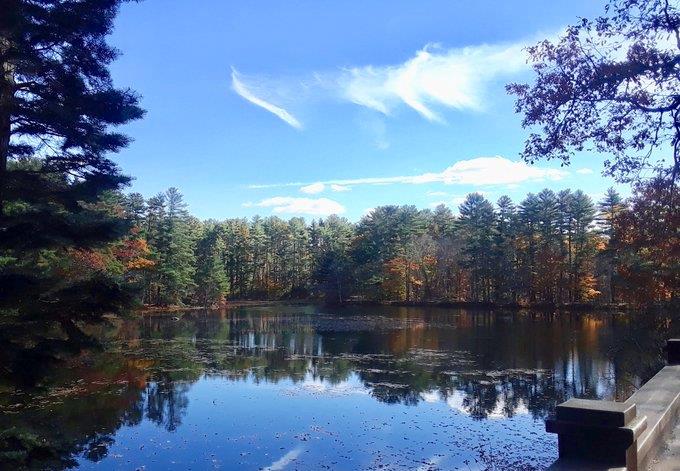
Fall calls. Reflections
gleam and mirror in the lake. . .
Time to reset. Pause.


Zebras as op art.
Nature's canvas paints a feast
For discerning eyes.


Kathy Halsey received a 2019 PBChat Mentorship and is Ohio SCBWI Central/South region’s newest ARA. Her first board book releases winter of 2023. She is a former K-12 school librarian, seventh grade English teacher, and Past President for The Ohio Educational Library Media Association. Kathy volunteers for the Choose to Read Ohio Advisory Council for the State Library of Ohio and learns about nature, flowers, plants, and vegetables by volunteering in a community garden. Kathy and Bob, her husband, live in Columbus OH with their rescue Corgi Scrappy Doo. Find Kathy online at 
her website ~ http://www.kathyhalsey.com
the GROG ~ http://groggorg.blogspot.com
twitter ~ https://twitter.com/infowoman1
facebook ~ https://www.facebook.com/kathy.halsey.5

Thursday, July 26, 2012

The Poetry of Moths


on the one ton temple bell
a moon-moth, folded into sleep
sits still
(Buson, 1716-84)

Moths inspire poetry ... who hasn't been inspired to write about the moth, attracted to light, singeing the tips of its wings? Or, like the ancient haiku master, the contrast between the one ton bell and the fragile moth?

You don't have to be ancient to write moth poetry. Nor do you have to live in an exotic location. Anywhere you find moths, you'll find the inspiration for poetry. You might try your hand at haiku:

Hidden in plain sight
a gray moth on gray tree bark
waits for night to fall

Haiku are short - like postcards they give a snapshot glimpse into nature. Traditionally, haiku is written in three lines with five syllables in the first line, seven in the second, and five in the last. But if your haiku has fewer syllables, don't worry - not every haiku poet follows the rules.

Try your hand at other kinds of poetry: 
  • a list poem - all the things you know about moths
  • an acrostic - write M, O, T, H down the page and then use each letter to begin that line
  • something rhyming and fun
In Insectlopedia, Douglas Florian begins his poem about the Io moth like this: "The io moth/ Has mam-moth eyes/ That are not real-/ They're a disguise..."
 
Lisa Olstein has devoted an entire chapbook to poetry about living with moths. Reading Lost Alphabet (Copper Canyon Press, 2009) is like leafing through a lepidopterists's journal. The prose poems reflect on wings, attracting moths to a sheet using a lantern, classification, caterpillars hatching from eggs and shedding skins. But at its heart, it's about people.

In one poem Olstein's character notes: "I have learned to peer at specimens through a small crack in the center of my fist." This is actually a good trick for getting small things in focus. In another poem her character observes a moth wing close up. "What appears smooth is feathered. What appears feathered is scaled." Moths, it seems, wear armor on their wings.