Showing posts with label wetlands. Show all posts

Wednesday, April 29, 2026

Explore Outdoors ~ another day, another salt marsh...


 A couple weeks ago we walked along the trail of a salt marsh at Caddy Memorial Park in Quincy, MA. It sits where Blacks Creek empties into Quincy Bay (part of the larger Massachusetts Bay).


Join us for a nature walk...


The salt marsh is flooded each day by salt water. Not only do the plants have to be adapted to that, but they need to be sturdy enough to endure the push and pull of the tides. Salt-resistant marsh grasses (Spartina) grow here and, in the fall, were cut and dried by colonists, and used for bedding and fodder for their horses and cattle.

According to the Massachusetts Department of Conservation and Recreation, the salt marsh is edged with oak, cedar, elm, sumac, and pitch pine trees. We saw many red-winged blackbirds and bluejays, an osprey nest, and a horseshoe crab. Apparently the crabs use salt marshes for spawning and will show up even in daylight.


Monday, December 12, 2022

Inviting Curiosity, Inciting Wonder, by Kimberly Ridley

In the middle of a packed school assembly for my debut picture book The Secret Pool, a second-grader asked a question I couldn’t answer.

“Why are the yellow-spotted salamander’s spots yellow?”

I froze. I didn’t have a clue, despite the many hours of research I’d done on vernal pools and the salamanders and other animals who depend on them. The question hadn’t occurred to me. 

The second grader and her 400-plus schoolmates waited for an answer. I stared at the sequined rainbow glittering over a blue unicorn on her t-shirt, glanced at the gymnasium clock.

“I…don’t…know,” I stammered.

Silence.

But in that pause, mercifully, a lightbulb went off. 

“Let’s see if we can find out.” I said. 

When we gathered at the end of the day to celebrate the creative nonfiction stories the kids had written in my workshops, they were exuberant. Not only about what they had accomplished in their writing, but that they had found the answer to the second grader’s question. The salamander’s spots are yellow to warn predators such as raccoons that they’re poisonous. When a predator attacks, the yellow-spotted salamander oozes a bitter toxin from glands in its skin.  

Who knew? 

In the hundreds of school programs I’ve done with my children’s books since, I always write down kids’ questions on a big flip chart if I don’t know the answers, and we follow up later in the day. I also tell them that scientists might not yet have discovered the answers to their questions. This thrills them.   

As the author of nonfiction science and nature books for children (and their grown-ups) I think this is my most important job: to invite curiosity and incite wonder about the astonishing world right outside our door. It’s also my passion.

All of my books, including my latest, The Secret Stream arise from my own curiosity, often stemming from questions I’ve carried since I was a kid myself. Where does my favorite brook begin and end? What are these small, wriggly creatures clinging to the rocks underwater, and how do they not wash away in the current? Do fish live in here, and whose paw prints are these in the mud? 

As for wonder, I stumble upon it at every turn as I observe, interview scientists, and read mountains of material for each book. Researching The Secret Stream, I fell in love with our smallest waterways all over again—not to mention the extraordinary creatures who inhabit them. For example, I’ve become smitten with caddisfly larvae, who protect themselves from fish and other predators by building exquisite “cases” around their bodies with pebbles and grit or plant materials stuck together with their remarkable silk.   

Again, who knew?

We walk or drive by these amazing beings and places every day, often without a clue. But this is where wonder resides. All around us. Every day we have abundant opportunities to reconnect our kids and ourselves with the rest of the teeming, surprising and still vibrant world around us. That’s why I want to invite curiosity and incite wonder with my books and school programs. 

When I recently told a friend about my mission, however, he was skeptical.

“You can’t incite wonder,” he said. “Wonder is soft and childlike.”  

I beg to differ. To me, wonder is a birthright and a survival skill. There’s nothing soft about it. Wonder is clear-eyed, wild, and necessary. Which brings me to the words of Rachel Carson, my heroine since I learned as a kid that she once summered in my home state of Maine. 
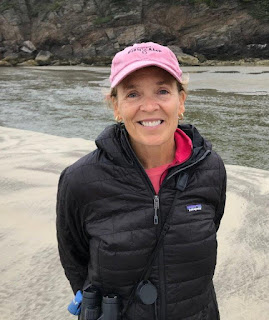
photo: Jean Fogelberg Photography
Carson wished for every child to be granted at birth “a sense of wonder so indestructible that it would last throughout life, as an unfailing antidote against boredom and disenchantments of later years, the sterile preoccupation with things that are artificial, the alienation from the sources of our strength.”

At the end of my school programs, I ask students if they want to help the wild places and creatures in their communities. Hands fly up, a resounding “yes.” And so I invite them to tell some-one at home at least one cool thing they’ve learned in our time together. This sharing, I tell them, will ripple out and inspire other people to learn about and together care for their patch of the planet.

This is how we incite wonder. This is how we cherish the intricate, fragile, and mysterious web of life that connects and sustains us all, every living being. This is a way to live in joy.

Kimberly Ridley is a science writer, essayist, editor, and children’s book author who writes about nature, science, health, and the environment. I reviewed her newest book, The Secret Stream here. You can find my review of her first picture book, The Secret Pool here, and my review of  Extreme Survivors, Animals the Time Forgot here. To learn more about Kimberly Ridley and her books, check out her website at www.kimberlyridley.org.


Friday, December 9, 2022

When a Stream Tells a Story

The Secret Stream 
by Kimberly Ridley; illus. by Megan Elizabeth Baratta 
40 pages; ages 6-8
Tilbury House Publishers, 2022

theme: streams, ecology, animals

My life begins when gray-bellied clouds fling down rain that seeps underground, filling crevices in soil and stone until… out I spill from a spring in the heart of the forest.

This is the story of a headwater stream told by the stream itself! The stream narrates its journey to the lowlands, sometimes burbling, sometimes tumbling over a jumble of boulders. Along the way, it introduces us to the animals that live in its waters and beneath the stones of its streambed, and those living along the banks. We meet nest builders and lodge builders and occasional visitors large and small.

What I like about this book: I like the first-person narrative. When we meet streams in the wild, we can hear them murmur and gurgle, but who knew they had stories to tell? I like the internal rhymes, and the onomatopoeia and verbs that give this story splash and dash! I like how some text tells the story while other text explains things such as how animals see underwater.

And of course, there is back matter! An author’s note dives into what headwater streams are, and the ecosystem they create. There’s a great section called “Cast of Characters” that explains more about each animal living in the stream ecosystem. A glossary and “how to protect streams” sections round out the book. This is a wonderful resource for kids – and adults – who want to explore the streams where they live.

Beyond the Books:

Explore a stream, or a creek. Each has its own personality, based on how large or small it is, and the type of environment it runs through. What plants and trees grow alongside your stream? What birds, insects, and other animals do you notice visiting the stream? You might find tracks in the mud showing who visits at night.

What lives in the stream? You might see small fish, frogs, crayfish, or even a muskrat. Look for insects on the water’s surface and along the streambed. Look under rocks to see who’s hiding there – and then replace the rock when you are finished. Draw pictures of some of the animals you meet.

Listen to the sound of your stream. Try recording your stream at different times of the day, at different seasons of the year. Listen to the animal sounds while you’re sitting quietly. What do you hear?

Kimberly Ridley will join us on Monday to talk about how wonder and curiosity inspire her writing. Today we're joining Perfect Picture Book Friday, an event where bloggers share great picture books at Susanna Leonard Hill's website. Review pdf provided by the publisher.

Friday, September 30, 2022

Beavers: Ecosystem Engineers!


 The Lodge That Beaver Built 
by Randi Sonenshine; illus. by Anne Hunter 
32 pages; ages 4-8
Candlewick Press, 2022  

theme: animals, homes, ecology

This is the crunch in the darkening wood, of teeth against bark where the willow once stood, on the shore near the lodge that beaver built.

Bit by bit, log by log we watch beaver build a dam, then a lodge, helped by her young ones. But that lodge is more than a home for beaver and her family. Goose builds a nest on top. Turtle hides below. Ducklings, herons, moose … an entire community grows up in and around the lodge that beaver built.

What I like about this book: The text is rhythmic, patterned on “The House that Jack Built” and a whole lot of fun to read. And the ink-and-colored pencil illustrations are so inviting and just welcome you into beaver’s world. 

And there is Back Matter! Now, some folks argue that back matter shouldn’t be needed if the book tells the tale completely. But here’s the thing: as a former teacher (and homeschooling parent) I always wanted to know more about whatever was in a book. So I love, love, love it when an author gives more info – in this case more about beaver architecture and engineering, their amazing tree-cutting teeth, and family life. Plus there’s a glossary and resources for curious young naturalists.


Beyond the Books:

Watch a video about how beavers build a dam. Here’s one, but you can find plenty online.

Beavers are ecosystem engineers. They can help reforest the landscape and regulate water flow. Got flooding? Erosion? Dry creek beds? There’s a Beaver for That!

Build your own beaver dam. You’ll need sticks and mud and leaves – and a plastic tray (a take-out container works well). Check out this video for some tips.

Randi visited the blog on Monday and shared a bit about the swamp where she grew up. If you didn’t catch it earlier, here’s the link

Randi is a member of #STEAMTeam2022. You can find out more about her at her website, www.randisonenshine.com

Today we're joining Perfect Picture Book Friday, an event where bloggers share great picture books at Susanna Leonard Hill's website. Review copy provided by the publisher.

Friday, May 27, 2022

Spend a Day at a Pond

At the Pond     
by David Elliott; illus. by Amy Schimler-Safford 
40 pages; ages 3-7
Candlewick, 2022

theme: nature, water, animals

The red-winged blackbird spreads his tail and sings his hello morning song…

This book is like a day-long field trip to a pond. Each spread features an animal, or a plant, described in a poem. We meet a family of mallards, a legendary catfish, turtles, and a busy beaver. There are also two insects that most kids will enjoy looking for on their pond visits: dragonflies and water striders. Each poem reveals a bit of the daily life of pond dwellers.

What I like about this book: I admit a bias toward insect poems, but also anything frog. So I truly loved the very short poem about metamorphosis from tadpole to adult. Told in seven words! Also, the fun play on words in the heron poem. And I love how the book ends with the evening song of the blackbird.


I also love the illustrations. The artwork is multimedia, finished digitally, but they are so full of texture I can almost feel the feathers and cattail fluff. And then there is Back Matter! Even the notes about the animals and plants in the book are fun to read. Take his entry on cattails. Most kids think cattails look like hot dogs (they do!) but that hot dog head, writes David, “is a collection of tiny female flowers. Not very tasty, I’m afraid.” Fun, right?

Beyond the Books:

Go on a pond field trip. Look, and listen, and smell the air, and feel the ground beneath your feet. You can do this any time of the year. I visited a local pond in mid-March and Canada geese were jumping from the ice into the water and flapping up a ruckus!

Write a poem or story about an animal that lives in or around a pond. Or write about pond life from the point of view of a plant along the shore.

Today we're joining Perfect Picture Book Friday, an event where bloggers share great picture books at Susanna Leonard Hill's website. Review copy provided by the publisher.

Friday, November 15, 2019

Books that celebrate our Connections with Nature


theme: environment, poetry, art

This week’s books are about the environment ~ what’s in a wetlands, and the environment around us ~ but they’re also about poetry, art, and hope.

Otters, Snails and Tadpole Tails 
by Eric Ode; illus by  Ruth Harper
32 pages; all ages
Kane Miller Books / EDC Publishing, 2019

Will I find you here
where cedar wears her mossy shawl ….

With an otter as our guide, we meet the amphibians, mollusks, birds, mammals, insects, reptiles, and plants that inhabit a wetland.

What I like about this book: I love that the otter shows up in most of the spreads – as though they’re our tour guide. It reminds me of the time my youngest insisted there “might be otters” in our little stream and so we hiked the length of it – finding crayfish, insects, mammal tracks, birds … but no otter! And there’s a wonderful poem about the heron that “measures the morning in slow, perfect strides” – which perfectly captures the heron that stalks the river’s edge nearby.


I love Ruth Harper’s artwork. Can’t think of a medium more perfect for capturing the feel of wetlands than watercolors!

You Are Never Alone 
by Elin Kelsey; illus by Soyeon Kim
32 pages; ages 4 - 6
Owlkids, 2019

Every moment
   this beautiful planet
        showers you with gifts

From the rain that provides our water, to the trees that give us oxygen to breathe, Elin Kelsey celebrates our connections with nature. We are a part of nature, and nature is part of us.

What I like about this book: Hope permeates this book. When coral reefs break, they can heal. When animals get sick, there is an entire pharmacy in the soil and plants. I like how Elin shows our wild connections, emphasizing that when we are in nature we are not alone. And I like how she brings in fun and interesting science: that mud is good for us.

I’m always intrigurd by Soyeon’s illustrations. She builds intricate dioramas and then uses sections of them to illustrate the spreads. What’s cool about this book: unfold the cover and you’ll find all of Soyeon’s  dioramas. If you look closely, you can see how they are connected.


Beyond the Books:

When something in nature sparks your curiosity, find out more about it. Maybe it’s something you read about or observed. So investigate. Write a story or poem about it. Make a diorama or painting about it. And share it with your friends.
This teaching guide has tips for poetry and line breaks

Wetlands are special - and important - places. Learn more about them in this short video by the National Oceanic and Atmospheric Administration (NOAA) and on the World Wildlife Fund page (tons of cool resources).

Head behind the scenes with author Elin and illustrator Soyeon at Owlkids. Videos and a teacher's guide here.

Today we're joining other book bloggers over at STEM Friday, where you can discover other cool STEM books. And we're joining Perfect Picture Book Friday, an event where bloggers share great picture books at Susanna Leonard Hill's website. Review copies and galleys provided by the publishers.