Friday, February 24, 2023

Problems with Plastic

I chose this book for it's title, because growing up I often heard someone exclaim "That's the last straw!" when they got frustrated. In this case, it's a call for action.

The Last Plastic Straw: A Plastic Problem and Finding Ways to Fix It (Books for a Better Earth)
by Dee Romito; illus. by Ziyue Chen 
40 pages; ages 6-9
‎Holiday House, 2023 

theme: environment, recycling, nonfiction 

Over five thousand years ago, the ancient Sumerians had a problem. They needed a way to avoid the icky substances in their beverages

Fortunately, these ancient folks were great problem-solvers and they came up with an idea: use a hollow reed to suck out the tasty liquid, leaving the sludgy stuff in the bottom of the cup. Even the Queen used a straw, though hers was a golden drinking tube encrusted with jewels.  

But there was another problem: some straw stems had residue that changed the flavor of the drink. Fortunately someone got the brilliant idea to wrap paper around a pencil to make a paper straw – and even patented the idea for how to do it! But there was another problem: could the top be bendy? And another problem…. And for each problem, people came up with a solution, and eventually plastic straws became ubiquitous.

Which led to an even bigger problem: too many plastic straws! Nearly 500 million straws are thrown out every day – in the US alone! And those plastic straws (and other things) don’t biodegrade. Instead, they break down into tiny bits called microplastics that stay around forever. They pollute oceans, endanger wildlife, and even show up in the food we eat! 

Fortunately, that’s a problem we can solve!

What I like about this book: I like the way Dee shows straws as a solution to a problem; even plastic straws solved a problem. I like how she focuses the end of the book on solutions. And of course, I like the back matter: an author’s note about more things that kids – and their families – can do, and a list of sources.

The Last Plastic Straw is part of the Books for a Better Earth series published by Holiday House. They  designed the series to inspire young people to become active, knowledgeable participants in caring for the planet they live on.

As a person who has tried to go straw-free, but still forgets to say “no straw” when ordering the occasional soda, I just had to ask Dee One Question:

Me: What was the last straw for you? And did you quit using plastic straws?

Dee: I’ve always tried to choose eco-friendly options, but wasn’t being as active as I wanted to be. Once I started researching and saw the photos of how much plastic pollution there is out there, we made the switch in our house away from plastic straws which has led to other earth-friendly choices. Sometimes we forget to say “no straws” or we’re on a road trip and the stainless steel are harder to keep clean, but we’ve started using agave straws (which are disposable and biodegradable) as our on-the-go option. And most of the time, you really don’t need a straw. It’s a habit and a convenience that I’m happy to give up for a cleaner earth and healthier sea creatures. As for writing this book, when I feel like the information I have can make a difference in the world, I want to write about it and share it!
Beyond the Books:

Find out more about alternatives to using plastic straws. Look for metal, bamboo, or even paper straws in stores or online. What other alternatives can you find?

Are there any companies manufacturing non-plastic straws near you? One company, Roc Paper Straws, makes paper straws Rochester, New York. The company is owned by a mother-daughter team who, when they started, had zero manufacturing experience and a giant dream. You can find out more about them at their website

Make your own paper straws. All you need is a pencil (or chop stick), some paper, glue, and wax. If you want your straws to be 100% biodegradable, use beeswax instead of paraffin to wax your straws. If you’re making straws for crafts, you don’t need to wax them. Here’s how to do it.
 
Dee Romito is a member of #STEAMTeam2023. You can find out more about her at her website, on Facebook, or on Instagram.

Today we’re joining Perfect Picture Book Friday. It’s a wonderful gathering where bloggers share great picture books at Susanna Leonard Hill's website. Review copy provided by the publisher.
Wednesday, February 22, 2023

Explore Outdoors ~ Nests Revealed

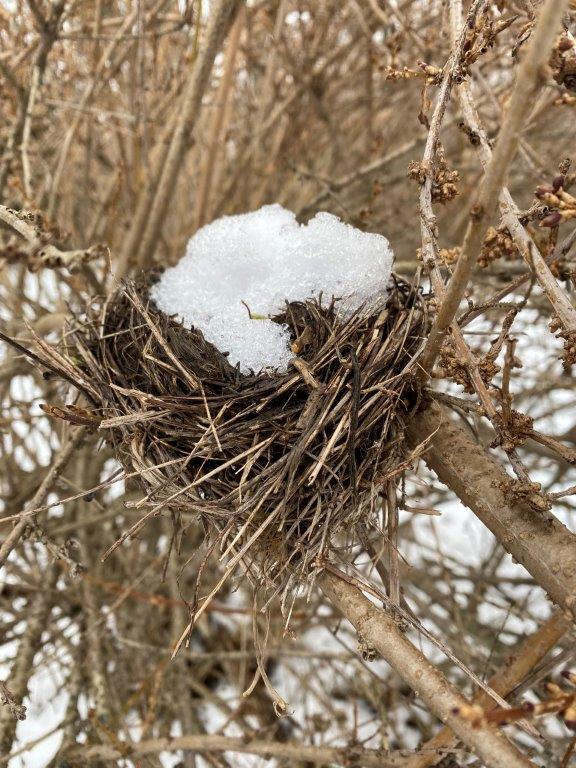
 The forsythia growing on the east side of my house is untamed - a wild mess of branches that, every summer I threaten to cut back. I never do, because in the winter I discover all the bird nests that had been hidden within the leaves.


I am not the only one with a wild forsythia ... shrub? ... tree? A few years ago, Katharine Kresge wrote about  her forsythia: "Catbirds, mockingbirds and cardinals build their nests in it every year. Robins and hummingbirds frequent the bush and rest on its branches..."

This week, take a close look at the forsythia - and other bushes and shrubs - around your yard and neighborhood. Do you see any nests hiding within the tangle of twigs? Who do you think built those nests?

Friday, February 17, 2023

Animals on the Move

Animals are heading out on journeys every day. Some are long: migrations from summer home to winter home. Some are shorter: looking for food or a mate or a good place to make a den for little ones. These books take a look at animals on the move – and what happens when you can’t travel along your normal route.

theme: animals, migration, nature

Border Crossings 
by Sneed B. Collard III; illustrated by Howard Gray 
32 pages; ages 6-9
‎Charlesbridge, 2023

On a moonless night, padded paws silently step across pebbled ground. They make their way past thorn tree, through brush, and around a muddy marsh.

A male ocelot is on the move, across the Chihuahuan Desert, seeking a mate. But then he comes upon an obstacle so tall and slippery he can’t get over it. The wall runs right through ocelot country, splintering rich habitat into two pieces. Ocelot isn’t the only animal that crosses the border to find a mate, hunt, or graze. 

What I like about this book: I like how the author presents the borderlands as an environment that has been part of animals’ lives for longer than humans have inhabited that bit of land. That for them, the border is not something that divides, but just … home. The illustrations capture the beauty of the desert, and (I hope) will inspire some readers to learn more about the southwestern desert. And the back matter is a tremendous resource, packed with information about the ecology of the border region, a glossary, and great recommendations for further reading.

Animal Journeys  
by Carron Brown; illus. by Carrie May
36 pages; ages 4-8
Kane/Miller Book Publishers, 2023

Many animals make incredible journeys every year, month, and even each day. This is called migration.

Readers go on journeys with geese, lobsters, sea turtles, and butterflies in environments ranging from high mountains to the seashore. But some things are hidden from view. To reveal the different animals on their travels, readers will need to shine a flashlight behind the page – or hold the page up to a light source, such as a window. Which works even on a cloudy day (I tested this).

What I like about this book: This is a fun way to introduce a diversity of animals from around the world. And the last spread invites kids to look for animals on their journeys. Plus there is back matter that explains a bit more about how animals stay safe on their travels.

Beyond the Books:

Learn more about ocelots and how walls and other infrastructure fragments their habitat. You can find out more about ocelots (and hear some ocelot sounds) at the San Diego Zoo website. Two places to learn more about the impacts of the border wall are the Defenders of Wildlife and the Center for Biological Diversity.

Explore the Chihuahuan Desert. Here are some resources to get you started: National Park Service; World Wildlife Fund; and this photo essay of plants and animals commonly seen on the desert.

Watch for migrating animals. As we move towards warmer spring weather, you might hear – and see – new birds flying overhead or stopping for a snack at local birdfeeders. Here’s a tool for following bird migration. Or you might discover butterflies returning to the gardens – check out this migration map for monarchs. 

Today we’re joining Perfect Picture Book Friday. It’s a wonderful gathering where bloggers share great picture books at Susanna Leonard Hill's website. Review copies provided by the publishers.