Showing posts with label water. Show all posts

Friday, June 5, 2026

Dive into the World of Aquatic Insects


When You See Us: The Mysterious World of Aquatic Insects 
by Katherine Hocker; illus. by Svabhu Kohli 
32 pages; ages 3-7
Candlewick, 2026

themes: nature, insects, water
 
 We are born on the sides of boulders or under leaf skeletons, in the waving stems of water moss or on a pond’s rippling skin.

Spread by spread, Katherine Hocker takes us on a field trip into the mysterious and fascinating world of aquatic insects. We learn where they hide, what they eat, and how they move.

 
What I like about this book: The language is luscious and lyrical and so inviting that you almost forget this is a factual look at aquatic insects. For example, because they have exoskeletons, the larvae need to molt (shed their skin) as they grow. Katherine writes that they eat and grow “…until we split open like flower buds…” which is such a cool way to think about underwater bugs. The illustrations are wonderful, capturing the feel of these insect lives both as aquatic larvae and as adults that fly through the air. And I love the back matter, where readers can learn more about the insects, and how to get a closer look at them in real life.

Katherine was one of the featured authors at the Sixth Annual GROG Arthropod Roundtable on Earth Day 2026, and you can find out more about her book – and her love for bugs – here

Beyond the Books:

Go water-bug watching. Stand or sit in a comfortable (and safe) spot next to a stream, lake, or pond. Then focus your eyes on a stick or stone beneath the water’s surface and gaze around. Soon you’ll see things crawling, swimming, or wriggling in the water.

Draw a picture of one (or more) insects you find living in the water.

Watch how aquatic insects move. Take a shallow white tub and a cup to a pond. Collect some pond water in the tub. Then scoop up any insects you find on or under the water’s surface. Watch how they move their legs, whether they twirl or dive… and write down some words to describe what you notice. Then put everyone back where they belong.

Today we’re joining Perfect Picture Book Friday. It’s a wonderful gathering where bloggers share great picture books at Susanna Leonard Hill's website. Review copy provided by the publisher.
https://susannahill.com/blog/

Friday, February 6, 2026

What Happens when a Lake Disappears?

The Vanishing Sea: The Tale of How the Aral Sea Became the Aral Desert 
by Dinara Mirtalipova 
40 pages; ages 5-8
Chronicle Books, 2026   

theme: ecology, water, nonfiction

 A long, long time ago, there was a lake so vast that the people called her MOTHER SEA.

This lake, called the Aral Sea, sits between Kazakhstan and Uzbekistan. It was formed by glaciers melting after the last ice age and for centuries it provided the people with fish to eat and water to drink. 

The people flourished. Villages grew into towns, which became cities. The people grew crops. “Like a selfless mother, the sea gave them ALL of her resources,” writes Dinara Mirtalipova. Until there came a time when she had no more to give.


What I like about this book: The spare text, paired with the folk-art illustrations clearly shows how the people’s desire for more riches killed the very thing that gave them life: Mother Sea. Two wordless pages show irrigation of cotton crops, and exporting it away from the community. 

I like that it’s a true story that also serves as a parable. And I like the back matter, which begins with an author’s note about her personal connection to the area, and the intensive cotton cultivation that drained the lake, Another spread provides a timeline of the history if the Aral Sea, from 17,000 years ago to present. Another section dives into the local and global ecological impact of the desertification of the Aral Sea.

Beyond the Books:

Check out what the Aral desert (previously lake) looks like from space at NASA website.

Turn your bedroom into the Aral Sea. Before the irrigation project in 1960, the Aral Sea was home to more than 20 different kinds of fish. Make as many different kinds of fish as you can, and hang them by threads from your ceiling so they look like they are swimming. Here are some ideas for different kinds of fish you can make.

After 10 days, take down half of the fish. How does your lake feel?

Today we’re joining Perfect Picture Book Friday. It’s a wonderful gathering where bloggers share great picture books at Susanna Leonard Hill's website. Review copies provided by the publishers.

Friday, June 6, 2025

Falling in Love with Pond Scum

 
Magic in a Drop of Water: How Ruth Patrick Taught the World about Water Pollution 
by Julie Winterbottom; illus. by Susan Reagan 
48 pages; ages 6-9
‎Rocky Pond Books, 2025

theme: biography, water, STEM

When Ruth Patrick was five years old, she fell in love with pond scum.

How can you not want to keep reading with a line like that? The story: she and her dad were out on a nature hike and brought home a number of things to study and (if they could) identify. Among those things: a bottle of slimy brown pond water. When Ruth looked at a drop of that water under the microscope she found glassy gem-like things. Diatoms. She was entranced and wanted to learn more!

But back in the early 1900s girls didn’t study scummy pond water. And they weren’t encouraged to study science. But with her dad’s support, Ruth went to college to study diatoms, and ended up teaching us about water pollution.


What I like about this book: The language is luscious. Here’s how Julie describes diatoms: “jewel-like shapes… ovals made of beads, circles filled with pearls, shimmering stars, lacy triangles…” It’s enough to make you want to collect your own pond water and look for these algae treasures. There are other similes and metaphors tucked into the text. I like how the story expands as Ruth discovers that studying diatoms can tell bigger stories. Stories of floods, and even about the presence of chemical pollution. Stories on a larger scale, from pond to rivers to the ocean. And I like that there is back matter – more about Ruth Patrick and a timeline to put her life and discoveries into a context we can relate to. Also, the end papers are amazing – kudos to Susan Reagan, the illustrator, who captured the magic of diatoms on the page.

I was amazed the first time I saw pond water under a microscope. So I had to ask Julie One Question

Me: What made you want to write about Ruth and her pond scum (and diatoms)?

Julie: When I first read about her in a book of essays about women in science, three things leapt out at me that made me want to do a book about her. The first was the story of how her father introduced her to the world of microscopic life in ponds and streams when she was only five years old. I thought that was a wonderful way into a scientist's life for young kids. The second was the incredible beauty of diatoms: what wonderful illustrations they would make, I thought. And the third was the important work that Patrick did to get government and industry to do something about water pollution, long before it was a public concern. Pollution is still such a pressing issue, and one that I think many young readers care about.

Both Julie and I were struck by the parallels between Ruth Patrick and Rachel Carson. They were contemporaries, both women in science and studying creatures in water, as well as the impacts of pollution. 

Beyond the Books:

Investigate pond water. Collect some and pour it into a clean white bowl (a plastic take-out container works well). Do you see pond scum (algae)? Do you see any insects? Use a hand lens to get a closer look. You might find fairy shrimp!

What happens when water is polluted? Pour some water in a bin and add some plastic ocean animals. Now pollute the water – great instructions here! Can you clean it up?

Go on a Pond Scum Safari with Sally Warring from the American Museum of Natural History. Remember to take your sketch pad so you can draw the cool micro-life you discover! Link here.

Julie is a member of #STEAMTeam2025. You can find out more about her at her website, julie-winterbottom.com

Today we’re joining Perfect Picture Book Friday. It’s a wonderful gathering where bloggers share great picture books at Susanna Leonard Hill's website. Review copy provided by the publisher.

Friday, December 9, 2022

When a Stream Tells a Story

The Secret Stream 
by Kimberly Ridley; illus. by Megan Elizabeth Baratta 
40 pages; ages 6-8
Tilbury House Publishers, 2022

theme: streams, ecology, animals

My life begins when gray-bellied clouds fling down rain that seeps underground, filling crevices in soil and stone until… out I spill from a spring in the heart of the forest.

This is the story of a headwater stream told by the stream itself! The stream narrates its journey to the lowlands, sometimes burbling, sometimes tumbling over a jumble of boulders. Along the way, it introduces us to the animals that live in its waters and beneath the stones of its streambed, and those living along the banks. We meet nest builders and lodge builders and occasional visitors large and small.

What I like about this book: I like the first-person narrative. When we meet streams in the wild, we can hear them murmur and gurgle, but who knew they had stories to tell? I like the internal rhymes, and the onomatopoeia and verbs that give this story splash and dash! I like how some text tells the story while other text explains things such as how animals see underwater.

And of course, there is back matter! An author’s note dives into what headwater streams are, and the ecosystem they create. There’s a great section called “Cast of Characters” that explains more about each animal living in the stream ecosystem. A glossary and “how to protect streams” sections round out the book. This is a wonderful resource for kids – and adults – who want to explore the streams where they live.

Beyond the Books:

Explore a stream, or a creek. Each has its own personality, based on how large or small it is, and the type of environment it runs through. What plants and trees grow alongside your stream? What birds, insects, and other animals do you notice visiting the stream? You might find tracks in the mud showing who visits at night.

What lives in the stream? You might see small fish, frogs, crayfish, or even a muskrat. Look for insects on the water’s surface and along the streambed. Look under rocks to see who’s hiding there – and then replace the rock when you are finished. Draw pictures of some of the animals you meet.

Listen to the sound of your stream. Try recording your stream at different times of the day, at different seasons of the year. Listen to the animal sounds while you’re sitting quietly. What do you hear?

Kimberly Ridley will join us on Monday to talk about how wonder and curiosity inspire her writing. Today we're joining Perfect Picture Book Friday, an event where bloggers share great picture books at Susanna Leonard Hill's website. Review pdf provided by the publisher.

Friday, May 27, 2022

Spend a Day at a Pond

At the Pond     
by David Elliott; illus. by Amy Schimler-Safford 
40 pages; ages 3-7
Candlewick, 2022

theme: nature, water, animals

The red-winged blackbird spreads his tail and sings his hello morning song…

This book is like a day-long field trip to a pond. Each spread features an animal, or a plant, described in a poem. We meet a family of mallards, a legendary catfish, turtles, and a busy beaver. There are also two insects that most kids will enjoy looking for on their pond visits: dragonflies and water striders. Each poem reveals a bit of the daily life of pond dwellers.

What I like about this book: I admit a bias toward insect poems, but also anything frog. So I truly loved the very short poem about metamorphosis from tadpole to adult. Told in seven words! Also, the fun play on words in the heron poem. And I love how the book ends with the evening song of the blackbird.


I also love the illustrations. The artwork is multimedia, finished digitally, but they are so full of texture I can almost feel the feathers and cattail fluff. And then there is Back Matter! Even the notes about the animals and plants in the book are fun to read. Take his entry on cattails. Most kids think cattails look like hot dogs (they do!) but that hot dog head, writes David, “is a collection of tiny female flowers. Not very tasty, I’m afraid.” Fun, right?

Beyond the Books:

Go on a pond field trip. Look, and listen, and smell the air, and feel the ground beneath your feet. You can do this any time of the year. I visited a local pond in mid-March and Canada geese were jumping from the ice into the water and flapping up a ruckus!

Write a poem or story about an animal that lives in or around a pond. Or write about pond life from the point of view of a plant along the shore.

Today we're joining Perfect Picture Book Friday, an event where bloggers share great picture books at Susanna Leonard Hill's website. Review copy provided by the publisher.

Friday, April 29, 2022

How to Save the Earth with Small Actions

 Earth Day may have been last week, but this book reminds us that Every Day is Earth Day – and that we can, by taking small actions, make the world a better place.


Be the Change 
by Rob Greenfield and Antonia Banyard 
96 pages; ages 8-12
Greystone Kids, 2022

When Rob Greenfield was 25, he wanted to change his life so that he could live in a more environmentally-friendly way. Step one: he wrote a list of positive changes he could make, and then set out to do one action every week. He started with small steps – eating fresh food instead of packaged foods, and even gave up his car. 

In this book he hopes to inspire kids to take positive actions that will help heal the world. In fact, it’s even subtitled Rob Greenfield’s Call to Kids: Making a Difference in a Messed-Up World. It’s divided into nine chapters that focus on stuff, waste, food waste, water, energy, money, transportation, and more. 
The first few pages of each chapter give information about that aspect in our daily lives. Take “stuff” for example. We’ve got so much, but how much is necessary? Really, how many toys does a kid need? And all that stuff is not making us happier.

Then Rob talks about his own adventures in becoming more ecologically activist: letting go of possessions, trading in his car for a bike, dumpster-diving to show how much good food is wasted.

What I like about this book: At the end of each chapter, Rob shares some ideas about things kids can do, and what others are doing to help make the environment healthier. Things like planting community fruit trees, and observing Buy Nothing Day. Instead of a luxury vacation, he proposes exploring local parks and museums – and, if you can, bike or take public transportation to get there. There are lists of small things kids can do to make a difference, such as help fix leaks and turning part of a grassy yard into a garden.

Thanks for dropping by today. On Monday we'll be hanging out at Marvelous Middle Grade Monday with other  bloggers. It's over at Greg Pattridge's blog, Always in the Middle, so hop over to see what other people are reading. Review copy provided by the publisher.


Monday, April 18, 2022

Inspiring Readers to Save the Planet ~ by Christy Mihaly


Happy Earth Week! The first Earth Day in 1970 focused on air and water pollution. Back then, factories spewed so much oil into water that rivers caught fire. Air pollution gave people cancer. But folks generally assumed this was the price of "progress." 

Christy appreciates water!
Rachel Carson's 1962 book, Silent Spring, helped wake Americans up, and Earth Day inspired broad action. I celebrated the first Earth Day with the Girl Scouts, collecting trash at a creek. But in 1970, we didn't appreciate the full extent of the manmade crises facing Earth. 

Today, I worry kids may see climate change as too big to solve, too daunting to fight. But then I watch young people, teens and younger, raising their voices, demanding action, inventing solutions. There's hope. 

That's why I write what I write. I want to give kids information and incentive to save the planet. Books have the power to do that.

I recently wrote a picture book about water. Why water? It's an ordinary, everyday substance—and central to life. I lived a couple decades in California, where water is often scarce. I worked with diverse stakeholders to negotiate a fair division of the waters of the Sacramento River system (leaving enough for the fish), because users held legal "rights" to an amount of water that exceeded the actual flow. Moving to Vermont in the 2000s, I was struck by the moist greenness and the ubiquity of streams and ponds. But I saw that even where water is so plentiful, we must steward it. 

In Barefoot Books WATER: A Deep Dive of Discovery, I wanted to share my deep appreciation of the science and the wonder of water. Working with the talented Barefoot Books team, we developed an engaging, interactive book.

We created a "water droplet" (fictional cartoon character) to offer funny comments and fun facts. We incorporated experiments, activities, and calls to action for that hands-on element, adding flaps and gatefolds too. And while we confirmed that all infographics and illustrations were scientifically accurate, we left room for the amazing illustrator, Mariona Cabassa, to explore the world of water with colorful, imaginative scenes. 

I used playful language, noting, for example, that water is a "shape-shifter," and wrote poetic passages as well. Together I hope that all these aspects of the books help WATER to capture kids' interest and passion and inspire them to be water stewards.

Thank you for joining us today, Christy.  I chatted with Christy about her book, WATER  back in October over at the GROG Blog. And she shares some hands-on water exploration activities on Patricia Newman's Lit Links blog here. You can visit Christy's website here.

Friday, January 21, 2022

Good to the Last Drop

 
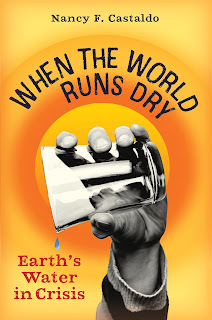
When the World Runs Dry: Earth's Water in Crisis 
by Nancy F. Castaldo 
208 pages; ages 10 & up
Algonquin Young Readers, 2022   


“When you get up in the morning and turn on the faucet of your bathroom sink, you can probably trust that water is going to flow out through the tap.” But what if it doesn’t, asks Nancy Castaldo? Or what if the water that does come out is toxic? 

You might be able to go a week or so without food… but water is essential to our life. In this book, Nancy examines our relationship to water and highlights specific issues contributing to a global water crisis. Each chapter presents case studies of ongoing problems in the US and beyond.

In one chapter, Nancy looks at infrastructure: the plumbing and pipes that transport drinking water into our homes. She revisits the Safe Drinking Water Act and shows how polluted drinking water is often and environmental justice issue. She dives into the problems facing residents in Flint, Michigan and Newark, NJ and gives some tips on what to do if lead is found in your school drinking water. 

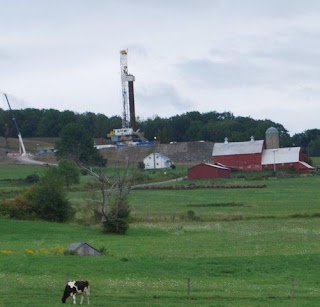
A number of chapters focus on sources of water pollution, from industrial to agricultural. One community facing groundwater pollution is a short couple-hour drive from my home. Residents in Hoosick Falls, NY are dealing with industrial chemicals that have percolated through the soil and into the aquifer they depend on for their water supply. Other communities, such as our neighbors in Bradford County, PA have lost their water due to pollution from fracking. Sure, you can get water delivered to your home and fill up large 250-gallon “buffaloes” – but the average person in our country uses 60-80 gallons of water per day. How long would that water last for your family? Not to mention problems of keeping water flowing on frigid winter days.

fracking in Bradford County, PA
Algae blooms and red tides contaminate water supplies. Accidental pollution happens when people flush medications down the toilet, and when chemicals from soaps and detergents reach rivers and streams. 

There are problems with too little water: lack of rainfall and snowfall resulting in lowering water levels in lakes and reservoirs. Maybe people can conserve by not watering their lawns, but how can farmers keep crops growing and livestock healthy when the pump runs dry? Likewise, problems arise when there is too much water. Flooding and rising seas pollute drinking water and destroy farmland.

Declining water resources drives conflict and migration. What happens when a corporation, partisan group, or local gangs take control of diminishing water supplies? Fortunately, Nancy ends with a couple chapters that look at potential solutions from recharging aquifers to desalinization, suggestions for action, and resources for folks who want to know more.

Nancy was kind enough to answer One Question:

me: What was the thing that made you know you had to write this book?

Nancy: This was a tough book to write, but so worth it. It enabled me to see people impacted by very difficult challenges rise to the occasion to help others. Every voice matters, from the Standing Rock teens who ran across the country to raise theirs to the Flint moms who supported the Hoosick moms miles away. In the end, I watched so many people show up to make a difference. That’s what it is all about – just showing up for our families, our communities, each other, whether in a classroom or a ballot box. The water crisis impacts everyone. 

My inspiration began in childhood when my mom became a water activist. I even wrote about clean water issues for my middle school newspaper. But the topic rose up again more recently when I was working on The Story Of Seeds and I saw how water issues impacted our worldwide food security over and over again. That led me to writing this book. It is a worldwide issue that needed attention. My readers are on the front lines. I hope that this book becomes a tool in the toolbox for teens working for a better future.

Thank you, Nancy. Speaking of working for a better future, here are some Simple Things You Can Do staring today:
  • take shorter showers
  • fix leaky faucets
  • only run full loads in dishwasher
  • collect rainwater for gardening
  • fill a reusable water bottle

Nancy is a member of #STEAMTeam2022. You can find out more about her at her website.


Thanks for dropping by today. On Monday we'll be hanging out at Marvelous Middle Grade Monday with other  bloggers. It's over at Greg Pattridge's blog, Always in the Middle, so hop over to see what other people are reading. Review copy provided by the publisher.

Wednesday, September 1, 2021

Explore Outdoors ~ Water Droplet Magnifier


Yesterday morning I was out in the garden watching bees, and I happened to notice water droplets clinging to the hairy lupine leaves. When I looked closer, I could see how the droplet in the center worked as a magnifier. Got me thinking about times when I've dripped water onto a page of the New Yorker, and how the print was magnified.

Water droplets make fine magnifiers - and if you took a trip in the Way-Back machine you would find some scientists using water droplets as microscopes. So why not make your own water-droplet magnifier? All you need is water and some plastic. You can use clear plastic from an old soda bottle or even hard plastic that was used in packaging for batteries or something.

Here's some fun experiments from Scientific American.

And here's a video, with an idea of how to use a water droplet to turn your cell phone camera into a macro lens.

Have fun!

Friday, March 30, 2018

Where Science meets Art

It's been rainy this past month (snowy, too) - but still, on those not-too-wet days I've loved heading outdoors to see what is happening with the changing season. Here are two books to inspire your own investigations as we welcome April showers, mud and flowers.

themes: nature, water cycle, imagination

 I am the Rain
by John Paterson
32 pages, ages 3-8
Dawn publications, 2018

Sometimes I'm the rain cloud
       and sometimes I'm the rain.

Using poetic language and art, author John Paterson takes us on an adventure through the water cycle. He knows water - where it flows and how to paddle through it. And he knows its many moods, from wild and splashy to misty fog.

What I like about this book: I like the first-person point of view - a story about the water cycle from the perspective of the water. I like how we learn about water through the different seasons, and in different states - gas, liquid, solid. Water is everywhere on our planet and, as it notes, "All of life depends on me."

The back matter is filled with so much information and ideas for exploration. There are notes to explain the "science behind the poetry" and tips for taking care of water. Plus science, engineering, and math activities.


Anywhere Artist
by Nikki Slade Robinson
40 pages; ages 4-7
Clarion Books, 2018

I am an anywhere artist.

Who needs paint and paper? All this artist needs is her imagination! And maybe a few leaves from the forest, or driftwood and seaweed. Mud, stones, lichens - they can make art. Or perhaps your art can fill the sky, created from nothing more than water vapor and imagination. Who hasn't created cloud dragons?

What I like about this book: it is so fun, free, and filled with the joy of discovering art in the natural world. As one who collects leaf skeletons for their lacy beauty, I love that this wild artist uses leaf skeletons in her creations. I love that she takes us to very different environments to find natural materials: the forest, the beach, a muddy puddle, the sky.

The title focuses on the art, but inside the pages this is a book about discovering nature. If your kids haven't hunted for leaf skeletons yet, they will once they see them used as art materials. The other cool thing about this book is that all the art materials are biodegradable.  I'd just add a caution: if you go collecting natural materials for your own art, use things that are dead, and only take a tiny tiny bit of living plants.

Beyond the Books:
How much rain falls during a storm? The easiest way to find out is to set a bucket in an open area of your yard and, after the storm, measure how much water is in it. Or you can make your own rain gauge out of a plastic bottle.

Where does rain gather in your neighborhood? And where does it go? Does it create a wetland in your yard? Make rivers in the gutter? Whoosh down storm drains? Fall over boulders in a creek? Find out where it goes.

Create art from natural things you find. It can be as simple as painting with mud, or creating a pattern from stones. This time of year you might find leaf skeletons beneath old piles of leaves. Or if you live along a beach you can find all kinds of seaweeds and driftwood, shells, and claws. Leave your art in nature, and return in a day or two to see what has happened to it.

Ephemeral Creations ~ choose a dry day so you can lay on the ground and look at the sky. Then create art from the cloud shapes. Do tree branches frame your art? Does mist turn it into rainbows?

Today we're joining the STEM Friday roundup - and we're also joining others over at Perfect Picture Book Friday, an event in which bloggers share great picture books at Susanna Leonard Hill's site. She keeps an ever-growing list of Perfect Picture Books. Review copies from publishers

Wednesday, September 13, 2017

Wednesday Explorers Club ~ Strider Babies!

Strider babies at Baxter State Park (photo by Martha Mitchell)

About a month ago my friend and naturalist, Martha Mitchell, was exploring Baxter State Park in Maine. They were camping at the Northwest Cove campsite (you can get there by hiking or canoeing) when she saw a hatch of water striders. Like all members of the Wednesday Explorers Club, she had both her camera and her journal at hand.

page from Martha's field journal
"Tens of thousands of tiny young/ baby water striders skate on the calm water surface near the shore of the cove," she wrote. She measured the area they covered: 10 to 15 feet wide by 50 feet long. They were in constant motion.

"They move with the blowing wind and scatter when I stand or move... some hop on the surface... A hunting dragonfly occasionally dips to the water's surface for a meal. When the wind dies down, the striders move as a group to deeper water; then back toward shore when it picks up again."

As evening drew on, striders still covered the water's surface. Fish rose to the surface to feed, eating many of the striders, she noted.

The next morning the wind was gone. "The lake's surface is smooth - except for dimples like those made by raindrops. Looking closer... the dimples move." Water striders! still there, spread out across the lake. Martha paddled out onto the water, drifted awhile to watch the striders.

"They skated around in a seemingly random pattern, pausing only to change direction or take a smaller insect in its mouth. Periodically one would jump straight up into the air or dive beneath the water's surface. Striders that had captured small insects were chased by other striders who tried to steal the food."  

 More cool stuff about Water Striders:

Notes about life and ecology of water striders.
Seven Cool Facts about Water Striders.
video of water strider hunting flies

Friday, December 13, 2013

Some Things Float ~ Some Things Don't

Things That Float and Things That Don't
by David Adler; illus. by Anna Raff
32 pages; ages 5 - 9
Holiday House, 2013

Last week we were testing how well glitter fell through water, and it got me thinking about all the "bathtub science" my kids used to do. You know: toss an apple into a bathtub full of water and it bobs on the surface. But toss in a quarter and it sinks - which makes anyone sitting in the bathtub wonder: how can a huge ship float if it's made of metal?

It's not just the material of an object - or its size - that determines "floatability". Shape has something to do with it as well, and Adler shows how.

Take a piece of aluminum foil. If you put it on top of water, it will float. It will float even if you crumple it a bit into a loose ball. But if you smoosh it into a tight ball it sinks. So it's not weight that matters - because it's the same amount of foil. It's how much space it takes up - its density. Adler explains density, and demonstrates why even "heavy" clay boats can float. He shows what displacement is all about and offers lots of opportunities for kids - and parents - to ask questions and test household objects. All you need is a bathtub. Or a dish pan or a wading pool or a large mixing bowl...

Today's review is part of the STEM Friday blog. Check out the other science books and resources reviewed this week. Review copy provided by the publisher.


Friday, May 3, 2013

Surface Tension - on earth & in space

Water is strong. If you want to know just how strong, fill a small juice glass up to the brim. Now grab a pile of pennies - a hundred might be enough...
Slip a penny into the glass. Does the water spill? Probably not, because a penny isn't very big and doesn't displace much water.
How many pennies do you think it will take before the water starts to spill over the lip of the glass? Ten? Fifty? Somewhere in between? Something higher?
check out more resources at  STEM Friday
Test out your answer by putting pennies into the cup one by one. At some point get your eyes level to the top of the glass and look at where the water is!

Water molecules hold onto each other tightly. It's called surface tension.

Now consider what happens in space. To help you out, Canadian astronaut Chris Hadfield. He shows what happens when he tried to wring out a soaking wet washcloth. Note: washclothes are packed like hockey pucks for their trip into space!


Friday, March 1, 2013

Slow Melt into Spring

This is the season of snow melting, rain and slush, freeze-thaw, cold nights and sap-running days. It is the time when things start to move.

So, how does the snow melt in your backyard? Where does it melt first? Last?

Where do the puddles collect? Where are the squooshy spots in the lawn?

When the snow melts, where does the water go? Can you follow it? Draw a map?

The snow in my yard melts into tiny rivulets that, if there's too much to percolate into the soil, runs into a gully. More water collects until, half a mile away, it joins a creek with no name. That wanders along the base of a hill and eventually winds up in Catatonk Creek, which eventually joins the Susquehanna which winds through the hills of southern New York and northern Pennsylvania and then finally heads towards the Chesapeake Bay.

Where does your water go?
This post is part of STEM Friday. Check out more science, technology, engineering and math resources here.

Friday, April 22, 2011

Celebrate Earth Day

This week I’ve been focusing on Melissa Stewart’s book, A Place for Fish. Now it’s time to take some action – and just in time, too, because it’s Earth Day.

There are plenty of things you can do to make the world better for fish, even if you don’t live close to the ocean or a lake. One of the easiest things to do is stop using plastic bags and plastic water bottles. The problem is that plastic doesn’t decompose – it stays around in the environment for hundreds of years. Some of the plastic garbage has made its way into the floating garbage patch in the Pacific Ocean. You can help fish and other sea life by using fewer plastic bags, bottles and other disposable items.

The pollution we put into the air affects our oceans and lakes. Sulfur dioxide, nitrogen oxides and even carbon dioxide can change the chemistry of water bodies, harming fish and marine creatures. We can reduce the amounts of pollution we put into the air by being more thoughtful about the energy we use. For example: walking or riding a bike instead of driving, turning off lights and TVs when you leave a room, even unplugging your laptop when you’re not using it.

You’ve probably heard that everything runs downhill. The same thing is true for water – rain falling on your street will flow into a stream that will flow into a river that will eventually end up in a lake or ocean. That means that chemicals you spray on your lawn eventually end up in water where fish live. So does oil from leaky cars. Another way you can help fish is to reduce the amount of chemicals you use on your lawn and to make sure that when you see oil leaks on the driveway you let someone know.

This Earth Day what will you do to help make the world a better place for fish?
 
Book Giveaway Reminder:

You could win your very own copy of A Place for Fish. This particular contest is limited to folks who live in the United States. Entering is simple- just send an email to: sueheaven{at}gmail{dot}com. Contest ends Sunday night April 24.