Showing posts with label humor. Show all posts

Friday, March 21, 2025

Oh my Crikeys! It’s tadpole season

 
We Are the Wibbly! 
by Sarah Tagholm; illus. by Jane McGuinness
32 pages; ages 2-6
‎Bloomsbury Children’s Books, 2025 

theme:  frogs, life cycles, nature

We are eggs. We are egg friends. We are the Wibbly.

I love frogs. Maybe not quite as much as I love bugs (which frogs eat – but that’s another matter altogether), but still, when I saw the title of this book I absolutely knew I had to read it! 

Fortunately, you can read it too, as it released earlier this week. 

Subtitled “A Tadpole’s Tail” this book is all about the frog lifecycle. It’s basic biology at its most humorous, as we follow along with our narrator who begins their story as one of the many eggs in a mass of frog eggs. Or, as they call it, “the Wibbly.” And it’s a nice life until things start happening: they get tails. They learn to swim – faster when there’s a “hunger-muncher” following them. They sprout hind legs. Front legs. Finally – in the nick of time – they achieve frogdom! 

This book is also about more than biology. What happens when you’re the last one to develop a tail? What happens when you are perfectly fine being just who you are and a leg unexpectedly sprouts from your torso?


What I like love about this book: I love the way Sarah Tagholm invites readers into the world of the Wibbly. She helps us see tadpole development from the tadpole’s point of view – their egg friends have gone “longish.” Then they … “Oh My Crikeys!” … burst out of the wibbly and begin “water-flying.”

I love the language. I have now incorporated “oh my crikeys!” into my basket of useful phrases for when unexpected – er, Stuff – hits the fan. I love the back matter, where the “true” story of the frog life cycle is presented. And I love Jane McGuinness’s illustrations created with a combo of mixed media, inks, and photoshop. She gets the perfect expressions on the frog faces when they discover their hands! Sorta reminds me of my granddaughter when she discovered her hands…

If I rated books, I'd give this one 5 lily pads!

Beyond the Books:

Listen for frogs and toads calling. Go outside in the afternoon on warmer days to a pond or wetland area. Find a comfy place to sit or stand and just listen. How many kinds of frogs can you hear? These recordings can help you learn a few of the calls.

Create your own wibbly. Gather some friends and find a space big enough for some jumping. Then start by crouching down like eggs in a mass, all snug together. When you’re ready to be a tadpole, lay on your tummy and wiggle. To begin turning into a frog, your hind legs grow out – so “fast swim” (or run) a few paces. When your front legs grow, you’re a real frog. Hop, frog, hop!

Brainstorm your own words or phrases to say when something surprising and unexpected happens. Here are a few words to get you started: yikes! Gee whiz! Holy smokes! Please share yours in the comments.

Today we’re joining Perfect Picture Book Friday. It’s a wonderful gathering where bloggers share great picture books at Susanna Leonard Hill's website. Review copy provided by publisher. 

Friday, June 9, 2023

A Guide to Wombats (sort of)

Wombats Are Pretty Weird: A (Not So) Serious Guide 
by Abi Cushman 
40 pages; ages 4-8
Greenwillow Books, 2023

theme: animals, nature, STEAM

Meet the wombat. The wombat is a robust, sometimes elusive…

And with that intro we’re tossed into a book filled with fun wombat facts as mom-bat (that’s a mama wombat) goes about her daily – er, nocturnal – life. Fact: a wombat is a marsupial. Fact: they live in Australia. Fact: some wombats have hairy noses.

What I like about this book: I like the dialog balloons where Snake and others add comments and carry on side discussions. For example, Snake decides to throw a party, even though wombats are solitary animals. There are party hats, guests, and balloons, even though balloons don’t do well with sharp wombat claws. I like the informational “how to” on making cube-shaped poop – weird, but, as Abi says, Wombats are Pretty Weird. Plus they are the only animals to make poop in cube shapes. And I like the discussion Snake has about whether they could be a wombat. There is back matter, too: more information about the three species of wombats, a glossary, and an animal search that will have young readers taking a second, closer look at the book.


I reached out to Abi with One Question about her book:

Me: Why Wombat? I admit, the whole cubed poop thing is pretty cool... and why Snake?

Abi: Yes, the cube poop fact is what started my obsession with wombats back in 2001 when I studied abroad in Australia and first learned about wombats. But there’s so much more about wombats.

First of all, they are super cute. The bare-nosed wombats look like little barrel-shaped bears, and the hairy-nosed wombats look like furry pigs. They are adorable! But as I learned more about them, I found out that their cube-poop wasn’t the only unique thing about them. They are marsupials, so they have pouches. But their pouches open up toward their rumps. In other words, they have backward pouches. They’re the only marsupial with teeth that continuously grow (similar to a rabbit or rodent). And they dig! Their burrows can be quite expansive, and in the wildfires that hit Australia in 2019, a lot of animals were able to seek shelter in wombat burrows. So there is a lot about wombats that make them truly special, and I felt like once kids learned about them, they’d love them too.

As for the snake, I wanted an animal that could act as a stand-in for the audience in the book. He could react and make comments that the reader was thinking when learning about these very weird animals. And this animal character had to be something other than a wombat. After all, the wombats wouldn’t consider themselves weird at all. In their world, it’s strange when poop is round. I chose a snake specifically because I wanted an animal that could technically live in the same area as a wombat, but was vastly different from them. And I think with the snake’s expressions, I was able to add even more humor to the illustrations.

Beyond the Books:

Do you have a marsupial living in your area? We’ve got opossums that sometimes visit our backyard. You can find out about them here.

What sort of things would you with your friends if you were a wombat? You can learn more about wombats at the San Diego Zoo.

Explore cubes. A cube has six sides of equal-sized squares. You might have some cubes around your house – for example, sugar cubes or 6-sided dice. You can make your own cubes out of origami paper using these instructions.

Abi is a member of #STEAMTeam2023. You can find out more about her at her website. abicushman.com

Today we’re joining Perfect Picture Book Friday. It’s a wonderful gathering where bloggers share great picture books at Susanna Leonard Hill's website. Review copy provided by the publisher.

Wednesday, November 2, 2022

Explore .... Indoors with Sock Science!

On any other Wednesday we'd be heading outside to do a nature break. But this week I wanted to play around with some sock science (and math). Because it's that time of year when you might need a snow day activity. Or maybe just something to do on an otherwise dreary day. 

When my kids were littles, their "laundry job" was matching socks. It's a great way to develop math and science thinking. Sometimes we'd roll sock pairs into balls and play sock-hockey in the kitchen or "toss the sox in a box." Here's some other sock science to play around with:

Red Sock, Blue Sock

If you have a bunch of unmatched socks hanging around, how many pairs can you make out of them? Let’s say you have six misfit socks: blue (B), yellow (Y), green (G), purple (P), stripes (S), and dots (D). Six socks means three pairs, but you can create more than three combinations. Think about what you can mix with blue: BY, BG, BP, BS, and BD. That’s five potential combinations. Then, if you look at combinations with yellow (but not counting BY because you already have it) you could get four more: YG, YP, YS, and YD. How many new combinations can you get with the green sock? Purple sock? Striped sock? If you add all the potential combinations together, how many are there?

Secret Sock Codes 
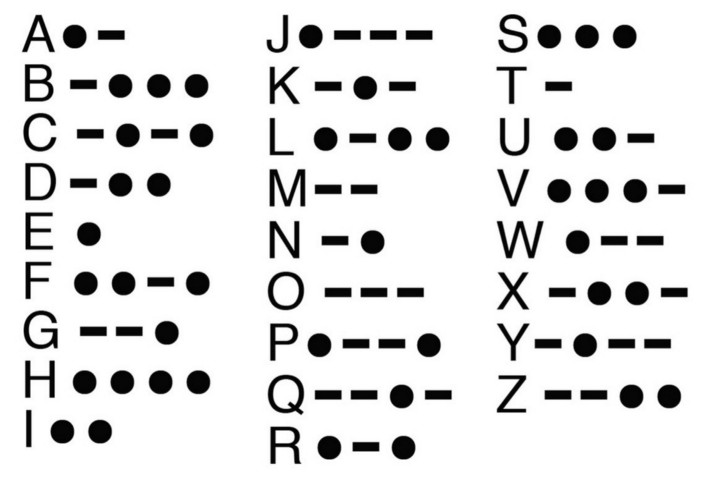
Socks exist in two states: rolled up and flat. That makes them perfect for creating coded messages, like Morse code which uses combinations of dots and dashes. What if you use a rolled sock as a “dot” and a flat sock as a “dash” to create messages? For example, an A would be a rolled sock followed by a flat sock. I would need seven socks to spell my name in Morse sock code. But ... you don't have to stick with Sam's code. You can make your own Secret Sock Code.

Do Socks Fly?
One little-studied sock phenomenon is flight behavior. While rolled socks have been used as substitute hockey pucks, snowballs, and hacky sacks, I don’t know of any studies that compare how well socks fly under various conditions. Perhaps you will be the first to document such things as how far socks fly when they are rolled up or flat, wet, dry, or frozen. To be totally consistent, you’d need to create a launching device.. perhaps a rubber-band catapult?

Further Sock Research
There are tons of fun books about socks, ducks (or others ) that wear socks, and even how to make socks. But here are a few of my favorites:
Odd socks by Michelle Robinson
Five stinky socks by Jim Benton.
Have you seen my new blue socks? by Eve Bunting
Ducks don't wear socks by John Nedwidek
A sock is a pocket for your toes by Elizabeth Garton Scanlon

note: these activities were first published as part of my "Archimedes Notebook" science column in Ithaca Child, Fall 2017.

Monday, October 31, 2022

When Socks go Missing

The average person loses 15 socks a year. That’s 1,264 over a lifetime! At the average cost of $2/sock, that can really add up. 

The mystery of sock disappearance is so perplexing, that in 2016 Samsung commissioned psychologist Simon Moore and statistician Geoff Ellis to figure out why our socks go missing in the wash. After surveying about 2,000 households in the UK, they developed the Sock Loss Index (SLI): 


In the formula, 'L' stands for 'laundry size' which is calculated by multiplying the number of people in the household (p) with the frequency of washes in a week (f).

'C' stands for the 'washing complexity.' This includes how many types of wash (t) households do in a week (darks and whites) multiplied by the number of socks washed in a week (s). Although, who among us counts the number of socks we toss into the hamper?

The second part is the product of the “positivity” (P) of doing the laundry times the degree of attention (A). Positivity is measured on a scale of 1 to 5 with 1 being “hates doing the laundry” to 5 being “loves doing laundry”. To calculate Attention, add how many of these things you do at the start of each laundry. Do you check pockets? Unroll sleeves? Turn clothes right-side out? Here’s a video of the scientists explaining how they calculated the SLI.


Then there’s the completely different problem of where socks go when they disappear. Here are some locations people often find lost socks: one sock still in the hamper; dropped by or between washer and dryer; under the bed or couch; in a shoe; in someone else’s drawer; in a toy box; outside (taken by pet or fallen off a line); clinging to another piece of clothing (we once found a sock weeks later stuck in a sleeve!); or in the lost socks box. Where do your lost socks go?

Drop by on Wednesday for some Sock Science!

Much of this post comes from my "Archimedes Notebook" column in Ithaca Child, 2017.

Friday, October 1, 2021

It's a Bird! It's a Dinosaur! It's Chicken Frank!

 I love dinosaurs - who doesn't! And I love chicken, especially when it's seasoned with .... I mean, I love the diversity of chickens and their personalities, and the cool way they chuckle and talk to each other. So of course I love this brand new out-in-the-world today book: 

Chicken Frank, Dinosaur! 
by S. K. Wenger; illus. by Jojo Ensslin 
32 pages; ages 4-7
Albert Whitman & Company, 2021 

theme: birds, dinosaurs, science

"What’s That?”
“A DNA test. To find another dinosaur, like me!”

Frank is not an ordinary chicken. He’s a chicken who knows his ancestors. And by ancestors, he means dinosaurs. More precisely, theropods – though Frank is pretty sure T. rex is one of his parent’s parent’s parent’s ….. parent. His evidence: three-toed feet, feathers that are modified scales, and an embryonic tail. 

What I like about this book: It is told in dialog, accompanied by chicken-scratched diagrams in the dirt and the occasional ultrasound or chalkboard chart. While it is true that chickens don’t talk (or at least speak English) or lecture on evolution, this book is filled with facts, and it is very, very funny. Also, there is back matter ~ with a discussion of similarities between dinos and chickens as well as some frank facts about evolution and a glossary of Frank’s favorite animal groups (which includes Lepidosaurs! one of my faves, too!).


This book was SO much fun to read that I just had to ask the author, Shaunda Two Questions:

Me: You don’t describe evolution in the text, so our understanding of how birds are related to dinosaurs (and their kin) relies on illustrations. What sort of art notes did you include?

Shaunda: I included three art notes with the original manuscript, and they were very brief and hinted at images the illustrator might draw, like [uses hand lens] to help convey the scale of the content. I wanted the editor to have room to form her own images in her head, rather than try to insert my own ideas which would take her out of the flow of the story. I suspected the editor had a background in science (since she edited these types of books), so I trusted that and kept the art notes to a bare minimum. I wanted the editor to fall in love with the characters first. Any supporting content could be provided as needed. And it was—after the illustrator began his work and the editors began looking more closely at the text. Eventually, they asked for backmatter and a glossary.

Me: What challenges did you face writing a book entirely in dialogue?

Shaunda: It took a “hard push” in the form of a rejection letter from the publisher to get me to write Chicken Frank, Dinosaur! in dialogue. The original manuscript was conceived and drafted in traditional narrative prose with a character arc. However, the publisher wanted the story to move more quickly with snappy dialogue. Through the revise and resubmit process, inserting more dialogue and trimming the narrative with the editor’s guidance didn’t quite mesh with the publisher’s vision. In the end, the original manuscript was scrapped with a rejection. 

I suppose sometimes we creatives need that kind of “hard push.” And it worked for me, because writing the straight dialogue happened in a 3-am wake-up call from my muse shortly thereafter. The dialogue-only draft was written by hand in speedy-fashion in an hour. After some feedback from my critique group, it was ready to go back to the same publisher (although it took me a few months to find courage to do this). But I really believed my new version was exactly what the publisher had been asking for, so I sent it for consideration since we had worked so hard on the original story together. The rest is wonderful history!

For dialogue-only stories, my advice is to write a solid story in narrative-form first. Shape up the character development, arc, and emotional layers with your critique partners. Then transform it into comic-book/graphic novel style. By this stage, you’ll know what definitely needs to be seen in the text and what can be supported by illustrations.

Shaunda is a member of #STEAMTeam2021. You can find out more about her at her website.

Beyond the Books:

Find similarities between a chicken and a dinosaur. Materials needed: a book (or books) showing dinosaurs, and a chicken. If you don’t have a chicken hanging around your house, a good photo will do. Look at their feet and their arms/wings. If you have chicken parts remaining from a meal, look at the bones. Are they hollow inside?

Learn more about how chickens are related to dinos. Here's one place to check out.

Make some dinosaur print cookies with Shaunda! Here’s a video showing how. If you don’t have a dino-foodpring cookie cutter, you can draw one on a cereal box. Then put it on the rolled out cookie dough and cut around the shape with a sharp knife.

Today we're joining Perfect Picture Book Friday, an event where bloggers share great picture books at Susanna Leonard Hill's website. Review ARC provided by the publisher.

Friday, December 4, 2020

Books that Ask Questions

Kids are full of questions. So are writers – and these authors have turned their questions into fun books about animal adaptations.
themes: animals, STEM, humor

Do Lizards Eat Ice Cream? How Animals Beat the Heat
by Etta Kaner; illus by Jenna Piechota
32 pages; ages 4-8
Owlkids Books, 2020

When it gets hot out, do animals wear flip-flops? NO!

So … how do animals beat the heat? They don’t eat ice cream. Or run through sprinklers. But some use their ears as fans, and some use sunscreen. From lizards to lungfish, elephants to ants, this book explores the ways animals have found to cool off in hot weather.

What I like about this book: It’s fun, with a straightforward structure. For each spread, one side asks a question and the facing page provides an answer with supporting text. The cartoon-like illustrations are bright. It’s a great companion to their earlier book, Do Frogs Drink Hot Chocolate .


Do Jellyfish Like Peanut Butter? Amazing Sea Creature Facts
by Corinne Demas and Artemis Roehrig; illus by Ellen Shi
36 pages; ages 4-8
Persnickety Press, 2020

Do starfish sign autographs? NO!

But they do use their arms to do other things… like pry open clams. In this book you discover the adaptive secrets of seahorses (No! they do not wear saddles), pilot whales (who have nothing to do with flying aircraft), and of course, the peanut-butterless jellyfish. 

What I like about this book: I like the playful questions, and the short answers. But in this book, the questions are presented on one spread, inviting readers to turn the page to discover the real answer. The art is fun and the tone of the text one of friends tossing one-liners to each other. I like that the authors include Back Matter, where they present more information about each of the sea creatures introduced in the book.

Beyond the Books:

Make a list of questions (silly or serious) about animals. And then find out the answers. Maybe you'd like to know things like: can chickadees sing the blues? Or how much wood can a woodchuck chuck?

What sort of adaptations do you have for warming up and cooling off? Do you drink hot cocoa? Put on extra layers of clothes? Wear a raincoat to keep dry? 

Today we're joining Perfect Picture Book Friday, an event where bloggers share great picture books at Susanna Leonard Hill's websiteReview copies provided by the publishers.

Friday, December 13, 2019

Real Science about Farts & Superpowers

People ask scientists all kinds of questions, but one of the most frequent is whether a certain animal farts. Which, believe it or not, scientists collect data about – because sometimes science is funny. And it’s part of the information they collect when studying what an animal eats and how it digests food. And – as in the case of some insects – passing gas can be an insect’s superpower!

themes: animal adaptations, insects, nonfiction humor

Does It Fart? A Kid's Guide to the Gas Animals Pass
by Nick Caruso and Dani Rabaiotti; illus. by Alex G. Griffiths
48 pages; ages 6 - 9
Little, Brown Books for Young Readers, 2019

This is a book about farts.

They may make you laugh and they may be really stinky, but the fact is that everybody farts. Well, almost everybody. Some animals don’t. Scientists Nick Caruso and Dani Rabiaotti present what could be a silly topic in a straight-forward manner. Their mission: to help young readers understand some of the basic chemistry behind toots and butt burps. They analyze how 20 different animals digest their food, and whether gas is produced.
   
What I like about this book: The format is fun. On one page is a cartoon representation of an animal with a statement and a question. For example: “This is a horse. Does it fart?” Turn the page and you get the answer – plus an explanation of how its digestive system works. Horses, it turns out, do fart. But parrots? Nope. And some animals have weaponized their gas. Beaded lacewing larvae expel gas to stun their termite prey, putting new meaning into “silent but deadly”.

Like other nonfiction, this book grew from a question. Dani’s teenage brother asked her if snakes farted. She knew from her own research that wild dogs of Africa farted, and so did gray seals. But she wasn’t sure about snakes, so she contacted a snake expert. And you know, when a scientist gets curious about something, they begin talking to others, and before long researchers all over the world were creating an animal fart database.

As a bug-lover, I was intrigued by the beaded lacewings and wanted to know if other insects farted. Which leads to our second book of the day….

Insect Superpowers
by Kate Messner; illus. by Jillian Nickell
80 pages; ages 8 - 12
Chronicle Books, 2019

The book’s subtitle describes what’s between the covers: 18 Real Bugs that Smash, Zap, Hypnotize, Sting, and Devour! So I could not wait to get my hands on a copy (it was released just a few weeks ago).

Sure enough, Kate Messner devotes an entire chapter to the “Masters of Chemical Weaponry”. This chapter features termites, the bombardier beetle and lubber grasshoppers. Good thing these insects are small, because their superpowers make them mighty.  “Imagine a human-size termite with a goo gun for a face,” writes Messner, “or a beetle the size of a bear that shoots a hot toxic chemical mist from its bottom!”

The African bombardier beetle sprays a hot chemical mist from its rear end when threatened. It actually sprays a series of superfast pulses – about 500 per second – so it’s like a chemical machine gun, Messner points out. That’s enough to make birds back off.

In six chapters, Messner presents a diversity of insect superpowers that rival any comic book hero: speed, mimicry, strength, defensive engineering, and the “Jaws of Doom”.

What I like about this book: I like graphic-novel style. It’s filled with action: swoops! sluuurps! Chomp! Smack! Slash! Crunch! Pfffr-ffft! 


I like the way Messner begins each chapter with an introduction of the insect: common name, scientific name, identification features, size, and superpower. Throughout the short chapter, she presents information in text boxes. She also includes an icon illustrating an arch-enemy for each insect. Total fun!

Beyond the Books:

Do you know what animals fart? Take a quiz here at Science Friday.

You’ve already met two bugs that fart. Meet one more here.

If you had a superpower, what would it be? Create a short comic showing how you would use your superpower to help others or defend yourself. You can download a free comic template here.

Today we're joining other book bloggers over at STEM Friday, where you can discover other cool STEM books. And we're joining  Perfect Picture Book Friday, an event where bloggers share great picture books at Susanna Leonard Hill's website.
I borrowed Does it Fart? from the library; A review copy of Insect Superpowers provided by the publisher.

Friday, June 14, 2019

Just Like Rube Goldberg


Just Like Rube Goldberg: The Incredible True Story of the Man Behind the Machines 
by Sarah Aronson; illus. by Robert Neubecker
48 pages; ages 3 - 8
Beach Lane Books, 2019

themes: invention, imagination, biography

Question: How do you become a successful, award-winning artist and famous inventor without ever inventing anything at all?

If your name is Reuben Garrett Lucius Goldberg, you do it in very circuitous manner. First, you get a degree in engineering and work for a city department of water and sewers. Then you quit and get a job cleaning the newspaper office. And in your free time you draw until the editor finally gives you a job. Then an earthquake crumbles the city around you, so you move across the country and do it again. And somewhere along the way you start inventing “screwball contraptions” – complex machines that use chain reactions to perform a simple task.

What I like love about this book: I have heard about Rube Goldberg my entire life, but it wasn’t until I read this book that I learned he was the son of Jewish immigrants. And his father didn’t want him to go into art. I knew Rube had designed all manner of silly machines that could do everything from exterminating a mosquito to hailing a street car. But I hadn’t put his cartooning into context: he began inventing his cartoon contraptions during the age of invention.


I like Robert Neubecker’s art. This spread in particular – a maze of pipes through which the text of the story runs. And I love that the end pages contain drawings of Rube Goldberg’s machines. I also like the back matter – more information about Rube and a short list of selected sources.

Beyond the book:

You can learn more about Rube Goldberg here

You may have seen a Rube Goldberg machine featured in a TV ad, like this one.

Try your hand at designing and building your own Rube Goldberg machine. Here are some ideas to get started:

  • A contraption that helps you get across water.
  • A way to do one of those pesky household chores.
  • Invent a way to get up or get down.
  • A squirrel-proof bird feeder.

You can find some helpful hints on making Rube Goldberg machines here.

Next Wednesday author Sarah Aronson will be chatting with me over at the GROG Blog. Come on over and join us!

Today we're joining Perfect Picture Book Friday, an event where bloggers share great picture books at Susanna Leonard Hill's website . Review copy provided by the author.


Friday, November 30, 2018

Octopus Escapes and a House in the Sky

Today I'm featuring two books about animals. Both were published by Charlesbridge this year.
themes: animals, humor, homes

Octopus Escapes
by Nathaniel Lachenmeyer; illus. by Frank W. Dormer
32 pages; ages 2-5

Octopus waits. 
Guard closes gates.

What happens at the aquarium after everyone leaves for the day? In this story, octopus escapes. He slips and slides down hallways, turns and hides from the security guard.

What I like about this book: I am a big fan of "night at the museum" stories... and of octopuses. They are clever mollusks, able to open jar lids and squeeze through tight spaces. This midnight romp through the aquarium features fun to read aloud rhyming couplets.  The back matter (you knew I was gonna mention back matter!) is all about the amazing behavior of octopuses. They are brilliant problem-solvers and, YES, there are documented cases of octopuses escaping their tanks and cruising through aquaria since the 1870s. Though I don't think any of them went bowling...  The simple, cartoonish illustrations add to the charm.


A House in the Sky
by Steve Jenkins; illus. by Robbin Gourley
32 pages; ages 3-7

Animals, like people, often need a cozy place to sleep, a hideaway for escaping danger, or a sage place to raise a family. They need a house.

Steve Jenkins highlights fourteen different animals and their homes. From nest to shell, he shows a diversity of ways animals solve their housing problems.

What I like about this book: Each page features large, easy-to-read text telling something about an animal and its home. Perhaps the home is a shell that was found, or a case that is built of stick or stone. Some animals nest in trees, some underground, some build with clay, and one lives on the back of a whale! Short sidebars provide more information about the animal. For extra-curious kids (or parents who need a quick answer to all those questions) there's more information about each animal in the book.

I also like the realistic watercolor illustrations by Robbin Gourley. They invite one to linger on the page, searching for details.

Beyond the Books:
Visit an octopus. If you can get to an aquarium, check out the octopus tank. If there's no aquarium around, check out this video of an octopus escape.

What examples of animal homes can you find as you walk around your neighborhood or through a park? With leaves falling off trees, it might be easier to see bird nests. Perhaps there are wasp nests, holes chipped into trees, and other homes. Learn more about animal architecture here.

Today we're joining other book bloggers over at STEM Friday, where you can discover other cool STEM books. We're also joining Perfect Picture Book Friday, an event where bloggers share great picture books at Susanna Leonard Hill's website. Review copies provided by the publishers.

Friday, February 26, 2016

Never Insult a Killer Zucchini!


Never Insult a Killer Zucchini  
by Elana Azose & Brandon Amancio; illus. by David Clark
32 pages; ages 7-10
Charlesbridge, 2016

Topics: alphabet, science experiments, humor 

Opening: “I grew zucchinis when I was a boy. They’re my favorite!”

It’s time for the science fair and Mr. Farnsworth is the judge. When the killer zucchini hears Mr. Farnsworth profess his love for zucchinis, it falls in love. Maybe Mr. Farnsworth could be a friend? But when Mr. Farnsworth says, “He looks like a yummy afternoon snack,” all bets are off. The killer zucchini is determined to squash Mr. Farnsworth and stay off the menu. And it uses the science fair experiments to exact revenge until chaos breaks out and only Mr. Farnsworth can save them all. 

What I like about this book: I like that the story is told through dialog balloons and comic-book type illustrations. I also like that the outrageous science fair experiments are introduced in alphabetical order. I love the whimsy of the illustrations, too.

But what I really like is the back matter. “Think the projects in this book are just mad science?” ask the authors. Nope; they all come from the real world – even the “eraser beam” and “invisibility suit”. Each experiment is explained in the back using language that we comic-book readers can understand. 

Beyond the book: Think of the weirdest science experiment someone might want to try. Then find out if anyone has tried it! Antimatter experiments? Yup, being done. Killer zucchini? Not so much, although there are plenty of carnivorous plants. Here’s a video. 

Do some science. You can find experiments at this site. And this one. 

Make some goop! Just follow these instructions. 

Today's review is part of the STEM Friday roundup. Drop by STEM Friday blog for more science books and resources. We're also joining PPBF (perfect picture book Friday), an event in which bloggers share great picture books Susanna Leonard Hill's site. She keeps an ever-growing list of Perfect Picture BooksReview copy provided by the publisher.