Showing posts with label flowers. Show all posts

Wednesday, June 24, 2026

Explore Outdoors ~ Flower Flies!


 Not everything stripy and buzzy flying in my garden is a bee! Some of the hardest working pollinators are flower flies! Some folks call them hoverflies because they hover over blossoms. According to one horticulture educator, hoverflies pollinate strawberries, apples, plums, pears, cherries, raspberries and blackberries. 

So how can you tell if that yellow-and-black buzzy insect is a fly or a bee? Get a close look.
Not THAT close! A couple hand-lengths away should allow you to observe them without making them nervous. Look at:
  • their eyes. Flies have large eyes that meet at the top of their head. Bees and wasps have smaller eyes that sit on the side of their heads.
  • their antennae: Flies have short, stubby antennae that sometimes look like tiny clubs. Bees and wasps have long, thin antennae that are made of segments.
  • their wings. Flies have only one pair of wings and tend to hold them out to the side when on a flower. Bees and wasps have two pair and tend to fold them over their back when resting.
There are 6,000 kinds of flower flies around the world - what kind do you see on the flowers in your yard?

Wednesday, May 13, 2026

Explore Outdoors ~ Logan Hill Nature Preserve


This past Sunday, Mothers Day, was perfect weather for a walk. So we headed to the Logan Hill Nature Preserve, a Finger Lakes Land Trust preserve located in Candor, NY.


The preserve is a mix of field and woods, with vernal pools and a pond. It's perfect habitat for bobolinks and woodcocks. On Sunday we heard  a medley of birdsong: hermit thrush, robins, sparrows of all kinds. We also heard the low humming of bumble bees and carpenter bees checking out the flowers.
 
Speaking of flowers...


 The overwhelming color this time of year was green ~ with highlights of muddy brown.
 

 Fortunately, there were stones across the muddy spots. Even they were part of the natural wonder! Who can resist stopping to look at fossilized brachiopods in the path? 


Wednesday, April 22, 2026

Explore Outdoors ~ flower watching

 Spring comes in its own time, sometimes in a flurry of flowering and sometimes a slow opening of a bud. While visiting Boston, I walked around the neighborhood every day just to watch this magnolia wake up from winter. 
This Earth Day, what's blooming in your neighborhood?

April 1


April 6

April 11

April 14


Wednesday, April 15, 2026

Explore Outdoors ~ a tree museum

 Last week a friend invited us to stroll through the Arnold Arboretum. It's Harvard University's "tree museum" and botanical research facility, and filled with birds and blooms that change with the season. In early April, our friend warned, we shouldn't expect to see a lot of flowers. Because it's still cold (indeed, it snowed for a few minutes that morning) and spring was still trying to wake up! But here, enough talk - come with us for a short walk...


Many of the trees in bloom were from China, Japan, South Korea - places where flowers are adapted to chilly spring weather. But, as we discovered, there's more to trees than their blossoms... 
Bark has wonderful texture, as do the sweetgum seedpods and the mosses and lichens growing on tree limbs.


Even so, the maples and magnolias were blooming (though the magnolias looked the worse for wear!)


And then, of course I just couldn't resist this splash of yellow!


This week, notice the trees where you walk.


Wednesday, April 8, 2026

Explore Outdoors ~ April Showers

 It's been a rainy spring here in the northeast - and some mornings are still on the cold side. (Snow, anyone?) But spring flowers are shaking off the raindrops and holding their faces to the sun.
 
What spring flowers are blooming in your neighborhood? 


Wednesday, March 25, 2026

Explore Outdoors ~ First Spring Rain

 Spring officially started this past weekend, and I've been waiting for sunshine and warmer weather for so long! So of course, it rained. And so, of course, I went walking outside between showers  ... 


What do you see when you go outside after rain?

Wednesday, October 22, 2025

Explore Outdoors ~ Aging flowers

 Day by day we're growing older. But for some of us, the process of aging comes more quickly - especially if we're a plant! As the flowers in my garden age, they produce seeds and the petals fall away. But there's that in-between time when they look like they're having a "bad hair day." This is especially true with calendula.


Aren't those textured seeds cool? 
This week, check out what the flowers are doing in your neighborhood! 


Wednesday, September 17, 2025

Explore Outdoors ~ After Rain

 I love exploring the world after rain has stopped. Drops still cling to blossoms and stems, sometimes reflecting light and glinting like jewels. Other times they act as lenses, reflecting the world they see.
 
 What do You discover After Rain?


Wednesday, August 20, 2025

Explore Outdoors ~ Old Friends


Flower-watching is sort of like bird watching. Except that flowers don't have feathers, and they don't fly. They don't move very much at all ... but they do change over the season. I enjoy looking at flowers at all stages, from buds to "old friends" 


I'm not the only one who has flower friends - Last  Friday I shared a book about a kid who befriends flowers.
 
 
This week visit the flowers in your neighborhood. 
Are there any that are growing old and fuzzy?


Wednesday, August 6, 2025

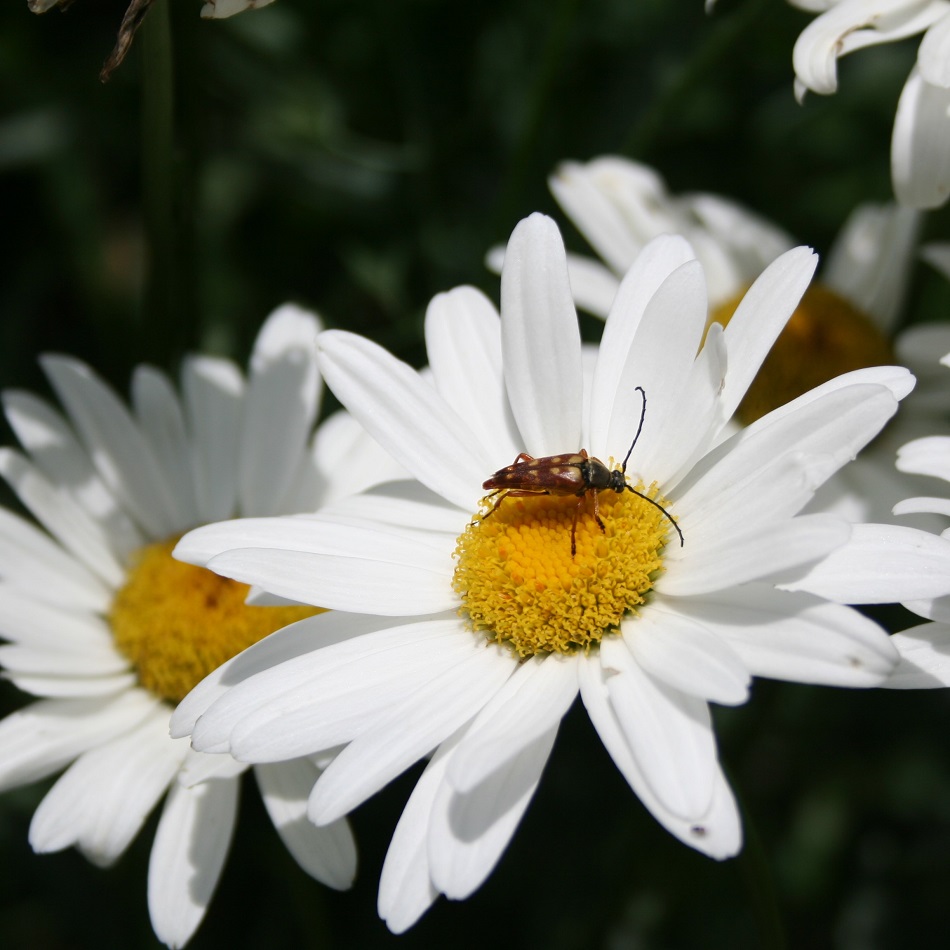
Explore Outdoors ~ bugs on blooms

 I spent a lot of time last month taking photos of bugs - a great many of them on flowers. Here are three that I particularly enjoyed.
 
Now it's your turn -
look for bugs on flowers
where you live 


Friday, June 20, 2025

Plant some Flowers for Your Pollinators!

 
My Pollinator Garden: How I Plant for Bees, Butterflies, Beetles, and More (Books for a Better Earth) 
by Jordan Zwetchkenbaum; illus. by Kate Cosgrove 
40 pages; ages 3-6 
‎Holiday House, 2025

theme: garden, pollinators, ecology

My garden is full of flowers. I like the pretty colors. I like that they smell good.

Those lovely flower smells attract animals that take pollen from one plant to another, so the flowers can make seeds. And those animals, from bees to birds, butterflies to bats, are called pollinators.  Spread by spread readers learn how flowers attract pollinators and how different pollinators carry the pollen. At the same time, we are introduced to a diversity of native bees, butterflies, moths, hummingbirds and bats, flies, beetles, and wasps.

What I like about this book: It’s fun to look at the different pollinators and flowers on each page. There are short-tongued bees and long-tongued bees. Some bees shake the flowers to release the pollen. There’s a fun fact about each of the featured pollinators: what colors they see; whether they fly during the day or night; what attracts them to a particular flower. Back matter includes and author’s note, how to plant for pollinators, a short glossary, sources, and an index to pollinators and their plants.

Beyond the Books: 

Plant some pollinator flowers that are native to your region. You can find a list of plants for your region here at XERCES. If you don’t have a large space for a pollinator garden, plant a way station. A way station flower spot could be as big as the area inside a hula hoop or a few pots on the balcony.

Make sure to have a watering spot for your pollinators. I use a shallow dish with rocks in it. The rocks serve as landing islands once I pour in water. Make sure you keep it filled, especially on hot and sunny days. 

Today we’re joining Perfect Picture Book Friday. It’s a wonderful gathering where bloggers share great picture books at Susanna Leonard Hill's website. Review copy provided by the publisher.

Wednesday, June 18, 2025

Explore Outdoors ~ local pollinators

 This is Pollinator Week!  Pollinators, like people, come in all shapes and sizes. Those visiting my garden include bumblebees, carpenter bees, sweat bees and tons of other bees I don't have names for (yet), syrphid flies and other flies, wasps - from bald-faced hornets to paper wasps to tiny wasps, butterflies, skippers, hummingbird moths, beetles, and hummingbirds. I'm sure I've left some out. 
 
Here are a few  of the pollinators visiting my garden and the "weeds" along the road.
Who do you see pollinating your flowers?


Wednesday, June 11, 2025

Explore Outdoors ~ Poppies!


The poppies were blooming with wild abandon last week! I love their brightness.


I wanted to get a closer look, so I snapped the macro lens onto my (smartphone) camera and got up-close and personal with the poppies...
 
 
What do you notice when you look inside a flower? 


Wednesday, June 4, 2025

Explore Outdoors ~ dandelion seeds

 Dandelion seed heads look so fluffy and soft! 


 But over time the wind blows those seed-parachutes away and you can see where the seeds were attached. They look sort of like golf balls to me - and when you look more closely at the seeds, you begin to notice the different textures. I used a clip-on macro lens for my smartphone, but you can see a great amount of detail with a hand lens.

 
This week get up-close and personal with dandelions.
What do you discover?


Wednesday, May 28, 2025

Explore Outdoors ~ Ants on Plants!

 
 I headed out for a walk the other day, thinking I might find bees on some of the wildflowers. I stopped and looked, closer and closer....


... and found an ant meandering up the raceme of almost-open blossoms. Looks like it barely escaped the fangs of a camouflaged flower spider! In all honesty, I didn't even see the spider until I looked at the photo later, on my computer.
 
So why did the ant climb up the cherry tree? Maybe it has a sweet tooth - er, mandible. Leaves of some species of wild cherry have extrafloral nectaries. Perhaps this ant is part of a pest-patrol? 
 
Peonies provide nectar for ants that keep pesky plant-chewing bugs off their flowers and stems - you can find out more here.
 
Look closely this week. 
Do you have ants on your plants? 


Friday, May 23, 2025

The Big, the Bad, and the Ugly


Fantastic Flora: The World’s Biggest, Baddest, and Smelliest Plants
by Ann McCallum Staats; illus. by Zoë Ingram 
144 pages; ages 8-12
‎ MIT Kids Press, 2025  

When plants face a problem, they can’t get up and move. Rooted to the ground, they have to find nutrition, fend off predators, and survive whatever conditions the environment throws at them. They thrive, writes Ann McCallum Staats, by “using brilliant – and bizarre – adaptations.” Some have thorns, others entice insects through the use of chemical signals.

With that in mind, Ann divides her book into four sections, focusing on The Big, The Bad, The Smelly, and The Exceptionally Strange. You probably know at least one really big plant: the giant sequoia. And you may have seen photos of cars driving through one, or many people holding hands to circle a tree. You may have even heard of the biggest of them all, General Sherman which stretches 275 feet into the sky. But did you know that a sequoia’s roots can stretch more than 150 feet from the base? 

Trees aren’t the only huge plants. There’s a water lily whose leaf is so big that you could use it for a raft!

What makes a plant “bad?” How about those that kill off animals nibbling their berries, roots, and leaves? Or those that, by simply touching their sap, could blind you. Certainly there are plenty more bad actors, and I’m sure we can each think of our “most despicable plant” (my vote goes to cholla cactus).

Then there are the smelly ones… the ginkgo which looks lovely but stinks up a storm! And skunk cabbage, one of the earliest plants to emerge in our snow-covered northeast, but carries a certain perfume. Of all the stinkers, the corpse plant whose name may be the most honest. It really does smell like a rotting carcass, and all for the sake of attracting flies to carry its pollen to another flower.

The plant kingdom is so diverse that you’re bound to find a few oddballs, and Ann shares three. One is a plant that’s turned the tables in a bug-bite-leaf world and dines on insects. Another disguises itself as a stone, and a third is a dainty orchid with flowers that look like flying ducks. Orchids are notorious tricksters, and have co-evolved some intricate partnerships with pollinators.


This is a fun book to read, and I wanted to know more. Ann graciously answered a couple of questions.

Me: How did you come across this idea for presenting a book about plants: the biggest, baddest, smelliest? 
 
Ann: I was staring out my office window one day and noticing the pattern of browns and golds (it was winter so no leaves). I decided to write about plants as a kind of challenge to myself. As a former teacher, I was often given a curriculum that could be boring--it was my job to make it engaging for kids and I enjoyed that task. I had low expectations for plants, but once I started a little research, I was astonished by some of the incredible adaptations plants use to survive. Seriously, some of the plants I showcase have seeds that explode, anti-fish armor, and berries so toxic that eating just a few is fatal. I was hooked. As for the structure of the book--the big, the bad, the smelly, and the exceptionally strange, that took some thought. I knew that the organization scheme was key. It couldn't be chronological or based on who, what, where. When I was brainstorming and finding fun facts, it came to me that this structure would work well for the topic. I wanted to highlight how amazing plants really are, once you ‘dig’ in.

Me: I love the "Be-Leaf it or not" features. How did those develop? Because I notice there are plenty of longer sidebars.

Ann: These recurring features focus on some cool fact that I wanted to include but that didn’t quite fit into the text of the chapter. I guess I'd call them breakout boxes. They provide an extension of the chapter and fun additional factoids. They are a little different from the sidebars which are more scientific in nature or offer a more in-depth explanation of something. The “Be-LEAF it or Not” pullouts ask a question and then share a little, fun tidbit that goes beyond the chapter. I really like the way they designed the book with these breakout boxes highlighted. 

Ann is a member of #STEAMTeam2025. You can find out more about her at her website, annmccallumbooks.com


Thanks for dropping by today. On Monday we'll be hanging out at Marvelous Middle Grade Monday with other  bloggers. It's over at Greg Pattridge's blog, Always in the Middle, so hop over to see what other people are reading. Review copy provided by the publishers.