Showing posts with label bird count. Show all posts

Monday, December 19, 2022

Writing in Season ~ by Lisa Amstutz

Many of my favorite childhood memories are seasonal in nature. Building snowmen and then warming up with hot chocolate. Growing pumpkins. Stomping in puddles. Running through the sprinkler. 

Holiday foods trigger memories as well—Mom’s turkey stuffing, Grandma's apple pie, Great-Aunt Ida's melt-in-your-mouth butter mints. I’m sure you have many delicious memories of your own!
 
These seasonal and holiday memories can be a rich source of story ideas. I've written about some of my own seasonal memories in Applesauce Day, which is based on our family tradition of making applesauce. Finding a Dove for Gramps, a story about the Audubon Society’s Christmas Bird Count, grew out of a memory of participating in a bird count with my father. Mining those memories—focusing on what I saw and felt at the time—helped bring the stories to life.

To a child, everything is new and exciting. Where adults see a messy morning commute, toddlers see something sparkly and surprising falling from the sky. Older kids see snow forts, sledding, and potential snow days. In truth, snow is all of those things; it’s simply a matter of perspective. When you write for children, try to see your subject through the eyes of a child—not your adult lens.

Think back to your own childhood. What memories stand out when you think about each season or holiday? Transport yourself back to that moment. What did it feel like, smell like, taste like? What delighted you—or even scared you? 

Take some time to jot down the answers to these questions, and consider how you could add them to your story. Capturing those sensory details will enliven your writing, and will be sure to delight your young readers as well!

Lisa Amstutz is the author of more than 150 children’s books. She specializes in topics related to science, nature, and agriculture. To learn more about Lisa and her books, visit www.LisaAmstutz.com


Monday, February 7, 2022

I have Birds on my Brain

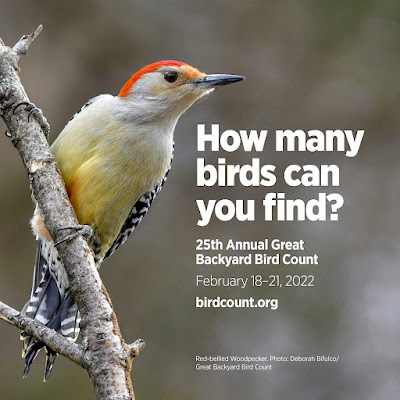
 We've got some feeders hanging from the lilac tree outside the kitchen window. Every morning I watch the chickadees and juncos, blue jays and woodpeckers ~  red-bellied, hairy, downy ~ feast upon sunflower seeds and suet. The juncos gather on the mess of intertwined lilac and forsythia twigs, a safe place to wait for the open spot at the feeder. The blue jays wait for no one. And the red-bellied woodpecker has discovered a stout limb below the suet where he can perch and peck away at his heart's content.

Though I've watched birds for many years, this will be the first time I officially count them for the Great Backyard Bird Count. 


 You might be wondering: hey, Sue, you count pollinators every summer - so why have you been ignoring the birds? Well, the truth is that a number of years ago a bear took down our feeder. After this happened a few times, we sort of gave up. But this year we decided to try again, because we really miss watching our feathery neighbors. And now the birds have told their friends where the buffet is and we anticipate seeing a good number.

Not only that, the Great Backyard Bird Count sounds like fun. All I need to do is: 

  • watch birds for 15 minutes or more at least once over the President's Birthday long weekend. That's next week, Friday, Feb. 18 - Monday, Feb, 21.
  • count all the birds I see or hear during those observation times
  • report them using one of the tools listed on the GBBC website.

Since I've got the Merlin app on my phone, I'll probably use that. But you don't need a smartphone - you can jot down your observations in a notebook and report them using a computer. In fact, you don't need much of anything except a bird guide and some warm clothes. Binoculars are great, but if you don't have them, rely on your eyes and ears. You don't even need a backyard. You can count birds on your balcony, at a park, at the bus stop, at the school yard, or anywhere you are. Heck! You can sit at your kitchen table where it's toasty warm, and count birds while you enjoy your cup of coffee.

I'm planning to go outside, though. Partly because I want to listen to the birds and partly because I need to rack up some #1000hoursoutside time. And who knows, maybe I'll head down the road and check for birds hanging out by the creek. 

The real reason I want to participate is that I know the data we collect will help scientists learn more about where birds are wintering here in the northern hemisphere, and summering in the southern hemisphere. Yup, it's a global event. Find out more at  https://www.birdcount.org/.


Friday, November 29, 2019

Books for Bird Lovers


Winter is coming and it’s the perfect time to watch birds ~ birds at the feeder, birds hanging around the park, birds creeping up and down trees as they hunt for insects hiding in bark crevices, and birds gleaning seeds from the garden flowers we never trimmed.

So today I’m sharing books about birds ~  here on Archimedes and also over at Sally’s Bookshelf. Theme for the day: birds, citizen science

Bird Count
by Susan Edwards Richmond; illus. by Stephanie Fizer Coleman
32 pages; ages 4-8
Peachtree Publishing, 2019

I shake Mom in the dark. “Wake up, sleepy head! It’s Bird Count Day!”

Ava is excited because this year she gets to keep tally of the birds “her” crew finds during the annual Christmas Bird Count. She’s dressed for the weather, and has the tools she needs: a notebook, a pencil, and most importantly, her eyes and her ears.

What I like about this book: We get to go along on the bird-finding field trip without leaving the warmth of our cozy home. Bird-by-bird we meet (and count) owls, chickadees, catbirds and geese. It’s a great way to become familiar with how the bird count works, in case we want to join a local census circle. Back matter tells more about each species featured in the book as well as additional information about the Christmas Bird Count. 

The Puffins Are Back (New & Updated)
by Gail Gibbons
32 pages; ages 4-8
Holiday House, 2019

A small boat comes close to an island of the coast of Maine.


Scientists have returned to study a puffin colony. Concerned about the population decline, they built burrows and brought chicks to the island. Now, years later, the scientists continue to observe the colony, learning more about the bird’s behavior.

What I like about this book: The illustrations are so inviting, and make me want to linger on the page. And the text tells a wonderful story of determination to save these iconic birds.

Beyond the Books:

If you have a bird feeder, you can become a Citizen Scientist by collecting data for Feeder Watch. Learn more at Feeder Watch.

Create your own back yard bird count. Keep track of all the birds you see during a 15-minute period of time. If you do that every month, you can get an idea of how bird populations change with the season. All you need are a notebook, pencil, and a bird guide (or two). You can also use  Cornell Lab of Ornithology’s online bird fieldguide and Audubon’s online bird guide.

Make a paper-plate puffin. Here's how. While the glue dries, learn more about the puffinresearch at Matinicus Rock.
 

Today we're joining other book bloggers over at STEM Friday, where you can discover other cool STEM books. And we're joining Perfect Picture Book Friday, an event where bloggers share great picture books at Susanna Leonard Hill's website. Review copies provided by the publishers.

Wednesday, February 13, 2019

Join the Great Backyard Bird Count!

Evening Grosbeak by GBBC participant Ted Schroeder, Oregon
This weekend is for the birds! The 22nd Great Backyard Bird Count (GBBC)  happens Friday, February 15 through Monday, February 18. You’re invited to join me and other volunteers from around the world. It doesn’t matter whether you’re an expert birder or just beginning to watch the birds hanging around your backyard.

The GBBC mission: to count the birds you see for at least 15 minutes on one or more days of the count, then enter your checklists at birdcount.org. You can do this by yourself or with family and friends.

This year, Cornell Lab of Ornithology says participants will probably see more finches and grosbeaks. They are moving farther south than usual in what's called an "irruption." This type of movement is often sparked by poor cone, seed, and berry crops in parts of Canada. It’s also a good year for sighting Red Crossbills, Common Redpolls, Pine Grosbeaks, Common and Hoary Redpolls, and Red-breasted Nuthatches.

 Downy Woodpecker by Charlie Prince, Alabama.
"The Great Backyard Bird Count is a great way for all bird watchers to contribute to a global database of bird populations," says Dr. Gary Langham, vice president and chief scientist for the National Audubon Society. "Participants in the Great Backyard Bird Count help scientists understand how things like climate change are impacting bird populations so we can better inform our conservation efforts."

Last year, GBBC participants submitted more than 180,000 bird checklists, reporting a record 6,456 species. That’s more than half the known bird species in the world.

How to get started:
1. Visit birdcount.org. There you’ll find instructions, a “How To” slide show, answers to your questions, and bird lists.

2. Check out the links, where you’ll find an online Bird Guide, tips for identifying “tricky” birds, and more.

3. And head over to Audubon for a great introduction to 15 common birds.